
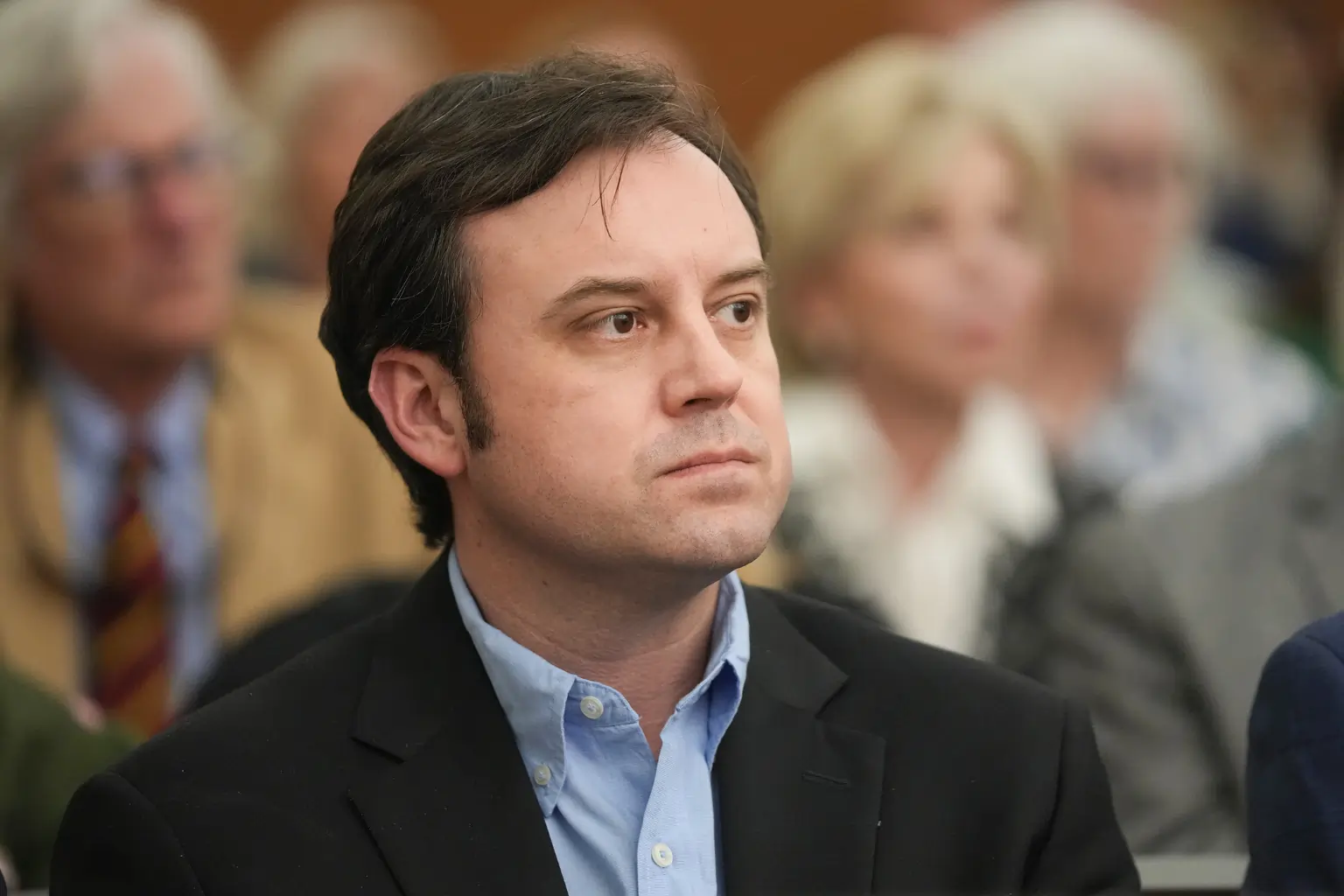


Testimony in the Camp Mystic evidential hearing concluded yesterday in an Austin courtroom. The lawsuit was brought by the family of eight-year-old Cile Steward, who died in the July 4, 2025, flood and whose body has not been recovered. Her family is fighting attempts to reopen the camp until her remains are found.
Edward Eastland, a director of the rural Christian summer camp, broke down in tears in the courtroom when asked about Cile. His father, camp patriarch Dick Eastland, died in the flood, as did two teenage counselors and twenty-five young campers. Only Cile’s remains are still missing.
Dick and his wife traveled with me to Israel twice; he was one of the most gracious, loving people I have known. I know his family is still grieving his death and that of so many in this horrific tragedy.
Nine Camp Mystic families are also suing Texas officials after the deaths of their children.
If my granddaughter had perished at the camp
Of all the kinds and categories of human suffering there are, the death of a child must rank as the worst. For other types of pain and tragedy, we can find responses that seem reasonable, at least on paper. You’re likely familiar with the most common:
When we misuse our freedom, the consequences are not God’s fault but ours (cf. Genesis 2:17). We experience diseases and disasters that are the fault of the Fall, not the Creator (Romans 8:22). Satan is a “roaring lion” who seeks to “steal and kill and destroy” (1 Peter 5:8; John 10:10). Suffering often leads us to rely more fully on God and thus to grow spiritually (cf. 2 Corinthians 12:7–10). We will understand in the future what we cannot understand in the present (1 Corinthians 13:12). God walks with us through our floods and fires (Isaiah 43:1–3). Our all-knowing, all-powerful, all-loving Father redeems all he allows for his glory and our good (cf. Romans 8:28).
But if my granddaughter had perished at Camp Mystic and her body was never recovered, I can assure you that none of these “explanations” would explain her death or be sufficient for my grief.
Since my granddaughter and the rest of my family are mortal, I must face the fact that any of them could die today. What happened to Job could happen to any family (Job 1:13–19).
If such a tragedy were to befall us, I could do what Job’s wife encouraged him to do: “Curse God and die” (Job 2:9). I could decide, as C. S. Lewis feared he might after his wife died of cancer: “The conclusion I dread is not ‘So there’s no God after all,’ but ‘So this is what God’s really like. Deceive yourself no longer.’”
Like some “open theists,” I could abandon my belief that God is all-knowing and thus knows the future, concluding that he did not know about the Camp Mystic flood beforehand and thus did not prevent it. Like Rabbi Harold Kushner and many others, I could abandon my belief that God is all-powerful, concluding that he does not intervene in nature and thus could not prevent the tragedy. Like most world religions across history, I could abandon my belief that God is all-loving, concluding that Cile Steward’s death and that of others who perished that terrible night fell outside his scope of concern.
Such conclusions have their appeal. In some ways, it is easier psychologically to give up hope than to sustain it against all odds. There’s a part of me that would much prefer to resolve the apparent contradiction of believing in an all-knowing, all-powerful, all-loving deity who nonetheless allows such horrific suffering in the world he created.
Upon reflection, I realize this is how I feel about this problem of all problems.
A sentiment I am not accustomed to making public
It never occurs to me to wonder if God knows all that happens or will happen, or if he is omnipotent in his capacities. When he allowed my father’s heart condition and early death, my son’s cancer, and my grandson’s leukemia, my visceral reaction was not that he did not know about their disease or was not powerful enough to intervene.
It was the fact that for some reason he chose not to do so. And choice speaks to character, in this case the biblical claim that “God is love” (1 John 4:8). Since my love for my family would absolutely compel me to prevent or heal their suffering, I struggle to understand why his does not.
This is not a sentiment I, as a professional minister, am accustomed to making public. But it is the truth of the situation, however subliminal and visceral. I suspect you might know what I mean.
Here’s the good news: Even when I question my Father’s love, he loves me so much that he welcomes my doubts (Isaiah 1:18) and speaks to my heart out of his, often in ways I could never anticipate.
I’ll close with an example.
“Because he loves you like no one else can”
Yesterday, my wife and I went for lunch to a seafood restaurant we had not tried. It turned out we were in the minority—the restaurant was so crowded that we had to take a table outside and share it with someone we did not know. Our new friend was very kind, welcoming us to sit beside her. As we began to talk, she shared some of her story with us.
What a story it is.
She was in town to take her father to his chemotherapy treatment. Her husband died of dementia two years earlier. She has lupus and deals every day with significant symptoms and suffering. And yet the joy of the Lord was prominent in her countenance and conversation.
At one point I asked how she was making it through these hard days. She smiled and said, “Only God.” I asked why she continued to trust him despite her challenges, and she replied, “Because he loves you like no one else can.” She explained that people can turn on you, but he never will. People can fail you, but he never can.
It is her decision to trust in God’s love, despite all she faces each day, that positions her to experience that love each day.
Will you choose to make the same decision today?
Quote for the day:
“All fear is but the notion that God’s love ends.” —Ann Voskamp
Our latest website resources: 