
Austin-Travis County EMS Cmdr. Tim Fuentes shows how the blood used in the service’s whole blood program is stored. Commanders carry blood in a military grade cooler for use in the field during trauma or medical blood loss cases.
Sara Diggins/American-Statesman
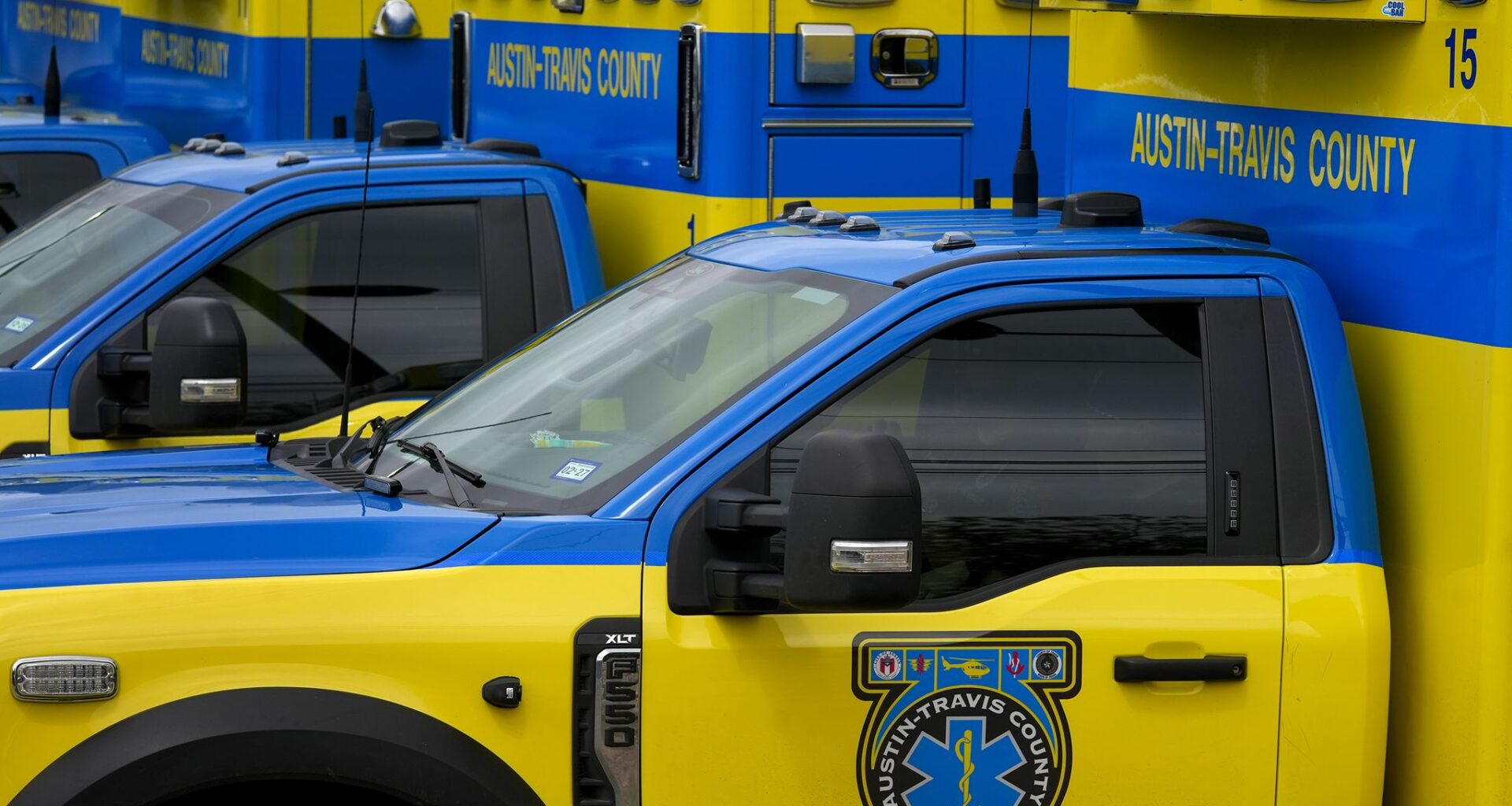
Even before the March 1 fatal shooting on West Sixth Street, Austin-Travis County Emergency Medical Services was working on a new way to get more whole blood to a mass casualty scene.

In November, it started working through several scenarios of how EMS would coordinate with We Are Blood, the blood bank that serves 10 Central Texas counties and 50 hospitals, during a mass casualty.
Article continues below this ad
Austin-Travis County EMS will be able to access more whole blood in a mass casualty event through a new protocol with We Are Blood, the blood bank for Central Texas.
Jay Janner/Austin American-Statesman
“We’ve spent years building a system that can deliver whole blood in the field for individual patients,” said EMS Chief Robert Luckritz. “This next step ensures that same level of care can be scaled quickly and effectively when multiple lives are on the line.”
Austin-Travis County EMS has been a national leader in providing blood transfusions in the field since it began the whole blood program in 2021.
Every day, EMS carries between nine and 11 units of O-positive whole blood on its supervisors’ trucks, which it can get quickly to someone who needs a blood transfusion. O-positive blood can be given to anyone at the scene without having to know their blood type.
Article continues below this ad
In a mass casualty situation such as a school shooting, building collapse or airplane crash, EMS would be limited in how many transfusions it can do at the scene based on the number of whole blood units it has, said Cmdr. Eric Gordon. People would have to wait until they got to the hospital to receive a transfusion once EMS ran out of blood.
“Our long-standing partnership with Austin-Travis County EMS made developing this mass casualty response protocol a natural step, strengthening our ability to act quickly and, together, saving lives across Central Texas when every second counts,” said Justine Garza, vice president of business development at We Are Blood.
Through running different scenarios, EMS and We Are Blood developed a new protocol for mass casualties:
Article continues below this ad
EMS notifies We Are Blood of the amount of blood it believes it will need.
We Are Blood, which has operations 24 hours a day, seven days a week, then lets EMS know how many units it can make available and begins preparing those units to be picked up.
An EMS “blood officer” then goes to We Are Blood to pick up the units and deliver them to the scene.
In the meantime, the blood units EMS has on the supervisor trucks already have arrived on the scene and are being used for the first patients.
“In public safety, we prepare for the moments we hope never come,” Luckritz said. “But if the unimaginable happens, this plan ensures we’re ready, with the training, support and resources to give every patient a fighting chance.”
Gordon said, though they had run the scenarios and were prepared to enact this new protocol when the West Sixth Street shooting happened at Buford’s Backyard Beer Garden, the need for blood did not extend beyond the units EMS already had. It did not need to use the new protocol. Two people and the gunman were killed, and 16 people were treated for injuries.
We Are Blood’s donation center in Cedar Park is one of four area centers for blood collection. Donors also can find a mobile blood drive.
Nicole Villalpando/American-Statesman
The need for more donors
All of this does not happen without blood donors, preparation and distribution at We Are Blood.
Article continues below this ad
Typically, whole blood is collected from healthy donors, who can give it every 56 days, and then it is split into red cells, plasma and platelets.
Each unit of whole blood can be used for multiple patients once it is split into parts, said Nick Canedo, We Are Blood’s vice president of community engagement.
Each blood part has its own purpose:
Red blood cells bring oxygen to the body.
Plasma carries proteins, vitamins, sugars, hormones, salts and fats.
Platelets carry the clotting factor.
Article continues below this ad
Why is whole blood given in trauma?
Whole O-positive blood, though, is specifically given in trauma cases because it has the coagulation properties needed to help stop the bleeding while replenishing oxygen through the red blood cells. Type O blood can be universally given. If a person has a negative blood type, a medication can prevent side effects.
“In the field, if the victim of assault is losing whole blood, give them the thing they are losing,” said Dr. Nicholas Steinour, who was the division chief of emergency medicine at Ascension Seton hospitals when the whole blood program began. “Usually the best answers are the simplest ones.”
The patients who arrive at the hospital after receiving whole blood in the field are in more stable condition, Steinour said.
Article continues below this ad
Since the program began, Steinour said he knows there are patients who would have died en route to the hospital if the blood had not been given.
Where to give blood
We Are Blood has four donation centers at 4300 N. Lamar Blvd. and 3100 W. Slaughter Lane in Austin; 2132 N. Mays St., Suite 900, in Round Rock, and 251 N. Bell Blvd., Suite 111A, in Cedar Park.
Article continues below this ad