
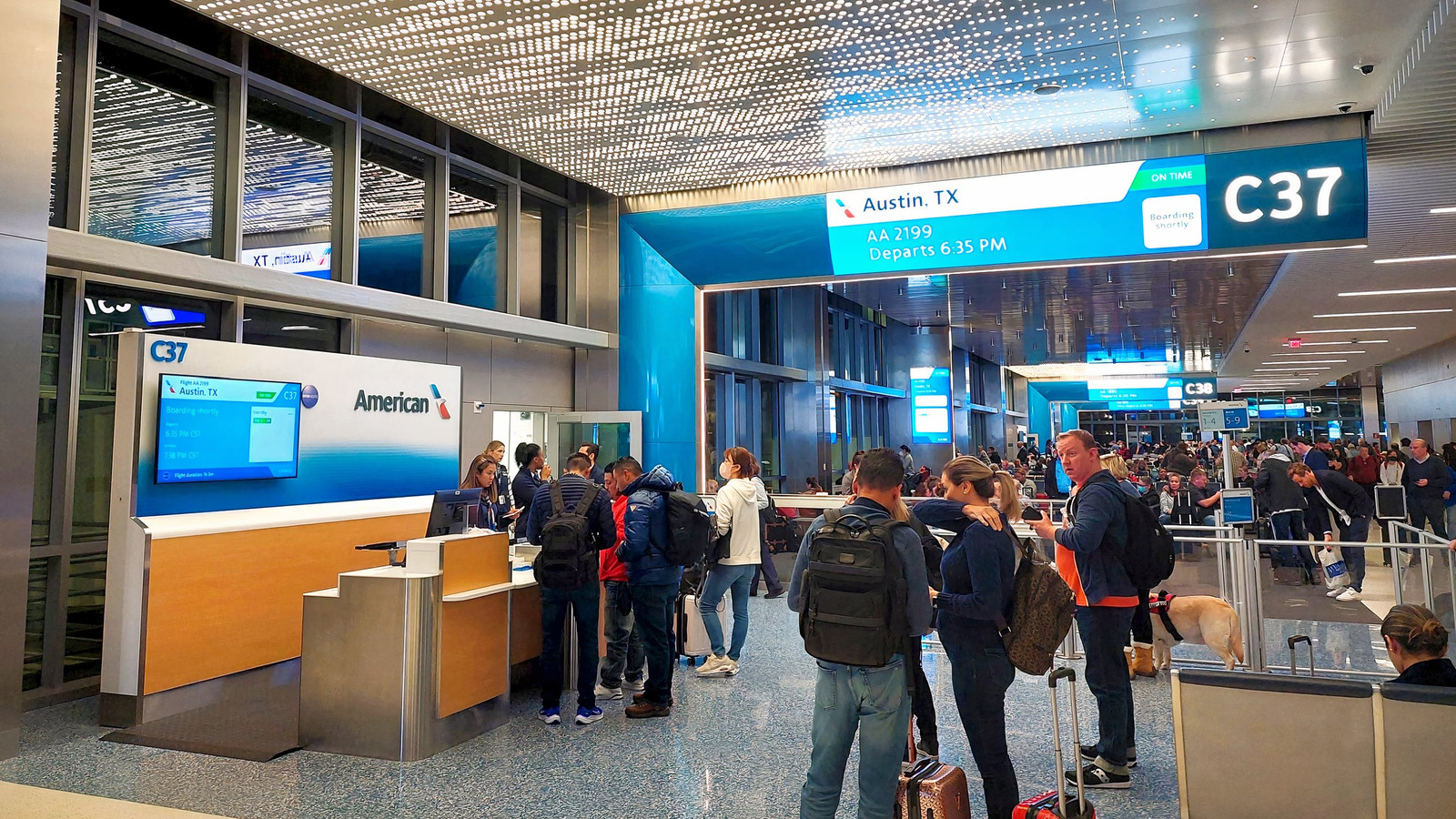
American Airlines has just announced the launch of new electronic boarding gates at its biggest and busiest hub, the Dallas-Fort Worth International Airport (DFW). While the eGates promise to ease congestion at the carrier’s home airport, they also spark privacy and staffing concerns.
This comes following “strong customer feedback” from the boarding eGates’ “successful pilot” in November 2025. At the same time, passengers have had long-running complaints about the carrier’s gate operations, from an “involuntary” ticket cancellation without any warning to DFW Airport’s frequent, last-minute gate shuffling.
Here are the issues American Airlines customers could face with the new eGates at DFW Airport, how they are set to work, and how they could impact the current issues passengers deal with.
American Airlines’ New Electronic Boarding Gates At DFW Generate Concerns
Early on Tuesday (April 14), American Airlines announced that it is rolling out electronic boarding gates at DFW Airport starting this summer, making it the first U.S. network carrier to do so at a major U.S. airport. The eGates are promoted as a provider of a “more seamless, user-friendly, and consistent boarding experience.”
However, Gary Leff at View From The Wing pointed out that the new boarding eGates might only make flying “worse” due to privacy and staffing concerns.
Leff didn’t get a response from American Airlines when asked whether “these boarding gates will use the optional photo add-on. The rendering makes it appear so, but shows a boarding pass rather than the passenger’s face.”
In a rendering shared by American Airlines, the scanners appear to look like U.S. Customs and Border Protection’s (CBP) face scanners, which come with an optional “photo add-on” or biometric scan.
American Airlines has yet to clarify if non-automated boarding will be allowed, if biometrics will be mandatory, or its terms on how passengers’ images from the scanners will be stored. Leff suggests that passengers must be informed of the airline’s data retention and deletion policy.
Leff, along with other passengers, hopes that this includes no secondary use of images for marketing or profiling, or at least includes the option to opt out. Furthermore, he also sounded the alarm on the possibility that opting out of this automation would lead to slower service or extra hurdles during boarding.
A possible lack of staff at boarding gates, presumably replaced by the electronic gates, could mean passengers may take longer to scan and wait for the gate to open, hence more queues.
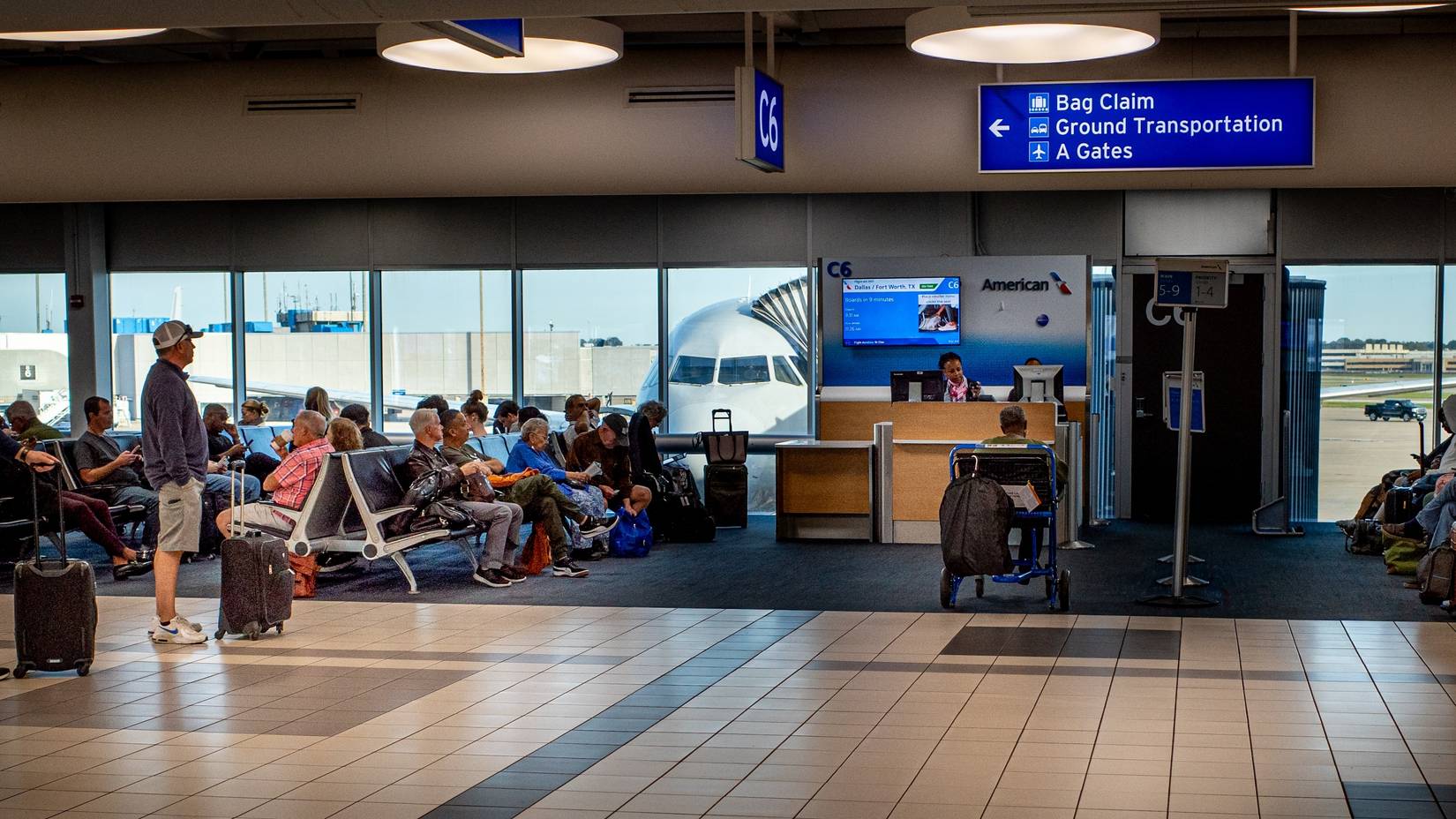
Passengers wait to board an American Airlines flight at a U.S. airport gateCredit: via Shutterstock
E-gates also don’t solve existing bottlenecks that staff and passengers face at boarding, including too many carry-ons and limited overhead bin space, last-minute gate-checking bags, and so-called “gate lice,” which American Airlines tried to fix previously by removing bag-sizers at the gates, as well as testing a new gate lice-reducing platform.
Leff also noted that he expects the airline to use the e-gates as a reason to assign fewer gate agents, which, naturally, can translate to a negative customer experience and fewer employees on hand to help when things go wrong. And being a digital system with hardware, there are bound to be technical failures that will ultimately slow down boarding and require staff to come to the rescue anyway.
American Airlines’ Boarding e-Gates vs. Europe’s Widespread e-Gates
While they’re quite a novelty in the U.S., some passengers argue that electronic boarding gates aren’t an issue, as they’re common in Europe. However, Leff notes that U.S. laws are different when it comes to how such gates use people’s information.
For instance, the 2025 European Union (EU) AI Act—the world’s first comprehensive AI law—considers biometric identity verification as “high risk.”
EU law then subjects European airport biometric gates to rigorous transparency and data protection standards. The U.S., on the other hand, does not have a federal equivalent, which allows for a less regulated use of facial recognition technology—and, therefore, potentially passengers’ sensitive personal information.
How American Airlines’ New Electronic Boarding Gates at DFW Will Work
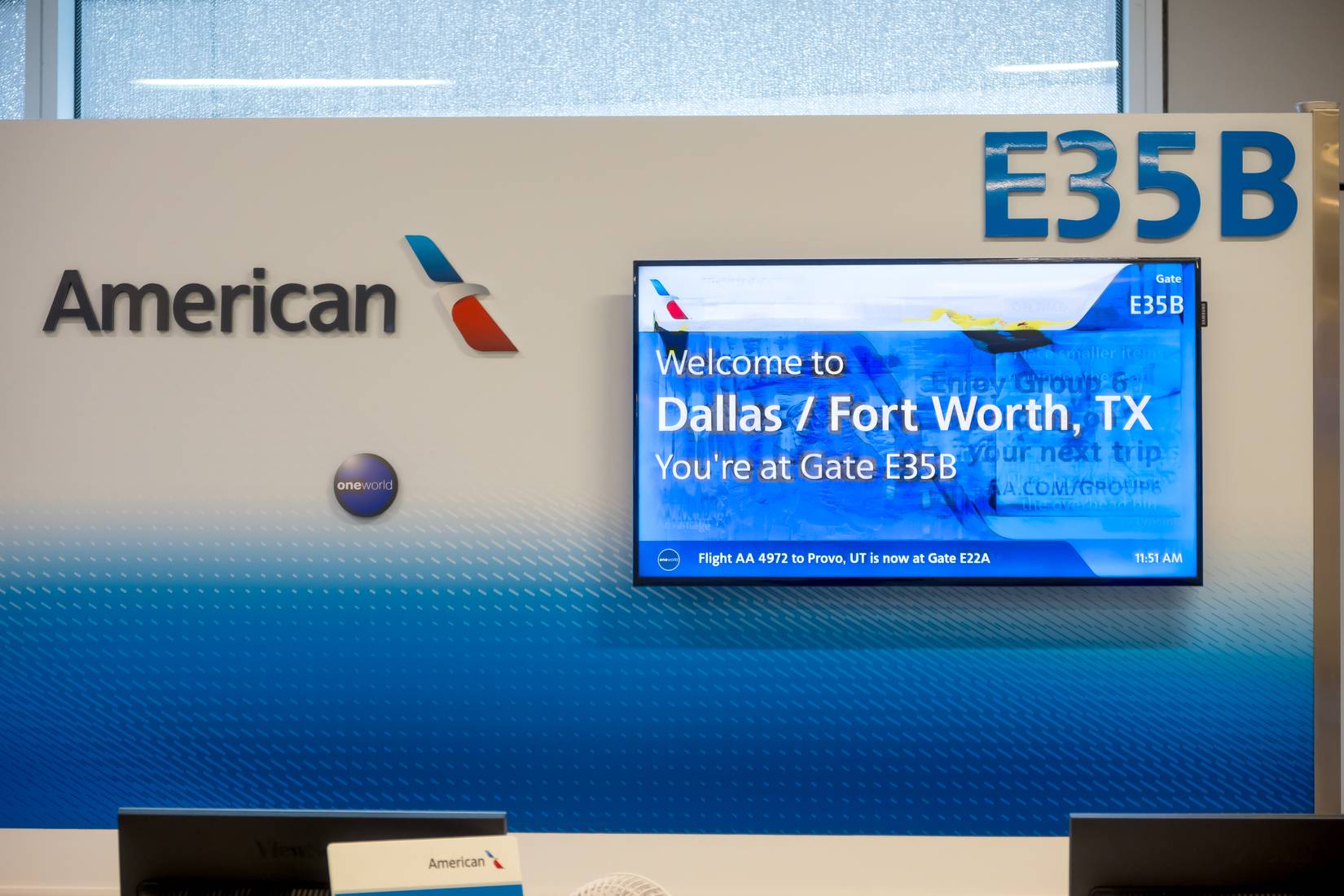
American Airlines departure board at Dallas Fort Worth International Airport in TexasCredit: Snehitdesign/Dreamstime
American Airlines is installing nearly 20 dormakaba Argus Air XS electronic boarding gates at DFW Airport, aiming to allow the carrier’s team members to have more time providing “exceptional customer service and operationally critical tasks.”
These devices promise the following features and benefits:
Clear touchscreen instructions
Automatic validation of boarding passes before opening
Regulation of boarding pace to “reduce congestion and improve jet bridge flow.”
Boarding eGates simplify identity checks by using facial recognition technology. Usually, a camera is mounted at the gate or held by a customs officer or airline staffer. It then captures a live photo of you during boarding.
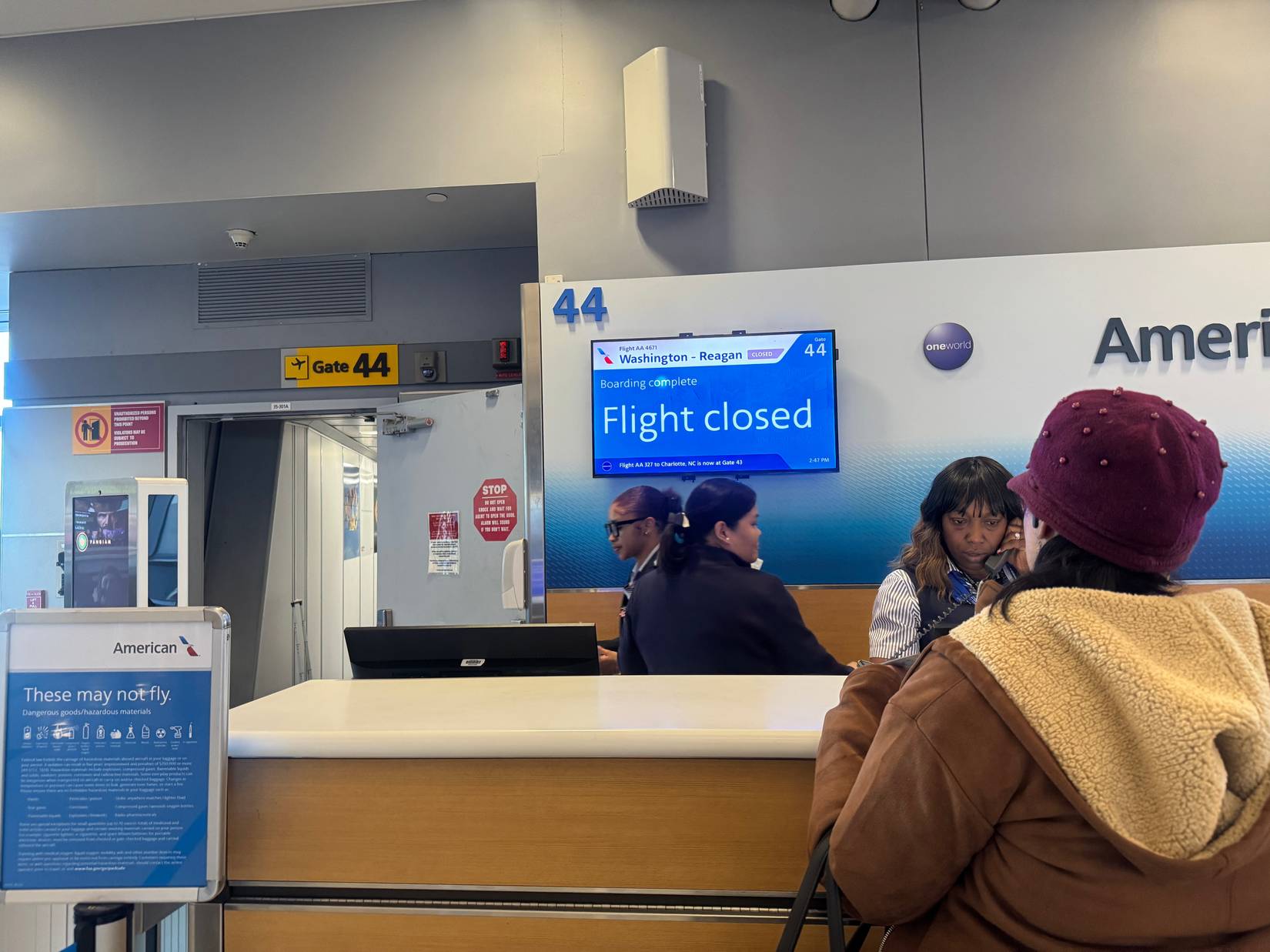
A passenger speaking with agents at an American Airlines boarding gateCredit: Shutterstock
The image taken during this process is sent to the CBP’s Traveler Verification Service (TVS), which matches it with existing, pre-staged, or trusted images from your passport or visa photo. It is also compared to the flight manifest approved by the government.
A match means you are allowed to travel. No match means you will be redirected to a manual document check by a Customs officer or gate agent. Sometimes, a no-match occurs due to poor lighting, an outdated passport photo, or technical glitches in the TVS database.
American Airlines eGates’ Impact On Congestion And Last-Minute Gate Changes
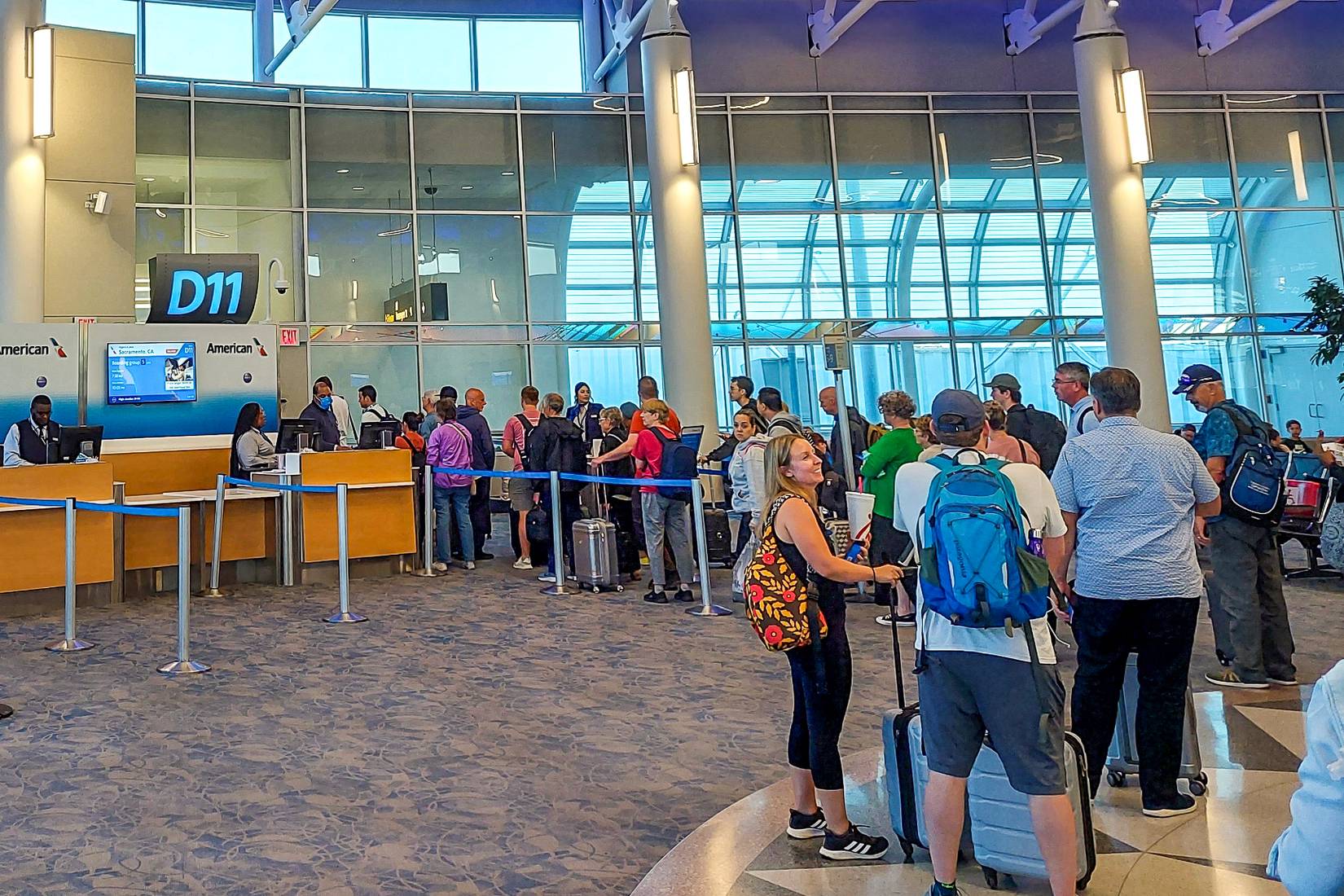
American Airlines passengers in line at the boarding gateCredit: Shutterstock
American Airlines passengers have long complained about the congestion and last-minute gate changes at DFW Airport.
In January, American also transitioned its DFW hub to a 13-bank schedule, which then increased block time for flights to minimize congestion and enhance reliability in terms of missed connections and baggage handling. Interestingly, in a recent reliability ranking, American Airlines (and Spirit Airlines) beat other major U.S. carriers.
However, passengers noticed that the actual travel between gates has only increased. With electronic boarding gates, American Airlines is optimistic that such issues will soon be resolved.
Last year, the airline said the initial rollout of its eGates at DFW Airport led to improved on-time departures and reduced gate-checked bags by 25%.
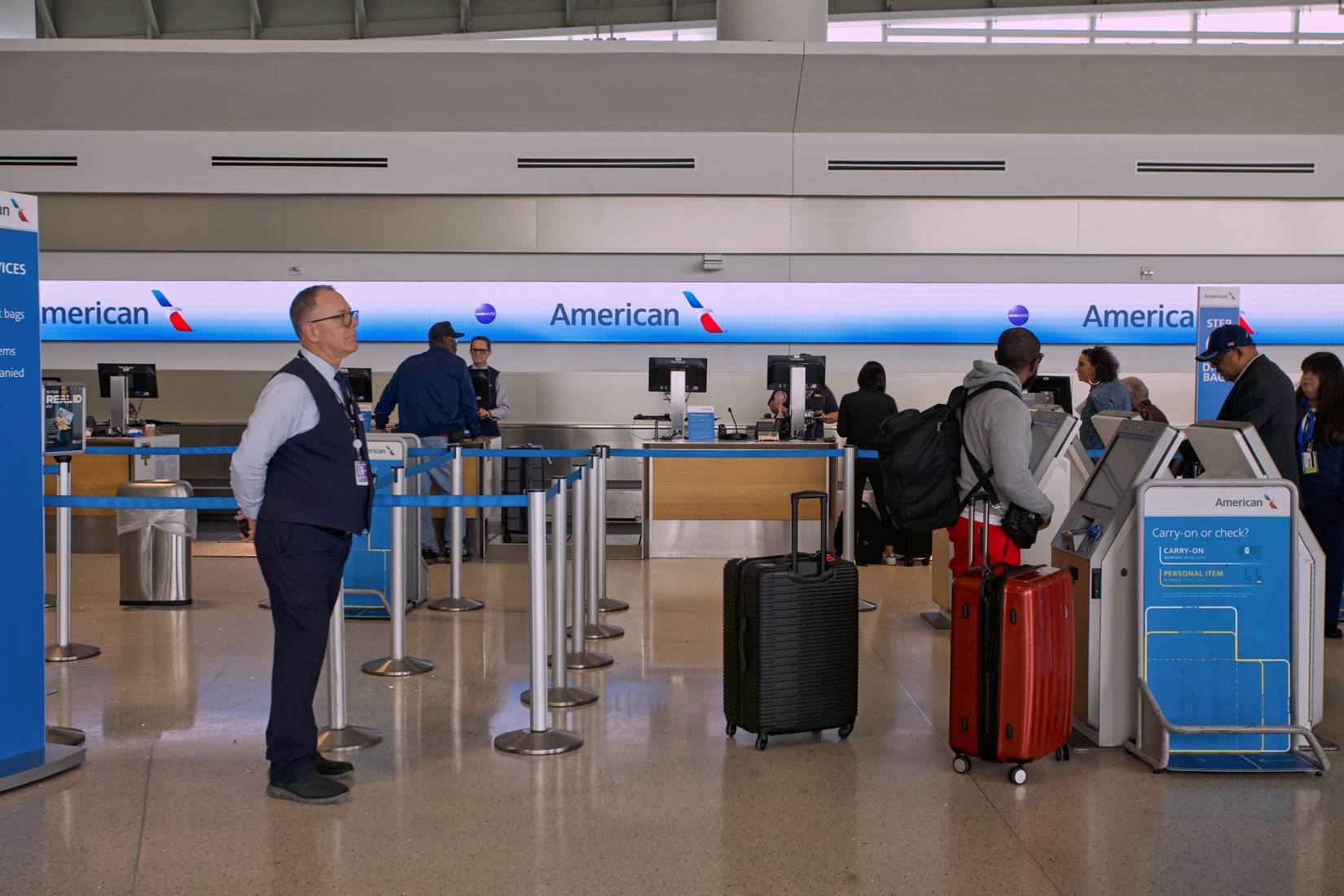
American Airlines baggage ticket counter at Louis Armstrong International Airport
Credit: Elliott Cowand Jr/Shutterstock
Some reports estimate that eGates are generally 20% to 30% faster than manual processing. At DFW, gate shuffles often happen due to staffing shortages and chaotic boarding lines.
Ideally, eGates will only require one agent to oversee multiple lanes, allowing them to focus on fixing seating issues rather than scanning hundreds of individual boarding passes.
The eGates aim to streamline entry to the jet bridge with a predictable boarding flow. The crew can then load the cabin more efficiently and prevent clogs, as well as allow airlines to depart exactly as scheduled.
However, American Airlines passengers may face minor delays or disruptions at DFW Airport during the early stages of implementation.