
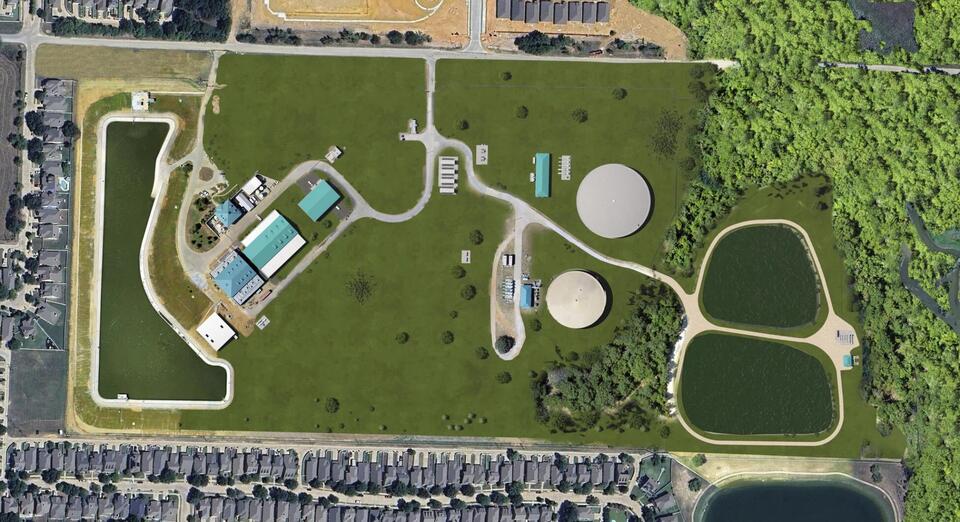
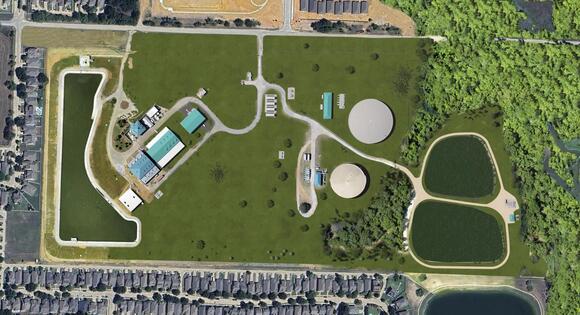
McCarthy Building Companies, in partnership with the Upper Trinity Regional Water District (UTRWD) and Carollo Engineers, have broken ground on Phase 2 of the Harpool Water Treatment Plant expansion.
The expansion will double the plant’s capacity, boost water treatment and provide critical water resources to the surrounding northern Denton and Collin County communities.
The expansion will also double the plant’s transmission capacity from 30 to 60 million gallons per day.
According to a McCarthy press release, the milestone reflects a significant investment in new water infrastructure for one of the country’s fastest-growing regions, and “will be vital to sustaining the health, vitality and resilience of North Texas for generations to come by expanding access to critical water resources.”
UTRWD serves approximately 29 cities and utility providers throughout Denton and Collin counties. The non-profit government agency provides treatment services for rainwater, solid waste, drinking and non-potable water.
The expansion project includes new infrastructure upgrades, plant equipment installations and advanced water treatment tech enhancements.
Larry Patterson, UTRWD executive director, said working in partnership to expand the Tom Harpool Water Treatment Plant’s capacity and deliver critical upgrades, “will ensure reliable water service for the fast-growing communities of Northern Denton and Collin counties.”
“We’re grateful for the support of our design partner Carollo Engineers as well as the assistance from the Texas Water Development Board for providing project financing through the State Water Implementation Fund for Texas,” Patterson said.
Scott Hoff, executive vice president at Carollo, said it is a privilege to work with UTRWD for more than 25 years and looks forward to continued collaboration to boost water treatment for thousands of North Texans.
“The fast-growing north service area continues to demand expanded water infrastructure,” Hoff said. “This project will incorporate advanced treatment technologies and resilient design features to position the facility to meet the region’s long-term needs.”
According to McCarthy, the project will create over 150 construction jobs. The project is expected to be finished by 2028.