
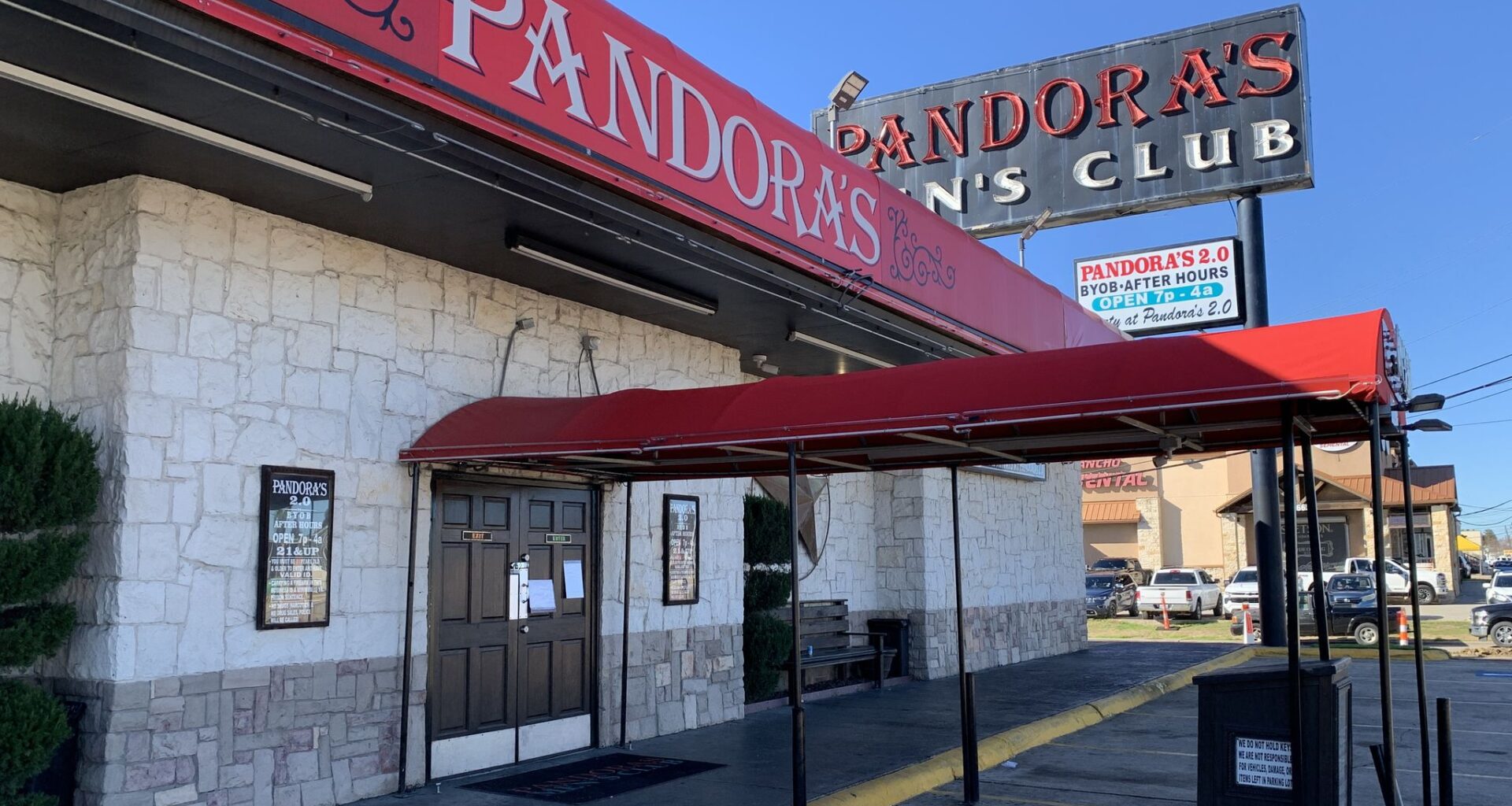
Pandora’s Men’s Club is located on Harry Hines Boulevard in northwest Dallas.
Robert Wilonsky
Dallas’ permit and license appeals board on Thursday rejected Pandora’s Men’s Club’s bid to get back its dance hall license and late-hours permit, siding with the city in a case tied to allegations of prostitution at the northwest Dallas business.

Assistant City Attorney Charlotta Riley told the City Council-appointed board that the nightclub had long operated as a sexually oriented business, but after surrendering its license in November, it “continued to operate as an illegal strip club where management not only knowingly allowed but facilitated and profited from prostitution occurring inside the club.”
Article continues below this ad
“This location was operating more like a brothel than a nightclub,” Riley said in her opening statements.
The board voted unanimously to affirm Dallas police Chief Daniel Comeaux’s decision to revoke the permits in January. In the weeks after Pandora’s surrendered its sexually oriented business license, police launched undercover operations that resulted in at least two prostitution-related arrests, according to city documents.
The enforcement against Pandora’s reflects the city’s push to regulate sexually oriented businesses after years of litigation delayed the implementation of its new rules. Those restrictions, which the City Council passed in 2022, took effect last year after the city prevailed in court.
Make Dallas News a preferred source so your search results prioritize writing by actual people, not AI.
Add Preferred Source
T. Craig Sheils, an attorney for Danny & Jimmy’s Entertainment, Pandora’s parent company, questioned the allegations and argued that the club’s licenses should not have been revoked. He said the club surrendered its sexually oriented business license because it had changed its business model, not to avoid stricter city rules.
Article continues below this ad
City officials have said some clubs, including Pandora’s, gave up their sexually oriented business licenses but kept operating under less restrictive dance hall and late-hours permits.
Related: Wilonsky: Why police, feds finally busted NW Dallas ‘brothel’ and adult book store
During the permit hearing, the city called Sgt. Thaddeus Hasse, a Dallas police vice officer who took part in the Pandora’s investigation, to testify. He drew on 12 years of experience as an undercover narcotics detective, saying, “I can say that almost during my entire time, I’m aware of prostitution cases being made inside that location.”
Sheils called Brian Vest, a regional manager overseeing Pandora’s, to testify. He denied the allegations the business had allowed prostitution, arguing it regularly took steps to protect women working there. Those arrested by police, he said, no longer worked there.
Article continues below this ad
Also in January, Comeaux denied the renewal of a dance hall license for The Platinum Club, another northwest Dallas business run by the same business group. The board voted unanimously to reverse the chief’s decision, citing procedural issues with the notice and saying the city did not lay out evidence showing prostitution allegations against that business.

By signing up, you agree to our Terms Of Use and acknowledge that your information will be used as described in our Privacy Policy.
The board’s votes also come after the city sued Danny & Jimmy’s Entertainment in February, alleging multiple code violations, including knowingly allowing prostitution on the Pandora’s property.
The city’s lawsuit against Danny & Jimmy’s Entertainment was ongoing as of the board hearing. In an amended filing this month, the city asked the judge to take control of Pandora’s away from its owners and place the property under a court-appointed receiver.
Article continues below this ad
If approved, an outside party would take possession of the property, make repairs needed to bring it into compliance with city code and take steps to reduce or eliminate the criminal activity described in the lawsuit. The receiver would also be required to file a full accounting with the court detailing repair costs, expenses and any income generated by the property.