
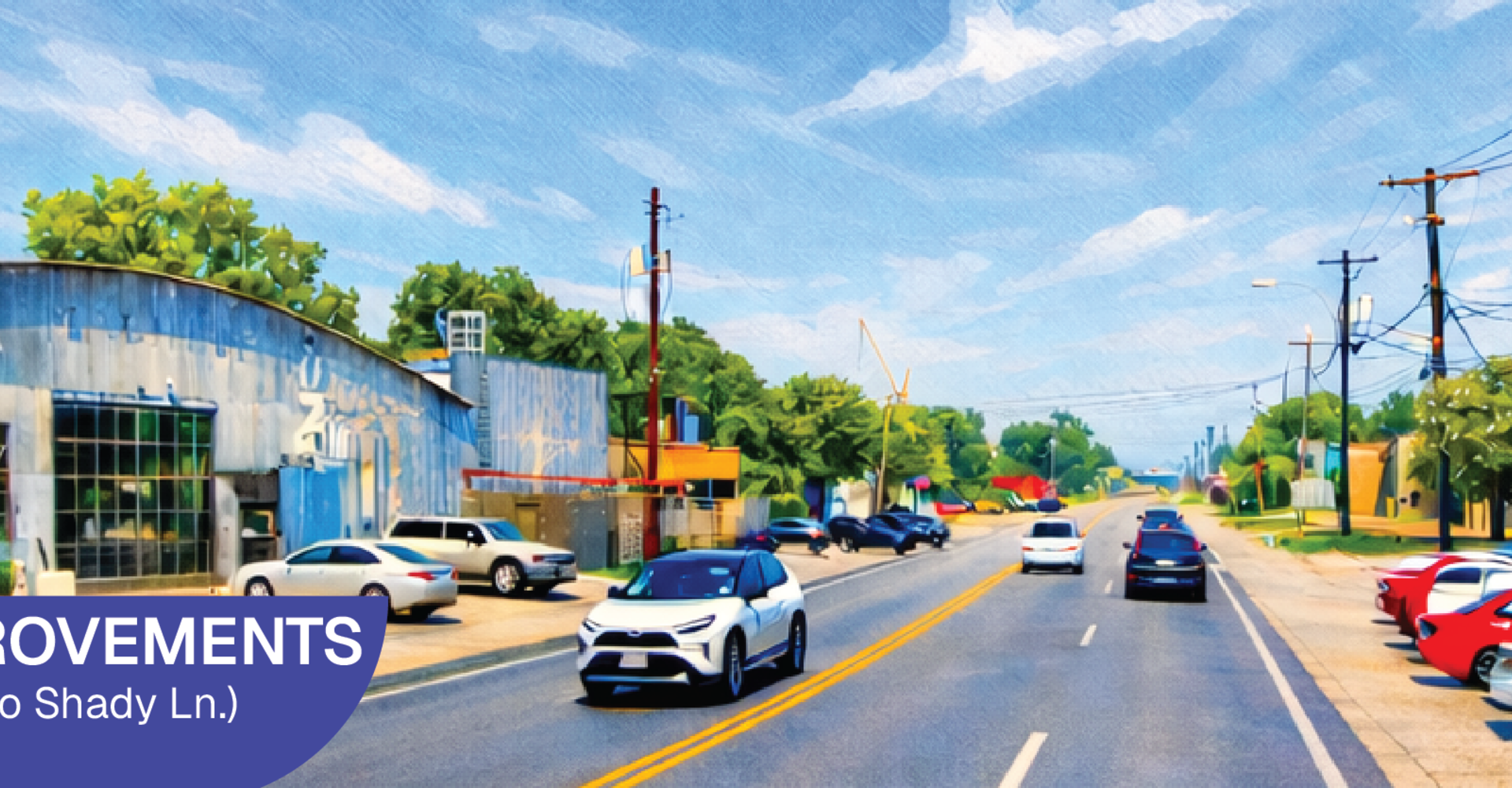
Motor vehicle congestion typically occurs at traffic signals because each direction of traffic must stop while the other directions move. In contrast, a lane between signals can carry about three times as many vehicles as a lane that must pass through a signal. Watch a video about how streets can become safer while still supporting existing motor vehicle traffic.
In the proposed design, the number of vehicle lanes at the Pleasant Valley and Shady Lane intersections would remain the same as they are today. These intersections determine how many vehicles Cesar Chavez Street can carry, since traffic signals control how many can move through the intersection at once.
Traffic analysis shows the proposed changes would have only minor impacts on travel times along the corridor. Travel times are expected to increase by only five to 15 seconds during the morning and afternoon peak periods. Lines of vehicles waiting at the Tillery Street and Springdale Road signals may increase slightly, by five to 10 vehicles in peak periods, but they are expected to clear with each signal cycle, as they do today.
The analysis also considered potential new development and additional traffic along the corridor. Because the proposed changes maintain the existing vehicle lanes at the Pleasant Valley Road and Shady Lane intersections, the corridor’s overall vehicle capacity would remain the same. This means the corridor would be able to handle potential future traffic from redevelopment while providing safer options for people traveling along the street.