
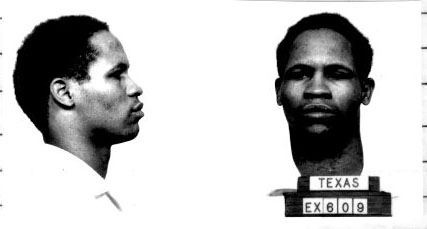
A condemned Houston man with a history of mental health issues during his nearly half-century stint on death row will not face a new trial after a Texas court vacated his death sentence, according to Harris County prosecutors.
Clarence Jordan, 70, whose death sentence was overturned Thursday by the Court of Criminal Appeals, is expected to have his punishment replaced with life imprisonment in the coming weeks. Prosecutors do not plan to seek a third death sentence against him, said prosecutor Andrew Smith, who oversees post-conviction writs for District Attorney Sean Teare.
Due to the age of the case, Jordan will be eligible for parole. He was convicted in the 1977 death of a Houston grocery store clerk, Joe Williams, following an armed robbery spree, and sentenced to die following two separate punishment trials.
TEXAS PRISONS: Death row loosens solitary confinement for first time in years
Article continues below this ad
The case is among three Harris County death penalty cases that have been reversed in recent years following concerns over mental competency — a legal threshold required for an execution to take place. All three inmates have been in prison for decades.
Prosecutors and other criminal justice stakeholders knew for most of Jordan’s sentence that he was ineligible for execution. Jordan was found incompetent for execution in 1987, but records show his case was largely ignored for decades until defense lawyers found he qualified for court-mandated relief because of flawed jury instructions.
Benjamin Wolff, an attorney with the state Office of Capital and Forensic Writs, likened Jordan’s case to Syed Rabbani, 60, and Raymond Riles, 75, whose decades-old sentences were similarly overturned because of jury instructions and after determinations that they were too mentally ill and incompetent for execution.
Rabbani and Riles were denied parole following the decisions, records show.
Article continues below this ad
Chronic health problems
Jordan was scheduled for execution in 1987 but narrowly avoided his fate after a judge deemed him incompetent during last-minute legal proceedings over his mental health.
That same year in Houston, Jordan briefly escaped custody amid what his then-attorney described as a fit of delusions. He believed that he was serving his country and that Army recruiters would grant him a pardon.
The Court of Criminal Appeals ultimately paused his execution until he was deemed competent again — but that never happened. He was imprisoned on death row for more than 35 years without litigation on his behalf.
The appellate court’s ruling reversed Jordan’s sentence last week. The justices found that the jury in his criminal case was given faulty instructions prohibiting them from considering mitigating evidence. The judges acknowledged Jordan’s history of mental competency issues and the unusual passage of time with little to no activity in his case.
Article continues below this ad
Jordan remains in custody in the hospital wing of the Estelle Unit in Huntsville rather than the Polunsky Unit, where death row inmates are typically housed.
Officials with the Texas Department of Criminal Justice denied a Houston Chronicle request to interview Jordan, citing his ineligibility for visits as he’s unable to consent to an interview.
Wolff said Jordan had chronic health problems and was bedridden. He declined to say whether he has communicated with Jordan, adding that attorney-client privilege prevented him from elaborating.
Jordan wrote to the court repeatedly following his conviction. His last known letter, which referenced his capital murder case, was filed last August with a 2006 postmark.
Deplorable conditions
Jordan was among 62 people with Harris County convictions on death row. About half of them had exhausted their post-conviction legal options and were eligible to be scheduled for execution when Teare took office, according to county records.
Article continues below this ad
Wolff was appointed to Jordan’s case in 2024, and he found that past prosecutors and at least one judge were aware that Jordan had suffered a head injury and stroke at some point.
A former judge over the court, Jan Krocker, wrote to the higher court in 2017 that prosecutors were not pursuing his execution following the stroke, according to court records. In the same email, Krocker detailed a message she wrote to the district attorney’s office in 2004 asking whether Jordan required a new mental health evaluation to reassess his competency — but prosecutors took no action.
Wolff similarly represented Rabbani, who was also at the Estelle Unit when his death sentence was overturned in 2023. He described seeing the Bangladesh native being housed in deplorable conditions in a moldy solitary cell with a soiled diaper and bedsheets. Jordan was housed next to Rabbani’s cell at the time, he said in court.
Rabbani was later transferred to the Carole Young Unit in Dickinson, where Wolff said he’s receiving hospice care.
Article continues below this ad
Prison officials wouldn’t let Wolff visit Jordan at his cell, as they had with Rabbani, following his appointment to the case.
Jordan was instead brought to Wolff in a wheelchair, he said.