
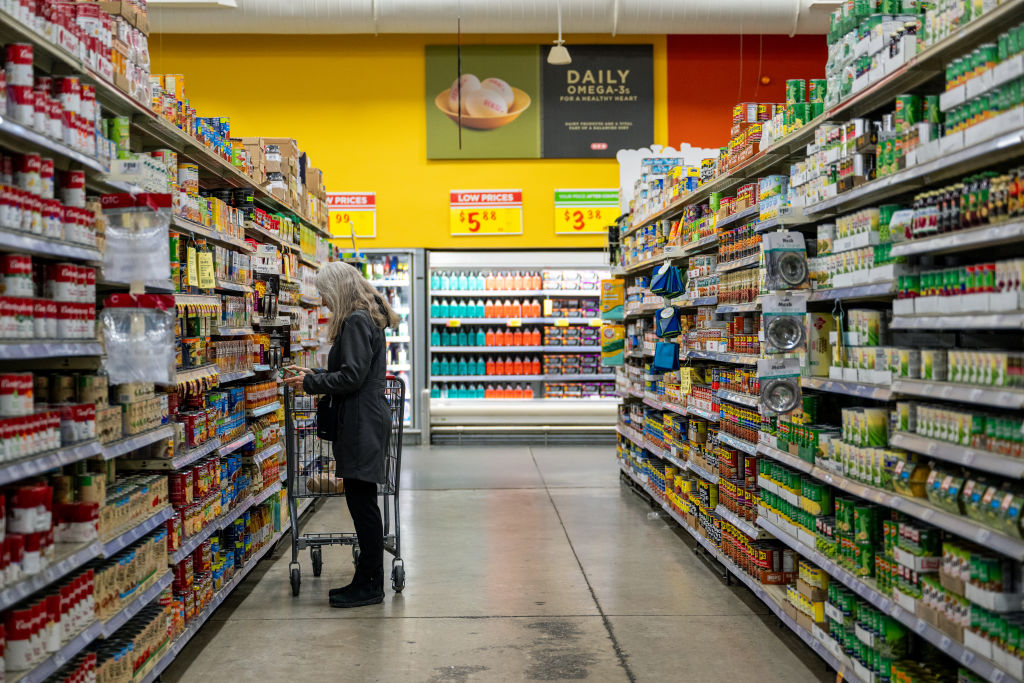
A 2026 Consumer Reports analysis compared the most and least expensive supermarkets across the country as well as in specific metro areas, with Walmart serving as the baseline average due to it being the “largest and most ubiquitous grocery retailer” in America. The result? H-E-B offers some extra bang for your buck compared to Walmart — but falters when matched up against some large-scale retail rivals.
Consumer Reports’ study found Costco Wholesale offered customers the best bargain prices, with its prices 21.4 percent cheaper than Walmart’s when evaluating it on a national average scale. Fellow big-box competitor BJ’s Wholesale Club trailed slightly behind, with its costs a marked 21 percent cheaper than Walmart.
Lidl, Aldi and WinCo rounded out the Top 5 at price savings of 8.5 percent, 8.3 percent and 3.3 percent, lower than Walmart, while H-E-B eked just behind, at 0.2 percent cheaper costs than the baseline. It was a similar trend when evaluating grocery retailers in the metro area, with Dallas and Fort Worth representing Texas in that analysis.
Once more, Costco had the lowest prices in the North Texas area, recorded at 18 percent cheaper than Walmart. Aldi came in at a 5 percent net savings average, followed by WinCo at 2.3 percent and H-E-B once more at 0.2 percent.
On the flip side, popular chains with Texas footprints — Target, Kroger, Fiesta, Trader Joe’s and Whole Foods — didn’t fare quite as well. Whole Foods, founded in and headquartered in Austin, was the most expensive comparison at a staggering 48 percent more expensive regional average compared to Walmart. Trader Joe’s average costs in the DFW metro were 33 percent pricier, with Fiesta landing at 21.7 percent, Kroger at 14.7 percent and Target at 9 percent compared to the baseline.
“Unlike other budget areas where prices have risen in recent years—think insurance and auto repairs—a little bit of strategic planning can save a cartload of money, and you and your family can still eat very well,” the report read in part. “One effective strategy is simply shopping at the right stores. Most Americans buy food from at least two retailers each week. But which ones you choose can have a big impact on your overall spending.”