
April 18, 2026
By Nehal Malik
Tesla is continuing its aggressive push into the autonomous ride-hailing market, and this time, the Lone Star State is getting a double dose of the future. After months of speculation and private testing, the company has officially expanded its Robotaxi service into Dallas and Houston.
The announcement was made via the official Robotaxi account on X, which simply stated: “Robotaxi now rolling out in Dallas & Houston.” This move effectively triples Tesla’s presence in Texas, joining the existing pilot program in Austin as the company works toward its goal of a global, unsupervised ride-hailing network.
My friend just shared his first unsupervised Robotaxi ride in Dallas, TX! pic.twitter.com/xsYRqZSoRX
— Innovating (@InnovatingCoin) April 18, 2026 Mapping the New Geofences
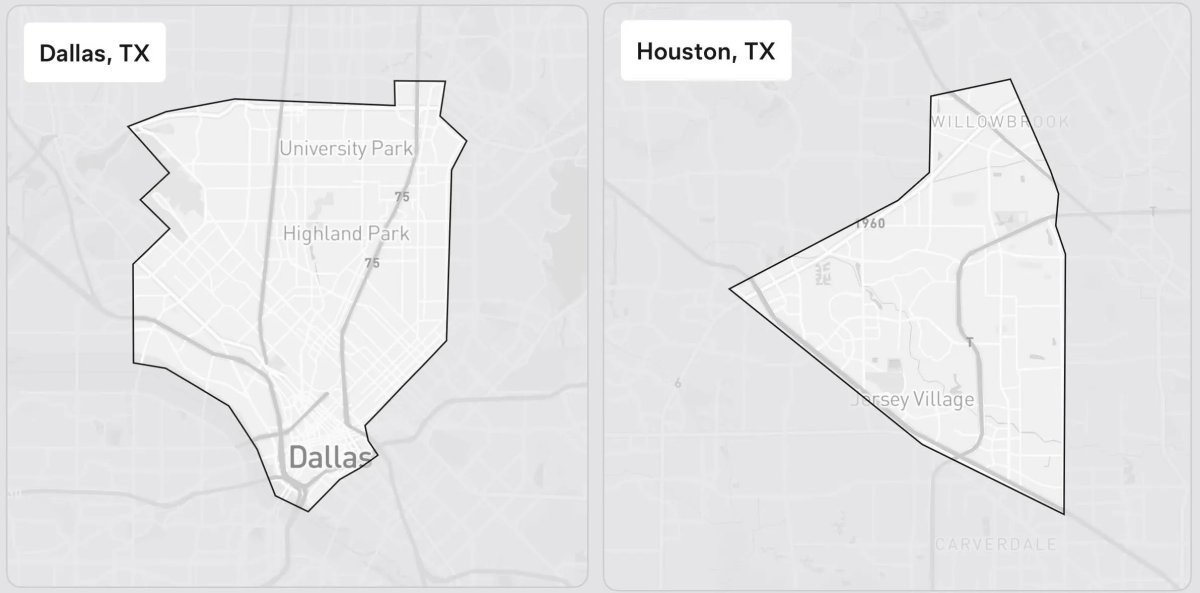
For the initial launch phase, Tesla is keeping the operating areas relatively tight. In Houston, the geofence focuses on the Northwest region, forming a triangle that covers the Jersey Village and Willowbrook areas. This initial zone appears to be around 12 to 15 square miles.
Dallas, on the other hand, is launching with a significantly larger footprint. The service area there covers a complex trapezoid-shaped region that includes much of the city’s “urban core” and the Park Cities, encompassing roughly 30 to 35 square miles.
While these areas might seem modest, they follow the playbook Tesla established in Austin. When the service first launched there last year, it covered a small 20-square-mile fraction of the city. Today, Tesla’s Austin geofence has exploded to approximately 245 square miles, growing over 12 times its original size. We expect a similar expansion pattern for Dallas and Houston as the system gathers more data on local traffic patterns and infrastructure.
Unsupervised Robotaxi
Tesla announced it’s launching robotaxis in Dallas and Houston, and users have now confirmed the service is unsupervised. This is a surprising move, as many expected Tesla to launch a supervised service in new areas before removing the safety monitors, much like they did in Austin.
However, it’s not clear whether these new areas include only unsupervised service or a mix of supervised and unsupervised. In the San Francisco Bay Area, the service still uses a safety driver behind the wheel, while Austin features a mix of cars with safety monitors in the passenger seat and fully autonomous units.
For this new Texas expansion, Tesla shared a video of Robotaxi rides with no one in any of the front seats in both cities, seemingly confirming an unsupervised service. This means that for riders in Dallas and Houston, the car will arrive and navigate to the destination with no human hand-holding.
Robotaxi now rolling out in Dallas & Houston 🤠 pic.twitter.com/G3KFQwqGxB
— Tesla Robotaxi (@robotaxi) April 18, 2026
That said, we might see the company take a hybrid approach during these early days. Just like the more established sibling in Austin, Tesla could operate a mix of both supervised and unsupervised vehicles. Some riders may still find a safety monitor present as Tesla continues to gather data and refine its “edge case” handling in these new urban environments. While the official “unsupervised” tag is a major milestone, we’ll be keeping a close eye on social media to see the ratio of truly empty front seats as the first public rides begin this weekend.
Timing is Everything
The timing of this launch is likely no coincidence. Tesla is scheduled to release its Q1 2026 earnings and present its financial performance to investors on Wednesday, April 22. By launching in two major Texas cities just days before the call, Tesla leadership has a massive “win” to discuss with investors who are looking for progress on the company’s pivot toward AI and robotics.
This Texas expansion is just the beginning of a very busy first half of the year for the company’s robotaxi ambitions. Tesla has already been spotted staging for a launch in Phoenix, and there are plans to bring the service to Miami, Orlando, Tampa, and Las Vegas this year.
As Tesla’s dedicated ride-hailing app continues to mature, the dream of a car that makes you money while you sleep is moving closer to reality. For residents in Dallas and Houston, the chance to summon a self-driving Tesla is finally here, marking another major milestone in the slow but steady death of the traditional taxi.
Subscribe to our newsletter to stay up to date on the latest Tesla news, upcoming features and software updates.
April 18, 2026
By Karan Singh
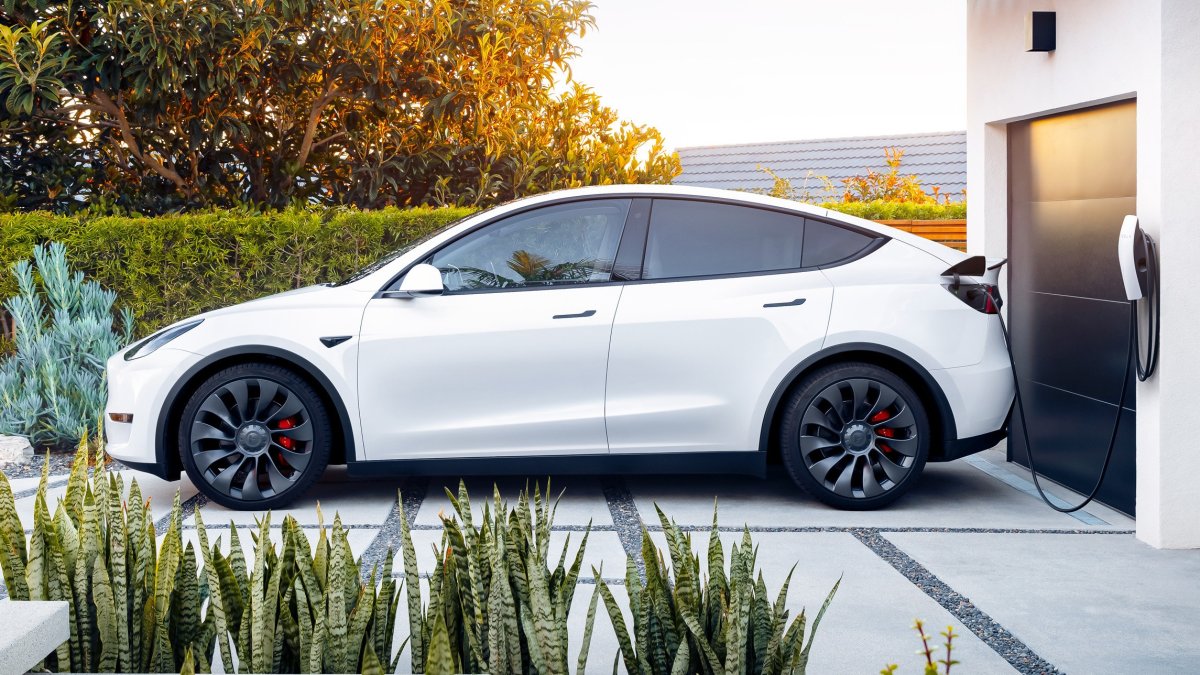
For new electric vehicle owners, shifting away from the gas station model is often the biggest adjustment. Rather than making a dedicated stop to refuel, the EV paradigm centers on overnight home charging. You simply plug in your vehicle when you park for the evening and wake up to a full battery every morning.
However, navigating the world of charging hardware, electrical amperages, and installation logistics can be overwhelming. Using the immensely popular Tesla Model Y as our benchmark, here is everything you need to know about setting up your ideal home charging experience.
Gold Standard: Wall Connector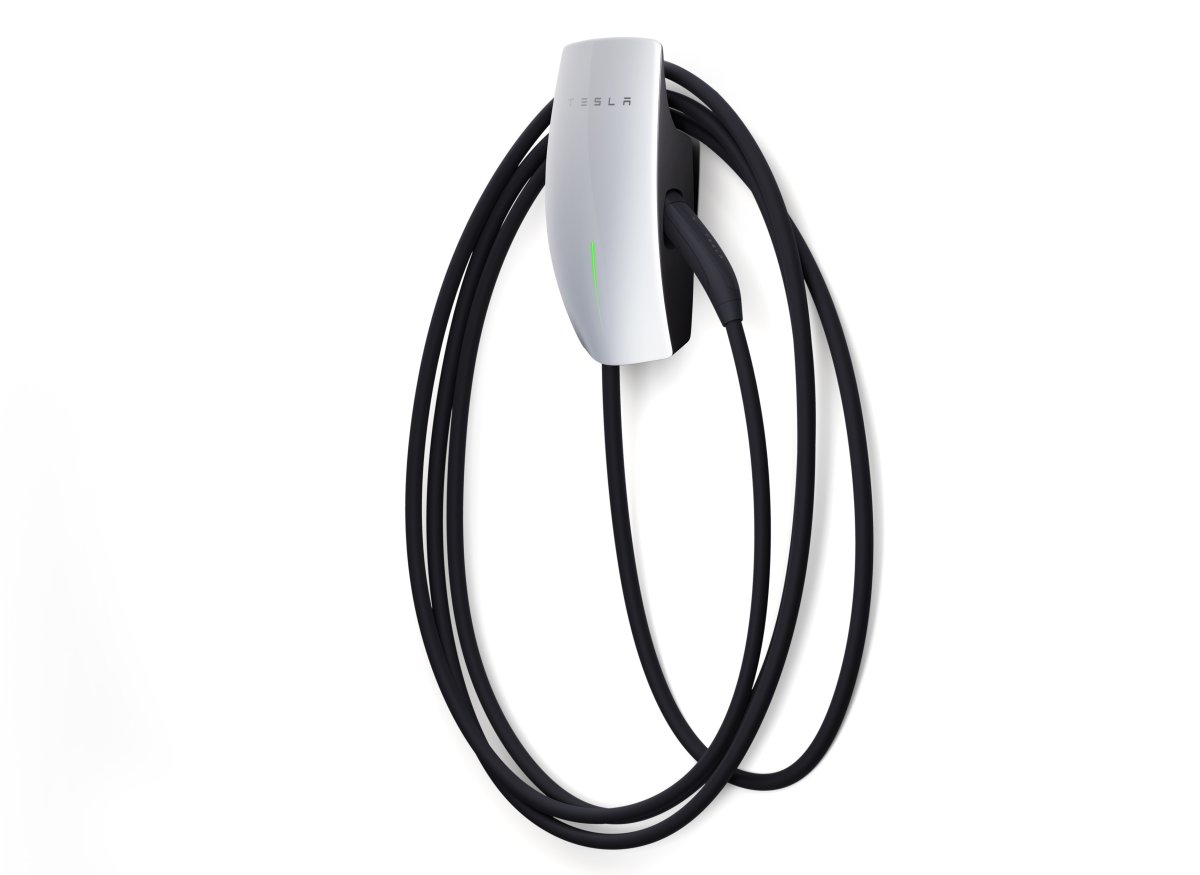
If you own a single-family home and want the absolute fastest residential charging speeds, a dedicated hardwired unit is the way to go. Tesla’s official Wall Connector currently retails for around $450 and can deliver up to 48 amps of continuous power on a dedicated 60-amp circuit.
For a Model Y, this translates to roughly 44 miles of range added per hour of charging. This provides incredible peace of mind if you frequently arrive home with a near-empty battery and need to head back out quickly.
While the maximum amperage is 48 amps, it can be configured to a lower amperage to meet your home’s capability.
The caveat here is the installation cost. Because the Wall Connector requires a hardwired connection directly to your electrical panel, most owners would want to hire a licensed electrician. Depending on the physical distance from your panel to the garage, and whether your home requires a larger panel upgrade to handle the extra electrical load, installation can cost anywhere from $500 to over $2,000.
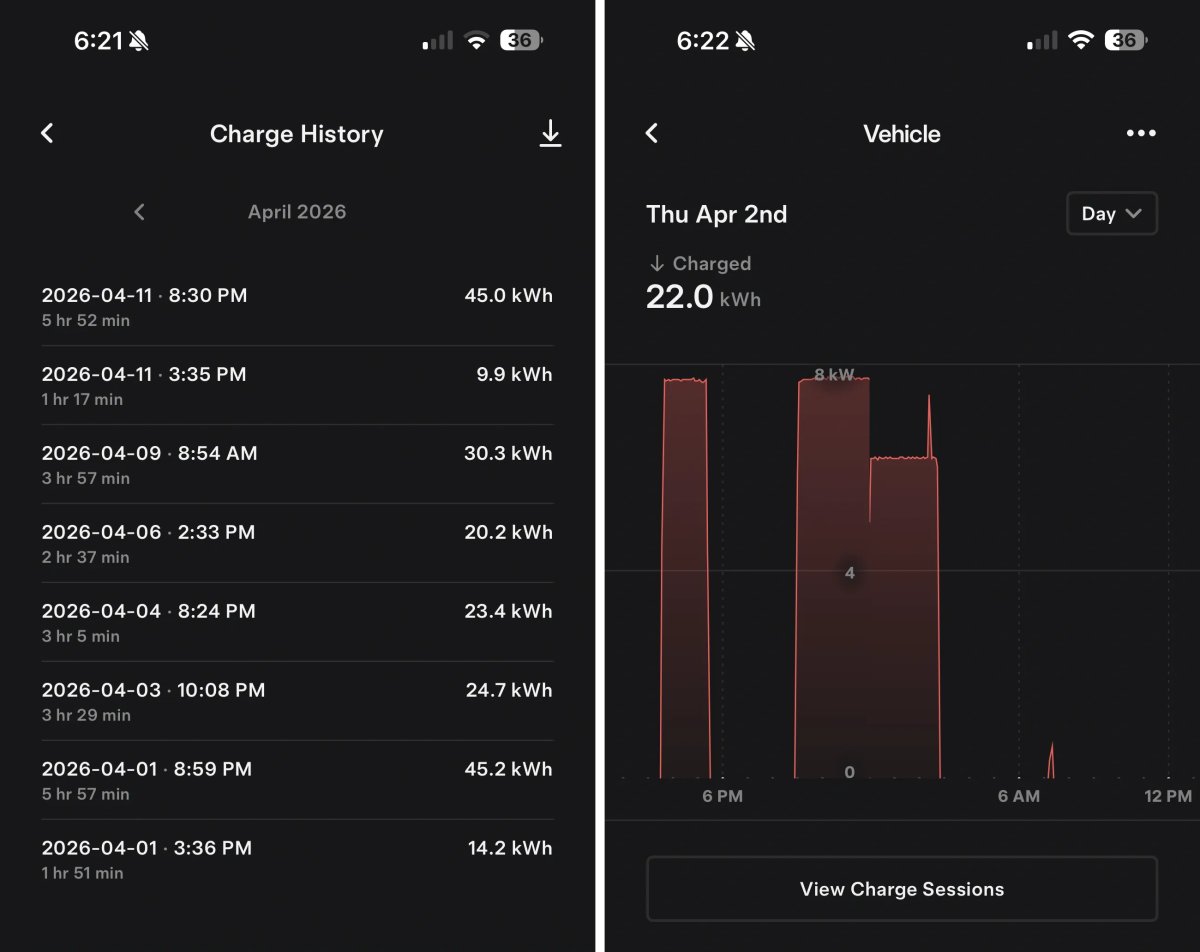
In addition, the Wall Connector can connect to WiFi and offer additional options not available with other solutions. You can limit charging to certain vehicles or times of day and gain better insight into your charging habits.
The Wall Connector will track your daily charging and display it directly in the Tesla app.
Versatile Option: Mobile Connector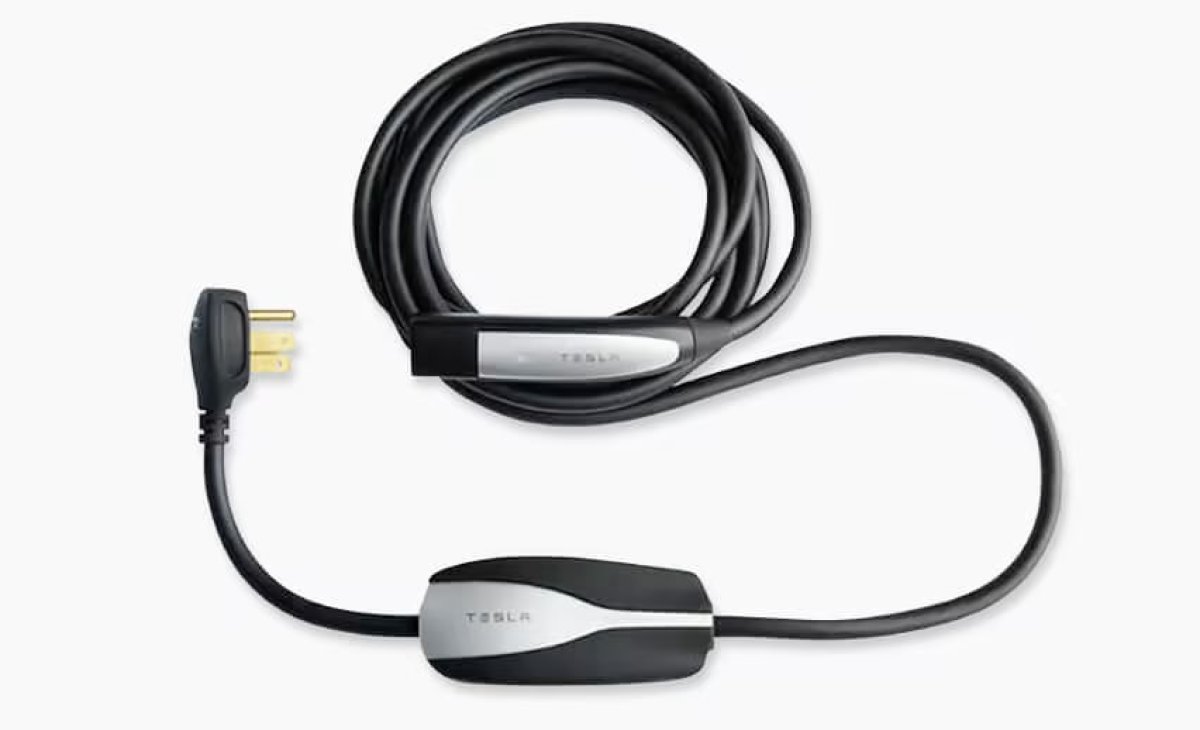
If you are looking for a more cost-effective or flexible solution, the Tesla Mobile Connector is an excellent choice. Retailing for around $300, this portable unit lets you swap out adapter plugs to match various electrical outlets.
If you plug the Mobile Connector into a standard 120-volt household outlet, it will draw 12 amps. This is commonly referred to as “trickle charging” and will only add about three to four miles of range per hour. While this may sound slow, a 12-hour overnight charge will still yield roughly 40 miles of range, which is enough to cover the daily commute of the average North American driver. However, if you travel anything more than your commute, or have cold winters, trickle charging will quickly become a chore.
For significantly faster speeds without the hardwired installation, you can have an electrician install a standard 240-volt outlet, much like the one your clothes dryer uses. Plugging the Mobile Connector into a 240-volt NEMA 14-50 outlet allows the vehicle to draw up to 32 amps, returning roughly 30 miles of range per hour.
Installing a high-voltage outlet is generally much cheaper than hardwiring a permanent Wall Connector, making this the sweet spot for most homeowners.
Matching Hardware to Your Lifestyle
When deciding between a 12-amp trickle charge, a 32-amp outlet, or a 48-amp Wall Connector, the most important metric is your actual daily mileage. The beauty of overnight charging is that the speed rarely matters while you are asleep.
If you drive less than 20-30 miles a day, a standard household outlet may serve you perfectly fine. If you drive 40+ miles a day on average, you will absolutely need a 240-volt solution. The goal is simply to replenish what you used that day, rather than trying to charge a battery from 0 to 100 percent every day.
The Apartment Dweller Dilemma
While homeowners can easily dictate their charging setups, renters and apartment dwellers face a completely different landscape. If you live in a multi-unit dwelling, your charging options rely heavily on your building management.
Many modern apartment complexes are beginning to install shared Level 2 charging stations in their parking garages. These are typically managed by third-party networks that bill you directly for the electricity used. However, sharing a handful of chargers among dozens of EV-driving residents requires active coordination and strict etiquette to ensure everyone gets a turn to plug in overnight.
If your building does not currently offer charging, some landlords are open to installing 240-volt outlets in assigned parking spaces, especially if the tenant agrees to cover the initial installation cost.
Street Charging Solutions
For drivers who rely entirely on street parking, the feasibility of EV ownership depends almost entirely on local infrastructure. In North America, residential street charging is still incredibly rare. However, the Canadian province of Quebec serves as a shining exception. The widely successful Circuit Électrique network provides thousands of curbside Level 2 chargers throughout Montreal and surrounding areas, allowing urban residents to plug in right on the street.
Across the Atlantic, European countries have integrated street charging seamlessly into urban life. Cities across the United Kingdom and Germany have retrofitted thousands of curbside lampposts with charging sockets. Residents simply park on the street, plug a portable cable directly into the nearest streetlight, and charge overnight just as easily as a homeowner with a private garage.
Comparing Your Home Charging Options
To help summarize the various paths to home charging, here is a breakdown of standard hardware configurations based on the Tesla Model Y. Note that the Expected Costs section provides broad estimates that include both the charging hardware and the typical fees for professional electrical installation.
Hardware Option (Circuit)
Charge Rate
0 to 100% Charge Time
Expected Upfront Costs
Mobile Connector
12A / 120V
~3 to 4 miles per hour
~50+ hours
$300 (charger Only)
Mobile Connector
24A / 240V
~21 miles per hour
~14 hours
$500 to $800
Mobile Connector
32A / 240V
~30 miles per hour
~10.5 hours
$600 to $1,000
Wall Connector
48A / 240V
~44 miles per hour
~7 hours
$950 to $2,500+
April 18, 2026
By Nehal Malik
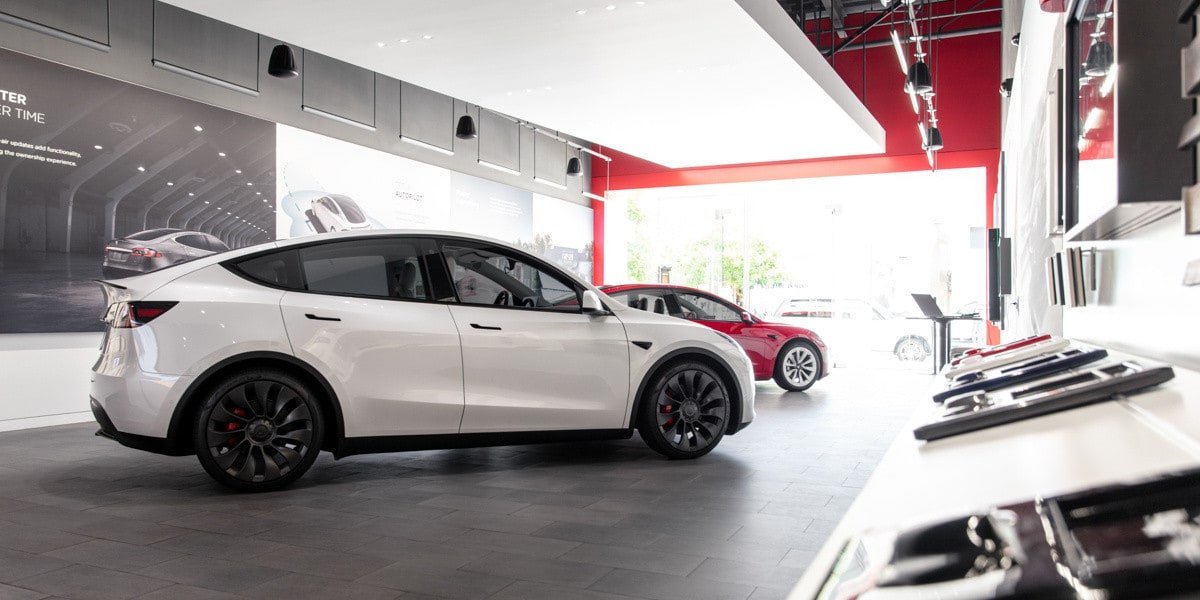
Tesla is heading to court to challenge one of the final frontiers of the traditional car dealership model. The automaker has officially filed a lawsuit against the state of North Dakota, seeking the right to open its first two showrooms and service centers in Bismarck and Fargo.
For years, North Dakota law has required vehicle manufacturers to sell their products through independent, third-party franchised dealerships. Tesla, which famously avoids the middleman to sell directly to consumers, argues that these decades-old rules are an unnecessary barrier. According to a report by the Minot Daily News, the case is now in the hands of District Judge Bonnie Storbakken.
A Battle Over Definitions
The core of Tesla’s legal argument relies on a specific reading of state law. Currently, North Dakota defines a “manufacturer” as a person who assembles or imports a vehicle and sells it to dealers in the state for resale. Tesla argues that because it sells directly to its customers and does not use third-party dealers at all, it technically doesn’t fall under that legal definition.
“Tesla just wants to be able to sell its vehicles in North Dakota, and not force customers who would wish to purchase a Tesla vehicle to have to drive to Minnesota or another state to do it,” said Ari Holtzblatt, one of Tesla’s attorneys. Currently, the more than 800 Tesla owners in North Dakota have to leave the state just to take delivery of their cars or receive first-party service.
The state’s Assistant Attorney General, Michael Pitcher, isn’t buying it. He argued during a recent hearing that “Tesla can operate in North Dakota the same way that every other manufacturer does. They can appoint dealers, they can enter into franchise agreements, and they can sell through that.” From the state’s perspective, the law isn’t stopping Tesla from doing business; it’s just regulating how the company’s cars get into owners’ hands.
Challenging the Franchise Model
Tesla has a long history of fighting these “protectionist” franchise laws across the U.S. In many cases, Tesla’s legal victories have paved the way for other EV startups like Rivian and Lucid to secure their own direct-sales exceptions. In some of the more restrictive states, Tesla has even found innovative workarounds by partnering with Native American tribes to open stores on sovereign tribal land.
The direct-to-consumer model is vital for Tesla because it allows the company to control the entire customer experience and maintain higher margins by cutting out dealer markups. For the customer, this often translates to a more transparent buying process without the high-pressure sales tactics or hidden fees associated with traditional dealerships.
The Road Ahead for North Dakota
North Dakota has historically lagged behind in EV infrastructure, though the state is slowly catching up with a growing number of Supercharger locations and charging ports along the I-94 corridor. Tesla’s attempt to establish a physical presence in the state is a clear sign that the company sees untapped potential in the region.
If the court rules in Tesla’s favor, it won’t mean instant licenses, but it will give the company the green light to reapply with the Department of Transportation. As the automotive world shifts toward an electric future, these legal battles in North Dakota will likely determine how much choice consumers actually have when it comes to how they buy their next car.