
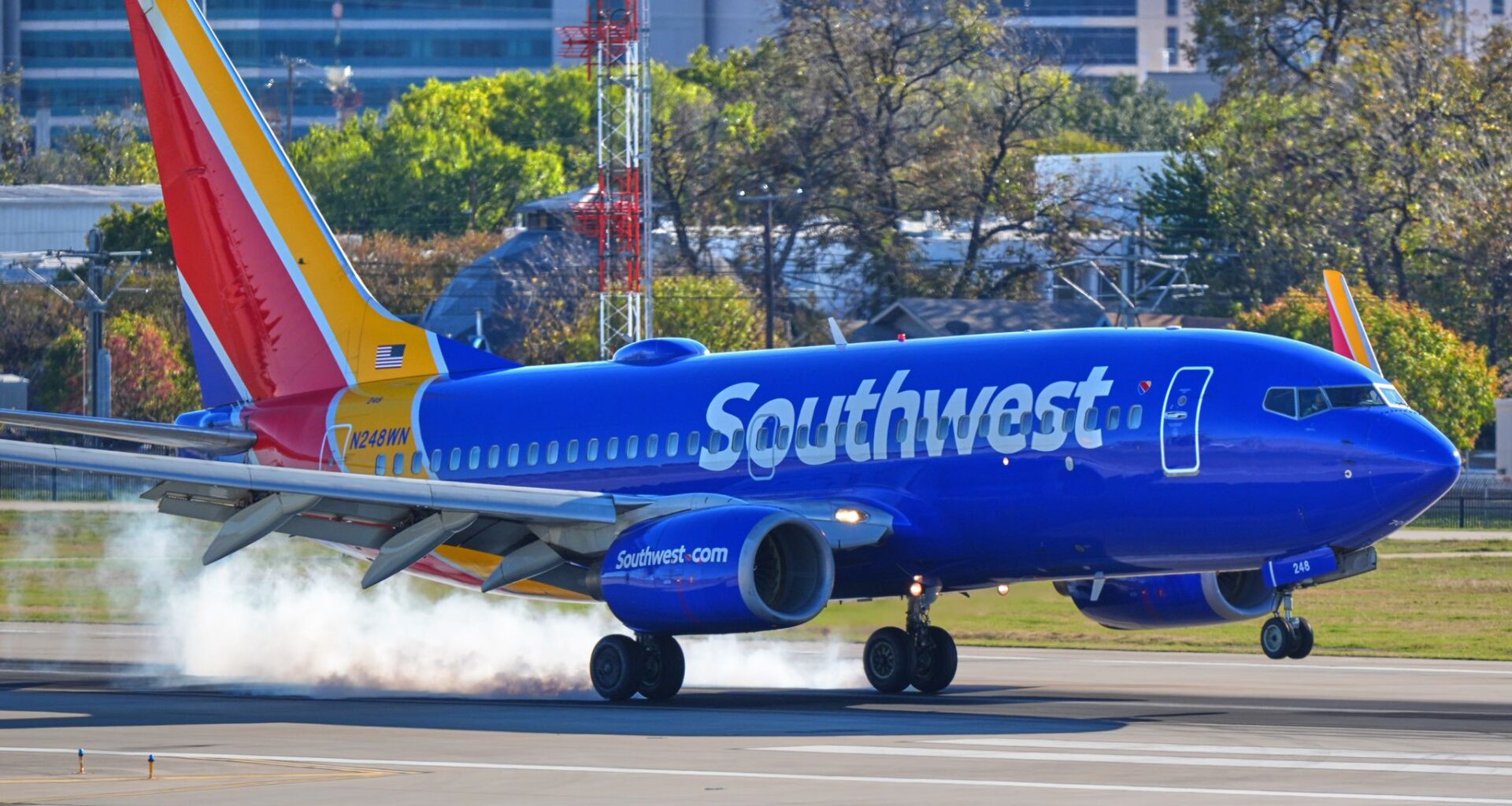
Southwest Airlines is making changes to a key safety policy it says may reduce the risk of battery fires.
Effective Monday, the airline, which is the dominant carrier at Dallas Love Field, is tightening its restrictions on portable chargers. Airlines have spotlighted portable chargers as an area of concern in recent years following an uptick in incidents involving lithium batteries aboard aircraft.
In a message to employees earlier this month that was shared with The Dallas Morning News, Southwest’s VP of Safety and Security Dave Hunt said the policy was being altered to “strengthen our ability to contain and mitigate lithium battery incidents, including reducing the risk of battery fires.”
“This new policy, along with our existing standards for lithium batteries used in mobility assistive devices, is part of our 2026 safety and security objectives, which focuses on improving our safety and security culture while reducing injuries, damage, and security events,” Hunt wrote.
“This policy also demonstrates our continued leadership as one of the first U.S. carriers to adopt higher safety standards.”
Here is the most important information you need to know if you’re a frequent Southwest Airlines traveler.
What are the changes to Southwest’s lithium battery safety policy for portable chargers?
Hunt said customers are now limited to only one lithium portable charger (power bank) per person and the power bank device cannot exceed 100 watt hours. Also, portable chargers are no longer allowed in the overhead bins and must be either stored in customers’ under-seat carry-on luggage or on their person.
Portable chargers cannot be re-charged using charging ports onboard aircraft, Hunt said.
Customers can review the full details of Southwest’s guidelines on lithium batteries, portable chargers and more on the airline’s website.
What previous policies remain in place?
There are a few things regarding the lithium ion battery policy that are staying constant:
How will passengers know about these restrictions?
Customers will be notified about the updated policy prior to their trip and when checking in for their flight, according to Southwest. Hunt added that on their day of travel, customers will be provided communication through digital signage, announcements and one-on-one interactions.
How is the policy change influenced by Southwest’s push to retrofit aircraft with in-seat charging?
Hunt emphasized that in-seat power will continue to expand, “reducing reliance on portable chargers and supporting a more consistent, convenient inflight experience.” By the middle of 2027, Southwest’s entire fleet will be equipped with in-seat power, Hunt said.