
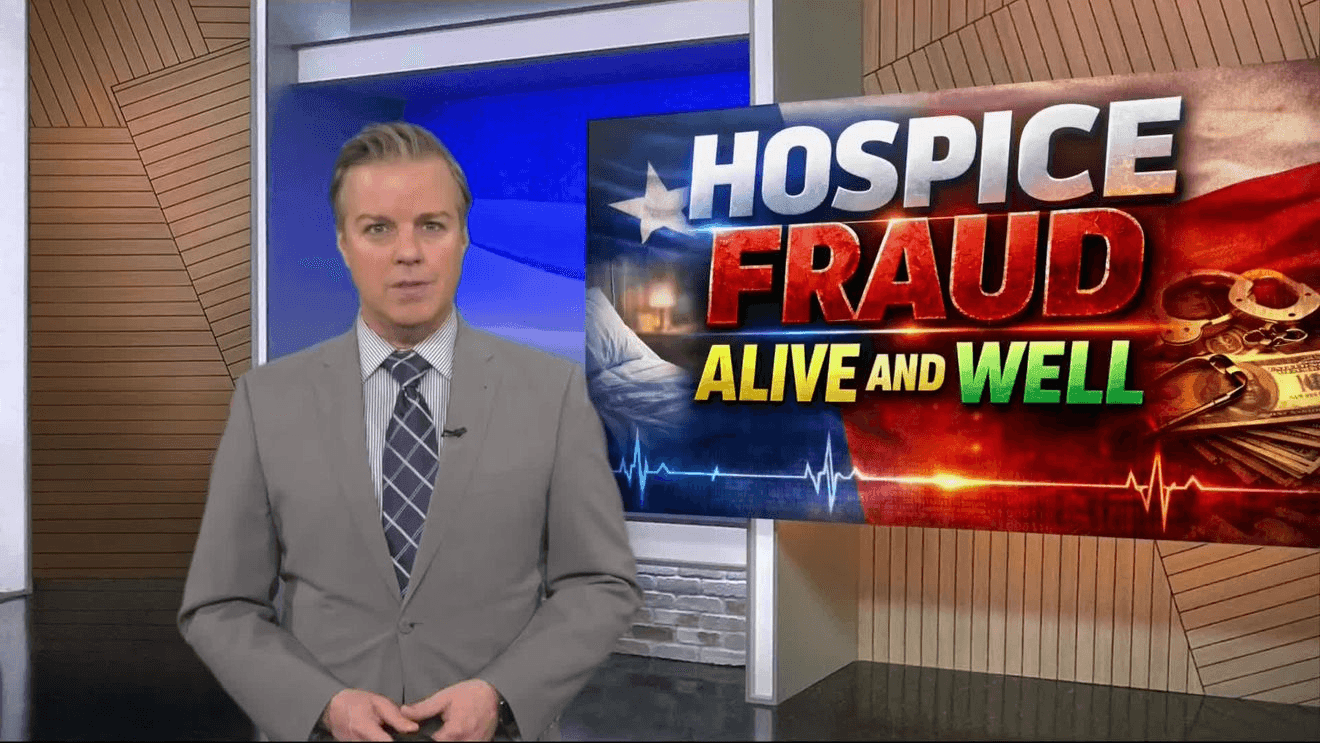
A sweeping hospice fraud crackdown in California is raising new concerns about similar schemes here in Texas.
Federal prosecutors say a massive fraud ring in California cost taxpayers an estimated $267 million. In that case, 21 people are now charged, accused of using stolen identities and creating fake hospice companies to bill Medicare for care meant for terminally ill patients.
But experts warn this is not just a California problem.
A recent presentation before Texas lawmakers suggests troubling patterns are emerging in the Lone Star State—potentially signaling widespread abuse in the hospice system.
Lisa McNair, President and CEO of Hospice Brazos Valley and treasurer of The Non-Profit Hospice Alliance, testified before the Texas Senate Committee on Health and Human Services on April 8. She pointed to data she says should raise immediate red flags.
“Seven Texas hospices had 100 percent of live discharges,” McNair told lawmakers. “You don’t go on hospice to leave alive. I regret to say, but you come on because we want to have you have a journey to your death.”
In legitimate hospice care, patients are typically in the final stages of life, and only a small percentage are expected to recover enough to be discharged. A normal live discharge rate is under 10 percent, and at her hospice, it’s seven percent with patients often seeking alternative treatment and eventually returning months later to face their death with compassion and dignity.
But the numbers in Texas tell a very different story.
According to McNair’s testimony:
Seven hospices reported that every single patient was discharged alive.Twenty-five hospices had live discharge rates above 90 percent.61 were above 75 percent.171 hospices reported that more than half of their patients survived.
Those figures, she says, are highly unusual and could indicate fraudulent activity.
The rapid expansion of hospice providers in Texas is also drawing scrutiny.
There are currently 1,366 licensed hospices operating statewide. McNair says 833 of those licenses were issued between 2021 and last year—a nearly 100 percent increase since 2020.
That kind of explosive growth has opened the door for bad actors to enter the industry.
Another concern: hospice providers with extremely low patient counts.
McNair testified that 139 Medicare-certified hospices in Texas treated 10 or fewer patients last year—numbers she says allow them to avoid certain reporting requirements.
“If you do not have 11 members that you’re taking care of at one time, on an average, then you do not have to report data,” she said. “You do not have to report quality data, you really fly right under the radar screen.”
As for the financial impact, there is no single statewide estimate for hospice fraud in Texas.
However, federal cases filed in the state show alleged schemes ranging from tens of millions of dollars to more than $110 million in one ongoing case in the Houston area. Prosecutors in Fort Bend County say that case involves a criminal fraud scheme centered on hospice billing.
With billions of taxpayer dollars flowing through Medicare, legitimate hospice officials are urging closer oversight before more money is lost—and before vulnerable patients are caught in the middle of fraudulent care.