
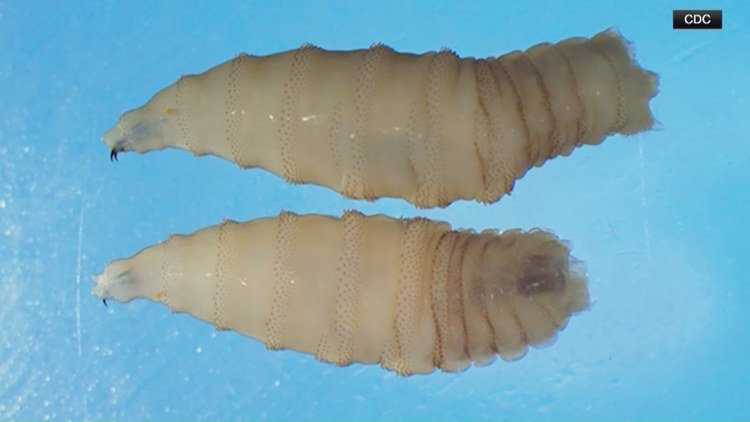
On Monday, Texas Agriculture Commissioner Sid Miller announced the New World screwworm is inching closer to the Texas border from Mexico.
According to the USDA, a case has been confirmed in a young calf located only 60 miles from Texas, in the Mexican state of Nuevo León. This marks the northernmost active case in Mexico, posing a high risk to the livestock industry.
The New World screwworm is a parasitic fly whose larvae feed on the open wounds of warm-blooded animals, including cattle, wildlife and, in rare cases, humans. Left untreated, an infestation can be fatal to livestock.
According to Miller, every available resource is being deployed to stop the screwworm from spreading into Texas.
Last month, the federal government approved a construction contract for a $750 sterile fly production facility at Moore Air Base in Edinburg. By November 2027, the facility is expected to reach its initial production goal of 100 million sterile flies per week, eventually scaling up to 300 million per week.
Because female screwworm flies only mate once in their lives, mating with a sterile male means their eggs never hatch and the local population collapses over time.
While the production facility is under construction, a new sterile fly dispersal site at Moore Air Base is already operational. USDA officials say the site allows them to distribute sterile flies more efficiently across northern Mexico and into southern Texas itself.
“The fact that this detection falls within the current sterile fly dispersal zone tells you just how real and active this fight already is,” Miller said. “USDA has been working with Mexican authorities to track and respond, and those efforts matter, but this is no time to let up.”
There is currently no confirmed New World screwworm anywhere in Texas. Since June 2024, more than 2,000 flies have been trapped and tested across the state. Not one has tested positive, but officials aren’t letting their guard down.
“I’ve said it before, and I’ll say it again: when it comes to protecting our livestock industry we must go on offense,” Miller said. “That means ramping up surveillance, tightening coordination at the border, and making absolutely certain every available resource is deployed to stop this dangerous pest.”