
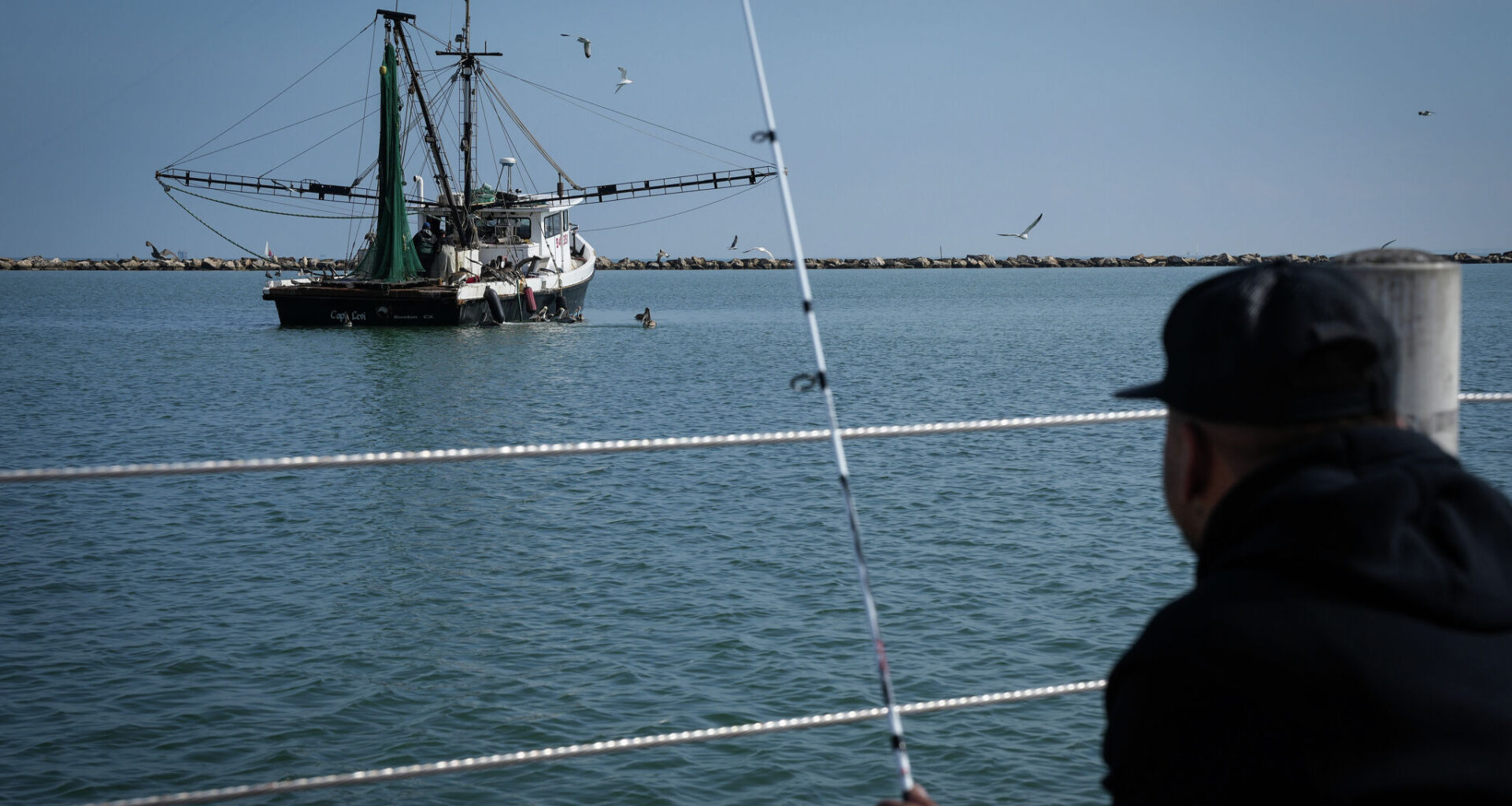
In this file photo, a fishing boat works just offshore in the Corpus Christi Bay. In Corpus Christi, a proposed seawater desalination project faltered amid rising costs and environmental concerns, writes Vanessa Puig-Williams.
Jon Shapley/Associated Press
Texas is learning, in real time, what happens when water planning lags behind water reality. Nowhere is that clearer than in Corpus Christi, where a convergence of drought, infrastructure limits, and stalled projects have forced leaders to look urgently toward groundwater to address the city’s water supply shortages. At the same time, parts of East Texas — long assumed to be water-rich — are confronting their own tensions as groundwater is eyed for export to meet demand elsewhere.
These are not isolated problems. They are signals of a deeper truth: Texas’ increasingly stressed water systems are interconnected, and groundwater, already the state’s largest source of water, can no longer be treated as an afterthought.
Article continues below this ad
In Corpus Christi, much of the current debate focuses on what could have been done differently. A proposed seawater desalination project faltered amid rising costs and environmental concerns, particularly related to brine discharge into sensitive coastal ecosystems. Perhaps if Texas had meaningful regulations designed to protect our bays and estuaries, the environmental concerns would have been quelled. As it stands, however, without that project — and with water supplies in local reservoirs vanishing — Corpus has few options left. Groundwater is now being discussed as an emergency supply.
That framing is the problem. Groundwater should not be an emergency escape hatch. It should be a carefully managed, long-term component of a diversified water portfolio. When groundwater becomes the default fallback, a victim of reactive decision-making, the consequences ripple far beyond the city pumping it.
We are seeing those ripples across the state. In East Texas, proposals to transport groundwater to other regions have sparked local opposition. Communities who depend on groundwater for their drinking water and economic resilience and landowners whose private property is at stake are asking reasonable questions: How much water will be taken? What will it do to wells, springs and land stability? Who benefits — and who bears the risk?
Make Dallas News a preferred source so your search results prioritize writing by actual people, not AI.
Add Preferred Source
The answers are not always clear. In some areas, like San Patricio County, where Corpus has approved purchasing and importing groundwater, local groundwater conservation districts (GCDs) lack the resources, data or regulatory frameworks to fully evaluate long-term impacts like aquifer depletion or land subsidence. In other areas, there is no district at all, leaving a patchwork of oversight that fuels uncertainty and mistrust.
Article continues below this ad
The result is predictable: Communities react in fear, not because they necessarily oppose groundwater development outright, but because there is no system to protect them. This is why landowners in Nueces County, where Corpus is also looking to pump additional groundwater, are scrambling to create a local GCD.
The challenges in Corpus Christi are a microcosm for Texas as a whole. As population growth, climate variability and aging infrastructure strain surface water supplies from reservoirs and rivers, more regions will turn to groundwater. Without proactive management, today’s emergency measures could become tomorrow’s crises.
The solution is not to reject groundwater development. It is to manage it deliberately, transparently and with science at the center. That means investing in aquifer data and modeling, setting clear limits on sustainable yield and ensuring that local communities have a meaningful voice in decisions.

By signing up, you agree to our Terms Of Use and acknowledge that your information will be used as described in our Privacy Policy.
It also means recognizing that sound water planning must integrate water supply development with water management. Surface water, groundwater, reuse, desalination and conservation are all part of a single system, and decisions in one area inevitably affect the others.
Article continues below this ad
We can’t build our future water supply with blinders on. Texas can either start building water resilience now or continue reacting to crises, one community at a time.
Vanessa Puig-Williams is senior director of climate resilient water systems at the Environmental Defense Fund.