
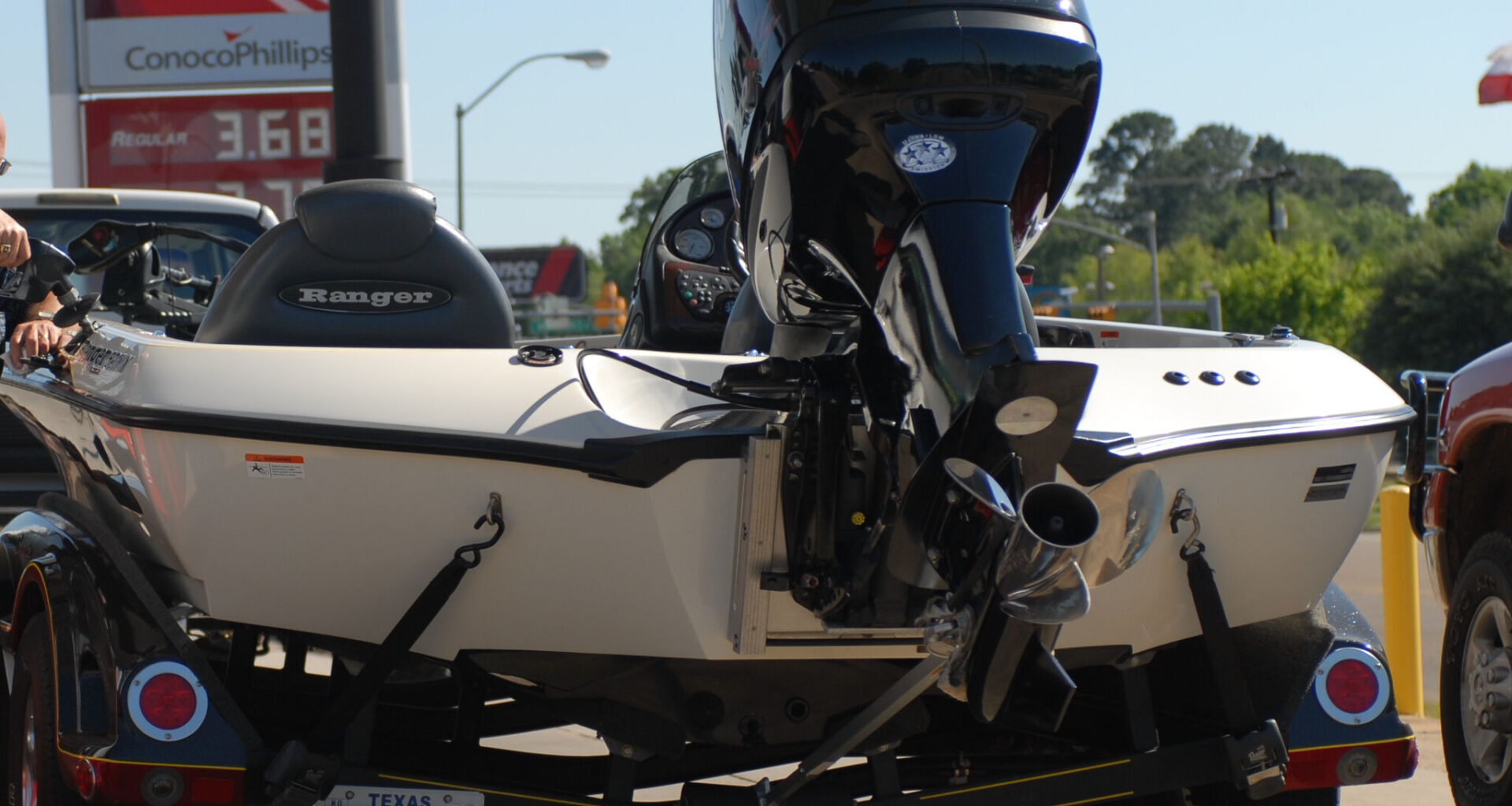
Dragging a boat behind a tow vehicle can reduce fuel economy as much as 30 percent, possibly more if something is preventing the trailer from rolling as easily as it should.
Photo by Matt Williams
An Abe Lincoln won’t get you near as far down the road as it used to. With the average price of unleaded nudging $3.78 per gallon in Texas and diesel nearing $5.40, many folks are looking for ways to get more bang for their buck.

Some people are sure to battle rising gas prices by going out less and staying home more. Fishermen and pleasure boaters aren’t likely to follow the lead.
Article continues below this ad
When it comes to trimming costs, most anglers will be more likely to put some of their Rat-L-Trap money into their fuel tanks rather than sacrifice their time on the water.
RELATED: Angler finds big bass on Texas lake after arctic blast
Fishing time is precious time, no matter what the venue. And when the fish are biting, most anglers aren’t going to allow a few dollars worth of gas prevent them from making a trip to their favorite playground.
There are several things fishermen can do to maximize fuel mileage. Making sure tow vehicles are properly tuned is always a good idea. It’s also wise to make sure boat trailer components like tires and axles are in good shape and functioning properly.
Article continues below this ad
A boat trailer that isn’t riding level, balanced properly or one that is resting on tires that aren’t properly inflated can put some serious strain on the horses under the hood and reduce fuel economy in the process.
This holds especially true of the larger fiberglass rigs. A 21-footer with a full tank of gas, batteries and other gear on a tandem axle trailer can easily weigh upwards of 4,000 pounds.
A boat/trailer rig in this weight class may reduce fuel mileage about 20 to 30 percent when hooked to the bumper of pick up or SUV. The loss can be even more substantial when something is restricting the trailer from rolling down the road as easily as it should.
Here a few ways boaters can make their rigs are easier tow and optimize fuel efficiency of the their tow vehicles.
Article continues below this ad
Tire pressure
Periodically check the air pressure on the trailer tires and the tow vehicle to ensure that the tires are inflated to the proper PSI. Tires that haven’t been inspected since winter are almost certain to be holding less air than they should. That’s because air contracts when cold. This can result in significant losses in air pressure in a short time.
Tires that are running low on air pressure won’t roll as easily. This means the motor of the tow vehicle will have to work harder to pull the trailer down the road.
Tires short on air also create more friction. Friction equates to heat, which can lead to premature tire wear and/or hazardous blowouts. The process is accelerated by summer’s torrid weather.
Article continues below this ad
Tongue weight
A boat that rides too far forward on the bunks can cause the trailer to be nose heavy. This creates too much weight on the tongue and increases the amount of weight on the bumper of the tow vehicle.
The opposite occurs when the boat rides too far back on a trailer. A back heavy trailer doesn’t put enough weight on the bumper of the tow vehicle. This can cause the trailer to sway, particularly at high speeds.
Ideally, the amount of weight that is distributed on the tongue of the trailer should be about 5-10 percent of the total tow package, including the boat, motor, gear and trailer.
Article continues below this ad
A level ride
The trailer should ride fairly level when hooked to the bumper. A trailer than angles upward will cause wind resistance against the bottom of the boat, which can cause the tow vehicle to guzzle more fuel. The problem is frequently encountered by owners of 4X4s with lifted suspensions and oversized tires.
The best way to remedy the glitch is with a drop hitch. Drop hitches are designed for use with the square receiver hitches that come on most SUV’s and pick-ups.
The drop hitch is designed with an offset arm to lower the point were the trailer connects to the tow vehicle. The hitches are available in a variety of drops from two inches to nine inches.
Article continues below this ad
Towing capacity
It is never a good idea to attempt to tow a boat and trailer package that exceeds the towing capacity of the tow vehicle. Not only will you see a dramatic decrease in fuel mileage, but you could put yourself and other motorists at risk, because the tow vehicle won’t be able to brake properly.
Invest in a cover
A towable boat cover that fits snug will reduce wind resistance by covering the seats, windshield, motor and other parts of the boat that might catch air. If you don’t have a boat cover, be sure and fold down the seats of the boat or remove them.
Article continues below this ad
Proper wheel alignment
Trailer axles and spindles that aren’t true can cause a tire to wobble, wear unevenly, or, in severe cases, cause the trailer not to follow straight behind the tow vehicle. In either case, gas eating friction is sure to result.
If an axle or spindle is bent, replace it.
Wheel bearings
Wheel bearings are the guts that allow your tires to turn freely on the spindle. It’s a good idea to grease bearings periodically to promote longer life and trouble free operation.
Article continues below this ad
Performing regular bearing maintenance won’t enhance fuel mileage. But it will help prevent frustrating breakdowns when traveling to and from your favorite destinations.