
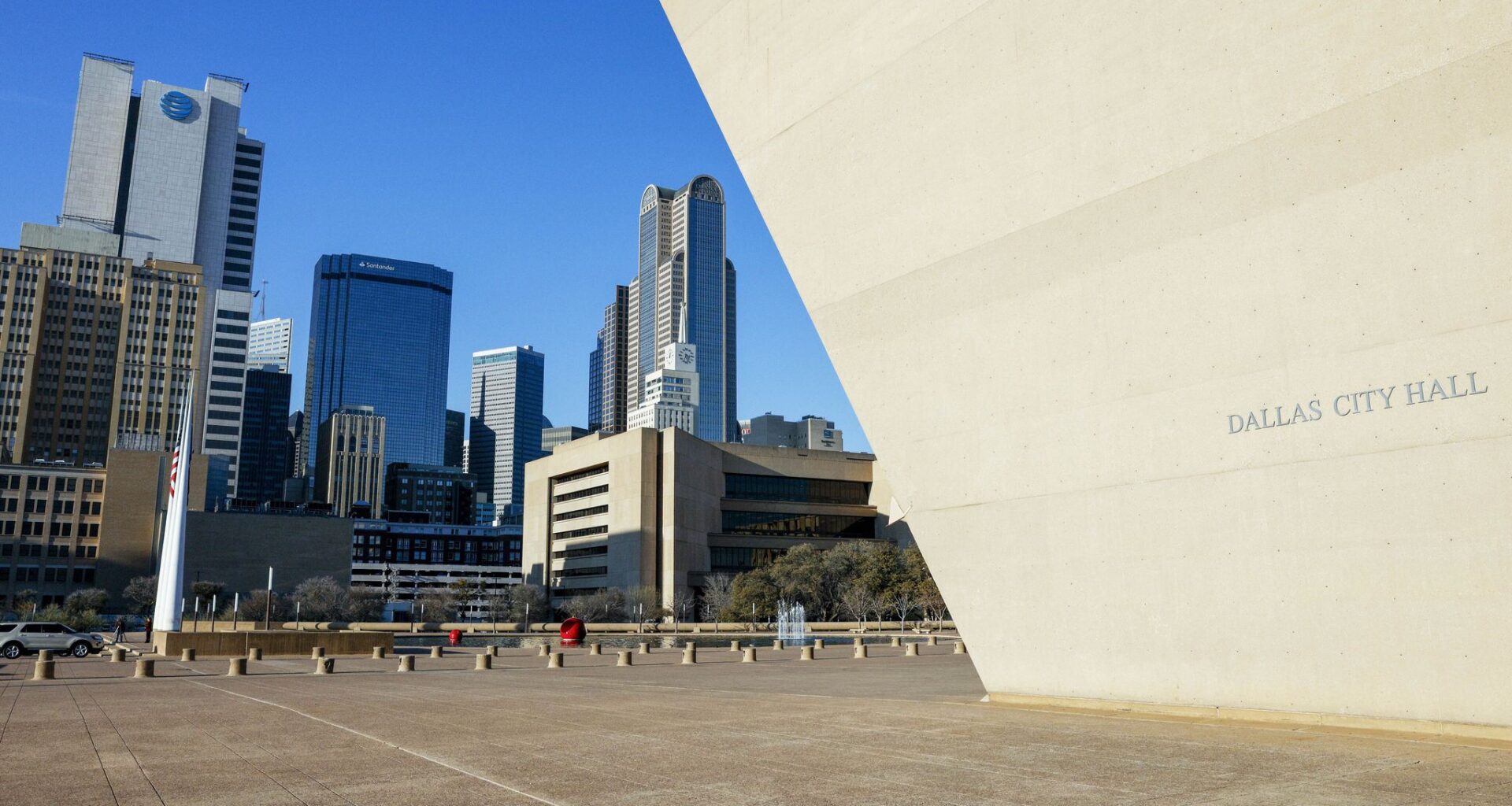
Dallas City Hall on Feb. 23, 2026.
Elías Valverde II/Staff Photographer
Dallas is immediately slamming the brakes on most hiring, spending and city travel to make up for a budget shortfall of tens of millions.

City Manager Kimberly Bizor Tolbert announced the changes in a memo to department directors Friday, citing soaring police and fire overtime costs, lower-than-expected sales tax revenue and rising employee health expenses.
Article continues below this ad
“We are committed to strengthening efficiency across all operations while ensuring that limited resources are focused on the City’s most critical needs,” Tolbert said in a Friday news release.
From the memo, the city projects a $16.4 million general fund shortfall driven largely by police and fire overtime.
Dallas’ general fund revenues are expected to fall short by $3.8 million, largely due to declining sales tax revenue, which makes up 24% of the fund’s total income.
Make Dallas News a preferred source so your search results prioritize writing by actual people, not AI.
Add Preferred Source
On top of that, Dallas is self-funded for employee health insurance and is projected to overspend in the employee health benefit fund by $13.8 million because of rising medical and pharmacy claims, Tolbert said.
Article continues below this ad
The hiring freeze applies to all nonuniform city jobs. Exemptions include police and fire uniform positions, seasonal hires and jobs funded outside the general fund, like those supported by internal service funds.
Related: Libraries, roads and City Hall: Here’s what came up in Dallas’ budget town halls
The City Council approved a $5.2 billion budget last fall, which included a $1.9 billion general fund that pays for most city services.
Tolbert said departments that don’t report directly to the city manager, including the City Attorney’s Office, City Auditor’s Office, City Secretary’s Office, Judiciary and the Office of the Inspector General, are encouraged to comply with the hiring freeze. Starting May 1, the city attorney, auditor and inspector general offices will be led by interim department heads.
Article continues below this ad
“At this time, please assume that current vacant positions will remain vacant through the end of the fiscal year, September 30,” Tolbert’s memo said.
The city is also shutting down nonessential travel and spending, eliminating most overtime and directing departments to delay or cancel any spending not considered “mission critical” as leaders work to close the budget gap before the fiscal year ends.
“The city will have to tighten its belt in this next budget season just like all Americans are having to do right now in this current economy,” said council member Chad West, who chairs the council’s Finance Committee.
Dallas’ move follows similar action in Fort Worth, where the city manager imposed hiring restrictions last month to address its own budget shortfall.
Article continues below this ad
Related: Dallas City Council passes largest budget in city’s history, reduces tax rate
The memo narrowly defines what work can continue, limiting it to activities that cannot be delayed without causing “major operational disruption,” “legal or compliance failures” or risks to “public health or safety.”
It also signals that the pullback may not end here, emphasizing the need to align spending with revenue this fiscal year, which ends in September.
Council member Paula Blackmon said City Hall was top-heavy and she was amenable to seeing cuts possibly in the Mayor and City Council office.
Article continues below this ad

By signing up, you agree to our Terms Of Use and acknowledge that your information will be used as described in our Privacy Policy.
“If we’re going to be part of the solution then maybe we need to chip in,” she said, adding that the burden of tightening belts shouldn’t just fall on employees.
The memo has not been made public but was reviewed by The Dallas Morning News. Tolbert’s directive hits hiring, overtime, spending and more:
Hiring Freeze: Nonuniform general fund positions frozen through Sept. 30. Police, fire, non-general fund and seasonal hires are exempt. Limited exceptions with justification.
Overtime: Nonuniform overtime eliminated, with limited, pre-approved exceptions in Tier 1 departments, including police, fire, courts, code, animal services, public works, emergency management and facilities.
Spending: Nonessential purchases halted. Departments limited to health and safety needs and told to cancel or delay commitments.
Travel: Nonessential travel suspended. Allowed only for emergency response, legal requirements, certifications or critical operations with approval.
Oversight: Departments must limit agenda items, move forward only essential or no-cost items, and submit updated projections by May 15 as additional cuts may follow.