
Raised as a kid on the caprock, School of Veterinary Medicine student Tommy Butler
rose to action when natural disasters threatened the land and the people he loved.
CREATORS

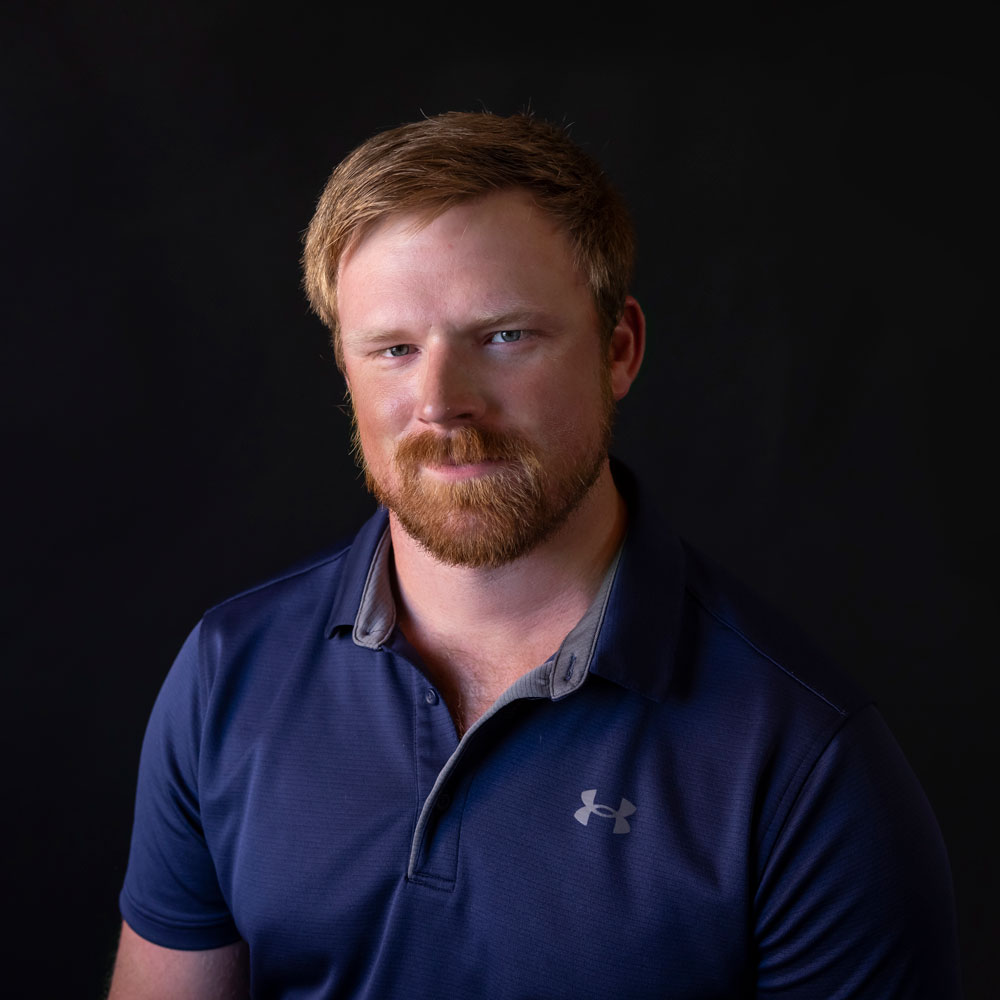
The smell hit him before anything else.
Tommy Butler grew up with that smell – smoke riding in on the West Texas wind. His
body stiffened before his mind knew what was happening. Even after experiencing some
close calls during his childhood, the scent melted away any logical thought process
he had as an adult.
Nothing prepared him for his drive into Miami and Canadian mere weeks after the worst
wildfire recorded in state history, scorching more than 1 million acres, killing two
people and destroying hundreds of homes, farms and ranches.
Everything was ashen as far as the eye could see.
Tommy knew this land. He knew where the cedar posts should be standing sentinel along
the fence lines – the same posts that aged hands had driven into clay soil long before
Tommy was even born.
The posts remaining were burned from the ground up, the post caps dancing in the wind
between wire that had deteriorated from rust to coal black.
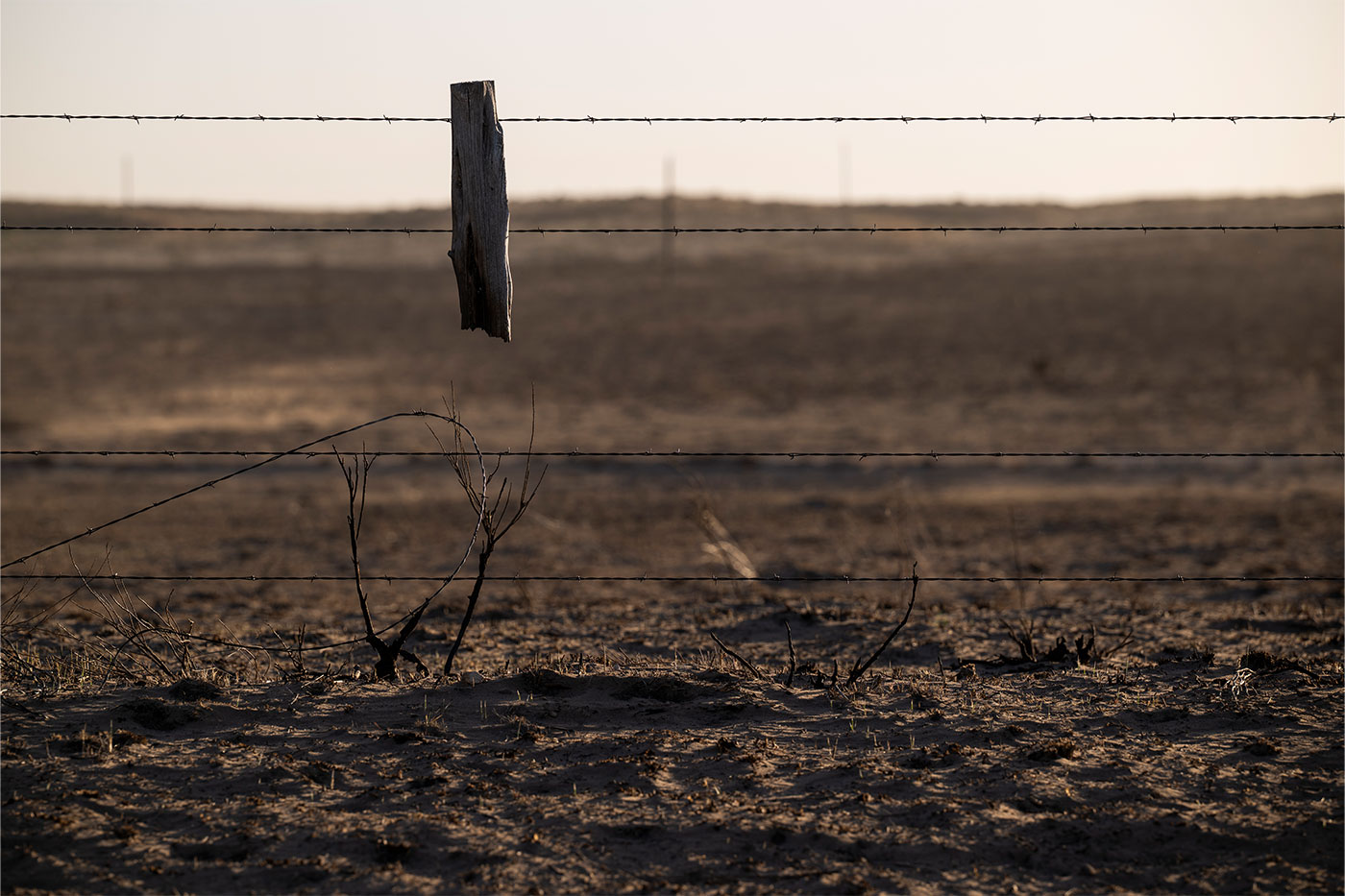 Burned cedar post
“Driving in that open country and seeing all black; that feeling is just not real,”
Tommy says, struggling to name the emotions of that moment. “Fire doesn’t care who
you are or what you’ve got – it’s the great equalizer.”
But on that day in March 2024, Tommy refused to get lost in emotion. He kept driving.
He had deliveries to make.
He was leading the way for semi-trucks full of round bales of hay. He’d taken dozens
of phone calls between classes, instructing others toward relief efforts. He transported
hundreds of diapers and clothing items for families who were displaced by the flames.
As he continued driving his Ford pickup truck down US 60, a different feeling took
shape. It wasn’t overt hope. It was something harder than hope.
Something you’d only recognize growing up in West Texas.
No Stranger to Risk
Tommy felt a silent nudge to enroll at Texas Tech University’s School of Veterinary Medicine in Amarillo, he just couldn’t quite put his finger on why. With acceptances to both
Iowa State and Kansas State University, Tommy knew enrolling at a brand-new vet school
like Texas Tech was more of a gamble.
“When you’re one of the first going through a program, there are pros and cons,” he
says. “You’re the guinea pigs, which can provide a lot of special opportunities, but
it’s also a complete unknown.”
But Tommy was no stranger to risk.
From growing up 30 miles from the nearest town of Perryton, Tommy crafted his motto
early in life – whenever it gets hard, keep going. Well-established programs were
the right fit for some. Tommy decided to pioneer something new.
He enrolled in the second class at the School of Veterinary Medicine, and will graduate
this May.
For those close to Tommy, his decision to study veterinarian medicine with a focus
on equine care, was no shock. Tommy was on horses before he was walking. One of his
first horses, Buzz, was his best friend as a child and the horse he learned how to
halter train.
When Buzz died of colic, Tommy was devastated.
While he still cared for dozens of horses, Tommy turned his attention to showing pigs
in third grade. No other horse could quite fill the hole Buzz left.
Tommy had a talent for showing pigs and traveled across the state through high school.
When he started college at Tarleton State University, he wasn’t just a student – he
took 18 hours a semester, while working three jobs, along with involvement in the
pre-vet association.
When he went home for the summers, he landed a job at the Hansford County Veterinary
Hospital in Spearman, where he focused on equine care.
Tommy wouldn’t go as far to say that Buzz’s passing was the moment he decided to become
a large animal veterinarian. He’s pretty sure it would have happened regardless.
“My earliest memory is working with my dad on a nearby ranch,” Tommy says. “When you
live as rurally as we did, large animals are just part of the landscape like the vibrant
caprock sunrises and sunsets.”
But the realities of equine care access in remote counties was a need Tommy saw early,
and he wanted to do something about it.
So, when Texas Tech opened its new School of Veterinary Medicine in 2021 with an emphasis
on large animal care in rural communities, Tommy was drawn like a bee to bloom.
“Prospective students often have to apply a few times to even get admitted to one
program,” Tommy says, “so I was shocked when I was accepted to three.”
He remembers getting the call from Associate Dean Britt Conklin, hearing he’d been accepted.
“I fell to my knees in gratitude; I just had a sense of peace about this place,” Tommy
says.
Tommy recalls walking into the enormous building, the golden sunrise illuminating
the archways, and the excitement from the staff and faculty waiting inside on his
first day.
“That first day felt surreal,” he remembers. “All my life I knew I wanted to be a
veterinarian and that was the day it became a reality. Reflecting back on that first
day, I had no clue how much vet school would change who I am.”
Not long into his studies, Tommy already felt God revealed why he was there.
One of his younger sisters began having major health issues and was admitted to
BSA Heart Hospital in Amarillo. Being near her helped Tommy feel connected to family.
Summer 2023
On the evening of June 15, 2023, Tommy was up at school working on a research project.
It was a pleasant day in Amarillo, an unusual week of cooler weather.
“It’d been a nice sunny day with low winds,” Tommy recalls. “So, when I began getting
texts from friends asking if I was OK, I was confused.”
They were asking him about a major storm cell moving into his hometown.
“Hey, saw something about Perryton tornadoes and just wanted to check and make sure
your family is OK.”
“Your family all good?”
“Wow this is crazy. I saw a video that looks like the town got hit pretty bad.”
One of Tommy’s friends attached a video with a caption that read: “This is the scene
in Perryton, Texas, where a tornado ripped through the town within the last hour.
Extensive damage and fatalities are reported.”
Tommy began calling his parents to make sure they were all right. The tornados had
missed them by a few miles, but they’d lost power. They drove to a neighboring town
in the opposite direction for food and gas.
“My mom said three people were missing in Perryton, and the damage was unthinkable,”
Tommy recalls.
Tommy paced the floor in Amarillo that night feeling helpless. He personally knew
one of the missing people. He sat on his couch watching photos hit social media –
each a barely recognizable image unwilling to fit into his memory of the town.
He tossed and turned that night, lying in bed fighting the urge to drive out.
“I knew I didn’t want to get in the way; I needed to stay in my lane,” he says.
The following morning, he was at the School of Veterinary Medicine by 7 o’clock, waiting
for whichever administrator showed up first.
Dean Guy Loneragan pulled into the parking lot.
“Tommy is from Perryton, and his own community was hurting,” Loneragan recalls. “I
didn’t want him to rush into harm’s way, but assess the needs. The speed and scale
at which Tommy did that was surprising.”
Loneragan says the first year of vet school is exceptionally challenging. The curriculum
is hard, and many students hit a wall halfway through.
“For Tommy to not only do so well with the curriculum, but to do so much for the Panhandle,
shows extraordinary grit,” Loneragan says.
Tommy gathered donations to help those impacted by the storm by creating a flyer to
hang up around the school, and he took them to the Texas Tech Health Sciences Center
campus too. Drop points were set up for donations. Tommy collected everything from
bottled water to baby clothes.
“I’m doing this,” he told Loneragan. “Would you like to help?”
He got the unwavering support of leadership at the School of Veterinary Medicine as
well as Texas Tech University Health Sciences Center in Amarillo.
Tommy had reached out to a student there who he’d known in high school. The two made
relief efforts a joint venture.
“What are you doing about money?” his friend asked.
“I don’t know; we’ll figure it out later,” he responded.
Money was the least of his worries.
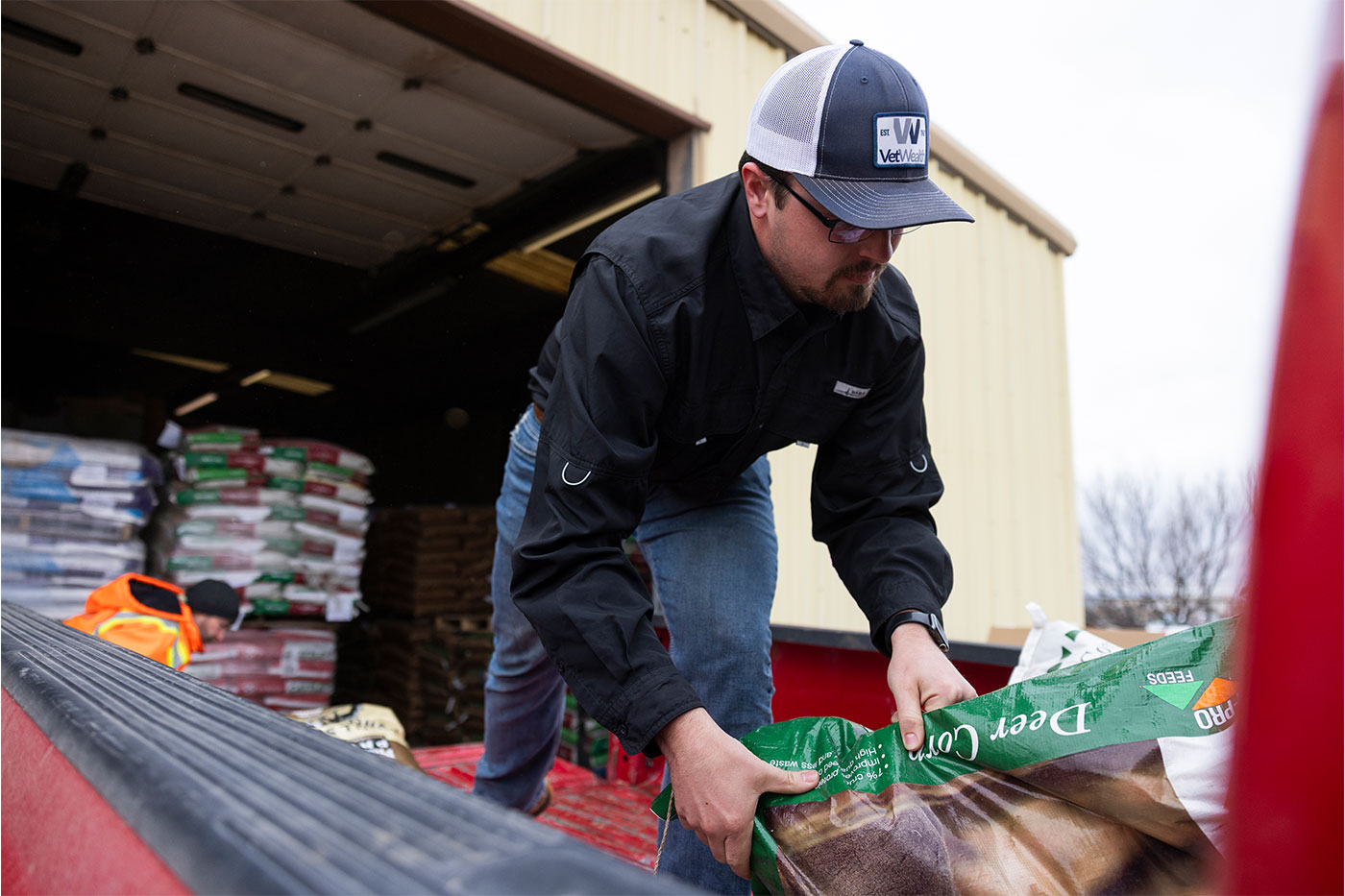 Tommy loading a truck of relief supply.
After a few days, they’d filled four pick-up trucks with hundreds of articles of clothing,
nonperishable food and emergency equipment, and headed to Perryton. As Tommy walked
the familiar streets, he observed the wreckage from behind yellow fire line tape,
keeping him a safe distance from unstable debris.
He also discovered his missing family friend had died in the tornado.
“That was heartbreaking,” he said.
Flat Land, Deep Roots
Tommy grew up understanding something most Americans don’t have to consider.
The high plains receives less than 20 inches of rain each year – less than the Mojave
Desert in wet years – and the people who build their lives here don’t get their water
from rainfall like most of the world does. Beneath the clay soil sits the Ogallala
Aquifer, one of the largest underground freshwater reserves on earth.
From the Comanches to the cattle barons of the 1800s, everyone who has ever built
a life on this land has to match its resilience at every turn.
Tommy explains what the resilience produces.
“The Texas economy can be summed up in three C’s,” he says. “Cattle, crop and crude
oil.”
The population centers of Texas – the triangle from Dallas, Houston and San Antonio
that hold roughly 75% of the state’s people – are sustained by what comes out of a
region many will never visit.
The feedlots within 30 minutes of Amarillo alone account for the heart of America’s
beef industry. The cotton fields that stretch across the plains clothe the country.
The oil beneath the Permian Basin powers it.
Most Americans only encounter the Panhandle at the dinner table, in the price of their
ribeye or in the thread count of their cotton shirt.
The following spring, it demanded more attention.
Spring 2024
“My nose is very sensitive to smoke; I’ve always been hyperaware of wildfires because
of where I grew up,” Tommy says.
On an evening in March, Associate Dean Britt Conklin had taken Tommy and another vet
student to talk to the Rodeo Team at Clarendon College. Tommy sat with the other students
as Conklin spoke in the lecture hall.
“The doors kept blowing open from extreme wind, and that’s when I smelled it,” Tommy
recalls. “My body immediately began to tense up. I had a completely visceral reaction.”
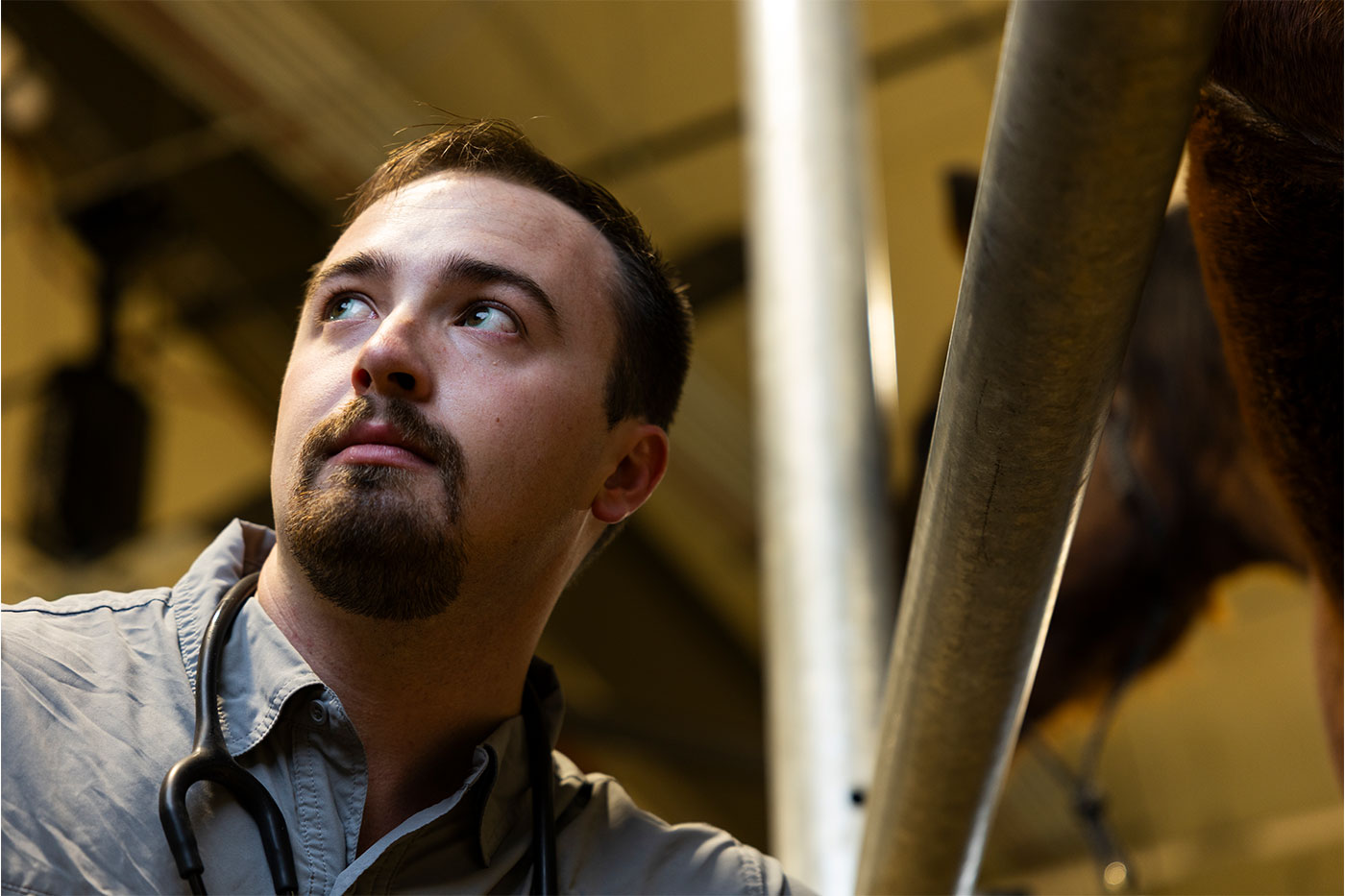 Tommy Butler
Soon, the others began smelling smoke and Conklin ended the talk. They got into their
professor’s truck and drove to gas up and get back to Amarillo.
As they arrived at the gas station, the parking lot was thick with idling engines
from dozens of cars. The people of Pampa were being evacuated, and the only way out
was through Clarendon.
Tommy gazed at the panic-stricken faces of families in their cars.
He looked over at Conklin and told him, “I’m going to do it again.”
“OK, if anyone has an issue, you tell ‘em I approved it,” Conklin responded.
As soon as Tommy got back to his house, he dug out the flyer he’d made during the
tornado and updated the details.
“Being a new school, we didn’t have standard operating procedures (SOP) in place for
something like this,” Tommy says. “I got to be the SOP. I learned what to do, who
to talk to and what’s required.”
The next day he had dozens of people ready to help, but the fires were still raging,
so there was little they could do. In the meantime, he reached out to people he knew
in the towns affected, located points of contact for each community, and kept the
school’s leadership looped in.
It would be three weeks before Tommy was able to get back into the north panhandle.
And that’s when he found himself driving from Miami to Canadian on US 60 to help a
local veterinarian treat cattle and horses.
“It was a heart wrenching drive,” he says somberly.
To this day, Tommy has never felt what he did was heroic.
“My role was nothing special, I just coordinated,” he explains. “Communication can
become unclear during crises, and I just wanted to take that burden off others. I
couldn’t have done anything if not for the people around me.”
The people who Tommy served don’t see it that way, though.
Perryton Mayor Kerry Symons still recalls the relief Tommy offered in the aftermath
of town’s biggest tragedy.
“The Tornado of June 15, 2023, is a day we will never forget,” Symons says. “Perryton
lost 400 homes that day. I cannot imagine how many animals were running loose, in
shock, trying to find their owners.
“That is a big job for anyone, but thanks to Tommy and Texas Tech’s efforts, many
where mended back to health and reunited with their families.”
Symons knew Tommy as a child and was not surprised to see him leap into action as
an adult.
“His love for this community is what brought him to Perryton to do what he could when
people were in need,” he reflects. “Tommy is an exceptional young man and will make
one heck of a veterinarian.”
Tommy went on to build what would become the Student Veterinary Emergency Response Association. In 2025, Tommy was honored with the Outstanding Youth/Collegiate in Philanthropy
award from the Association of Fundraising Professionals. It’s an award they bestow
only in rare circumstances. The last time an individual won it was 2013.
Tommy is quick to brush these honors aside and talk about the effects the region is
still feeling from these disasters. Not because he’s a pessimist, but because he is
unsure Americans really understand the cost of the damage.
“Beef prices are through the roof,” he notes, “that all traces back to the wildfires.
Prices soared in 2025 because fewer animals were being slaughtered after the fires.
A lot of folks are starting to notice those prices.”
Even so, Tommy points out that the U.S. doesn’t experience food shortages like much
of the world does.
“We’re blessed in that way,” he says. “But it’s not mere luck. It’s because we have
farmers and ranchers who have grit, who, no matter what happens, they stand back up,
pick themselves up by their bootstraps, and get back out there.
And if they didn’t?
“That’s when we’d see real food shortages. Only the wealthy would be able to afford
meat,” he says.
Tommy is not worried about that happening anytime soon, though.
“It’s not in ranchers’ nature to give up,” he says.
That’s one of the main reasons he wants to eventually start his own veterinary practice
in the region. Because the people who don’t give up deserve veterinarians who won’t
either.
Spring 2026
Tommy checks in on a horse during a cool and cloudy February morning. He is between
rotations, and each week inches him closer to graduation.
He plans to apply to several internal medicine residencies and hopefully land a fellowship
in emergency and critical care before returning to the northern Texas Panhandle, either
joining a practice to start offering specialty care or running his own practice for
the countless animals working the priceless land.
“The need up here is great, and there just aren’t enough vets to go around,” Tommy
says, stroking the mane of the quarter horse he is working with at Texas Tech’s Mariposa Station.
The clouds above are heavy with rain, releasing a few tentative drops. This is also
a smell Tommy knows well – long awaited water – an inestimable commodity out on the
Caprock.
The temperature rises just above 50 degrees as more droplets let loose; the smell
of damp hay and manure permeates the air.
“West Texas is not for the weak,” Tommy admits. “Texas Tech talks about grit a lot,
but some may not understand it’s a value instilled in our very soil.
“A lot of the world sees these small Panhandle towns as frozen in time, and maybe
in some ways they are, but the people here don’t give up. I think that makes it like
no other place in the world.”
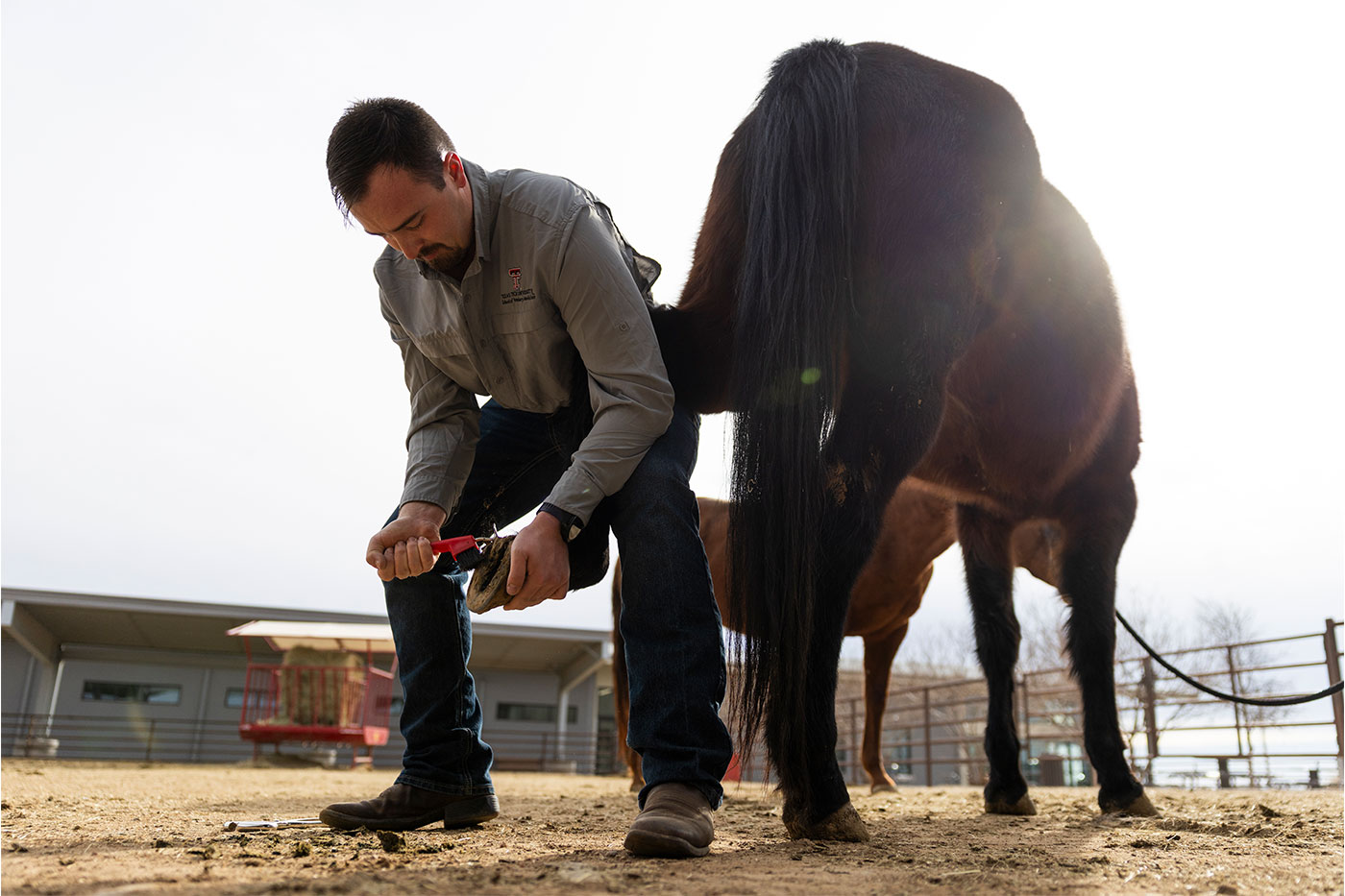 Tommy working with the horses at Texas Tech.