
Austin’s housing market has been a cautionary story of how a pandemic boom can turn into a bust. After hitting a peak in 2022, home prices fell for four straight years.
But now there are growing signs that the market may be approaching a bottom — and that’s beginning to create an opportunity for buyers.
Housing contract activity in the greater Austin area — a sprawling part of central Texas that follows Interstate 35 from the northern suburb of Georgetown through the capital city and south to San Marcos — soared by double digits last month compared to a year earlier. Even homebuilders, who for years have had trouble selling newly constructed homes in the area and have resorted to hefty buyer incentives, are reporting stabilizing trends.
“We certainly felt that we were one of the first markets that really experienced that pandemic housing boom, and I think we were one of the first to see the bust,” said Väike O’Grady, market research adviser at Unlock MLS, the multiple listing service for central Texas. “Now, I kind of feel like we’re in a boring, normal place, which is a good place for us to be, relatively speaking.”
After spending time as one of the nation’s hottest housing markets, and one of the slowest, a “normal” period for Austin means 6,000 homes sold in the first quarter, a slight dip from a year earlier, but an 11% jump in homes under contract during the same timeframe, according to Unlock MLS figures.
The median home in the area currently fetches $415,300, down about 3.4% from 2025, and in line with 2021 levels. Successful sellers are getting 92.6% of their asking price, compared to last year’s 93.3%, meaning buyers have had improving luck negotiating.
“I think sellers are kind of understanding that the market is not as strong,” said Jeremy Knight, who has worked as a Realtor in Austin for over a decade. “They’re being a little more realistic.”
As for buyers? They like the lower prices, though high mortgage rates and economic uncertainties may be giving them some pause. But Knight expects more to re-enter the market soon.
“We’ve had a lot of buyers that have been on the fence, and typically they move more toward this time of year,” he said.
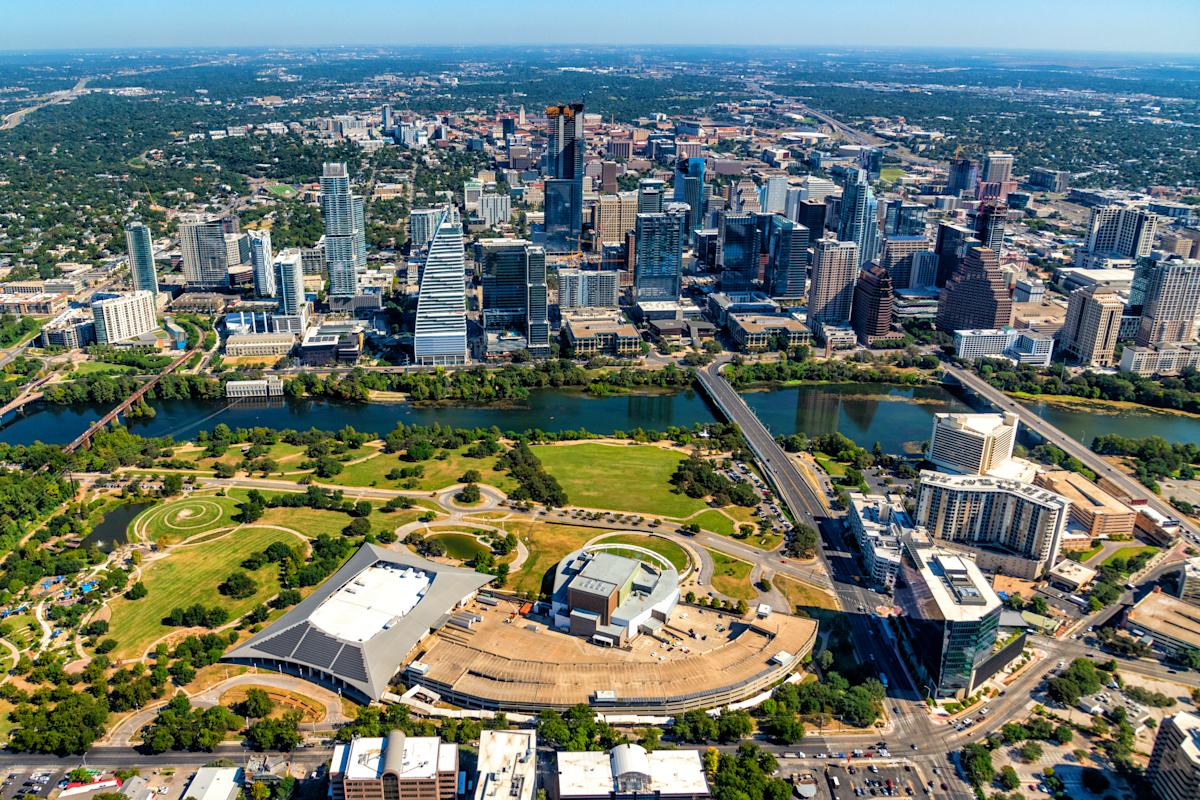
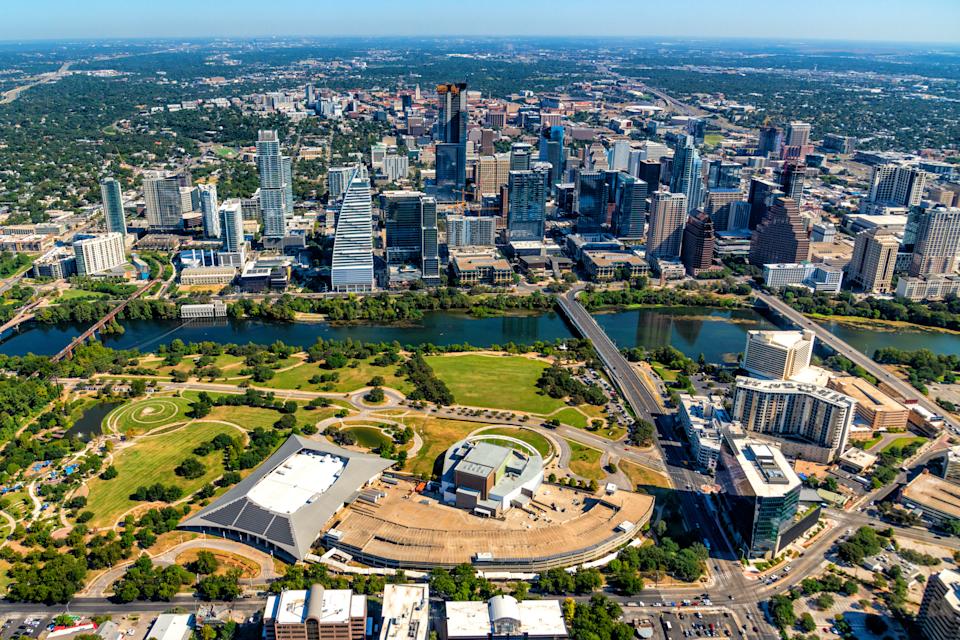 Wide-angle aerial view of the skyline of Austin, Texas and surrounding communities from about 2500 feet in altitude during a helicopter photo flight. · Art Wager via Getty Images
Market cooldown brings hotter sales
Austin has long been known for its live music, scenic location near Texas Hill Country, and the University of Texas at Austin, the flagship of the UT system. It’s also developed into something of a technology hub. Dell Technologies is headquartered in nearby Round Rock, and companies like Apple, Meta, and Amazon also maintain major presences.
Story Continues
Though Austin still trails Houston, Dallas, and San Antonio in population, it took on new prominence during the pandemic, attracting remote workers looking for warm weather, outdoor activities, and lower cost of living than could be found along the coasts.
The influx of residents, though, quickly drove up housing costs. In 2019, the median home in the Austin metro area was worth around $320,000, according to Zillow data. Just three years later, that figure was $570,000.
Spring 2022 was the market’s peak. Just a few months later, mortgage rates had risen dramatically, shrinking the buyer pool. Austin’s population growth also began to slow. At the same time, builders hoping to capitalize on the city’s upswing were still adding thousands of new homes, especially in the outermost suburbs. Supply soon outran demand, turning the market cold.
Today, Austin isn’t the country’s strongest buyers’ market — Redfin gives that honor to Miami — but it ranks in the top 5, with the number of sellers more than doubling buyers. Home prices are currently around levels last seen five years ago.
While lower prices mean sellers who bought at the peak may be forced to take a loss or explore renting instead of selling, it’s also helped middle-income buyers like teachers and police officers regain access to the market, O’Grady said.
“When you have more offerings coming online below $400,000, that suddenly opens up the world for people to be able to make a purchase,” she said.
Sales of lower-priced homes — which tend to be purchased by first-time buyers and others of moderate means — have been growing the fastest, according to Unlock MLS data. 129 homes between $200,000 and $250,000 sold in March, more than twice as many as a year earlier. Home sales below $200,000 also surged, while sales in the $250,000 to $300,000 price area were up 7%.
Even homebuilders, which have been offering incentives like mortgage rate buydowns and closing cost credits, and sometimes even cutting prices outright, say interest is improving this spring.
“Austin actually finally saw …. some stabilization in backlog, had the best sales month in quite some time, and [cancellations] seemed to stabilize,” Sheryl Palmer, CEO of Taylor Morrison Homes, said on an earnings call on Wednesday.
Knight says he’s not ready to call a bottom in the market yet, but he thinks it could be close. As home prices in Austin cooled, builders pulled back on construction, meaning supply is likely on the way down. New listings this spring have so far trailed behind last year’s levels, another sign that for-sale supply may have peaked.
“I look at the inventory for and permits for multifamily slowing down, and that tells me that maybe we are close to that bottom,” he said. “I think in 2027 there’s going to be a lot less inventory. 2028, maybe a little bit less inventory. Maybe in 2029 you really start to see prices escalate, but who knows what’s going to happen?”
Claire Boston is a Senior Reporter for Yahoo Finance covering housing, mortgages, and home insurance.
Sign up for the Mind Your Money newsletter
Read the latest financial and business news from Yahoo Finance