
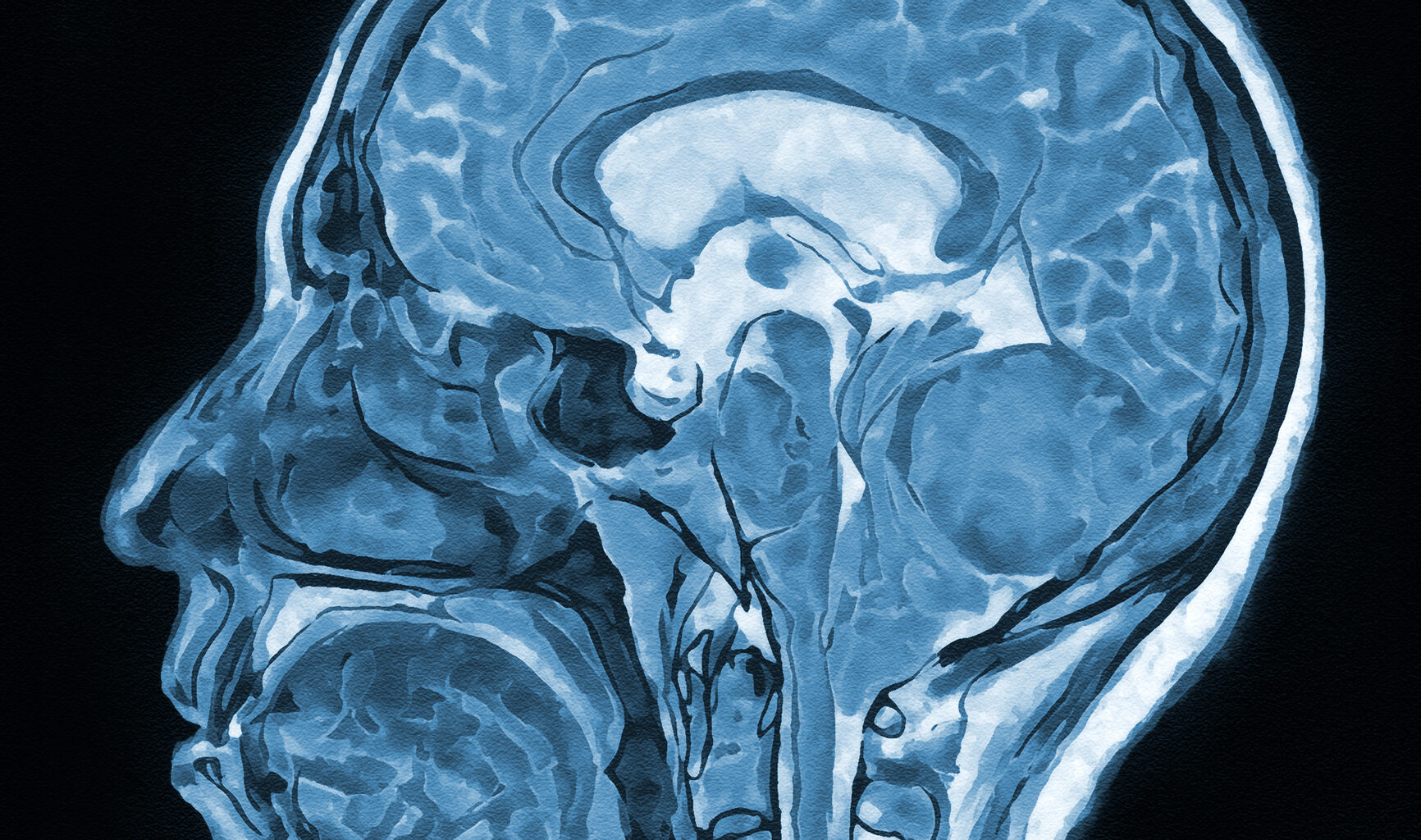
A study from UT Dallas and collaborators found that in mice, repeated cocaine use alters a key brain circuit involved in memory and reward behavior, reinforcing drug-seeking behavior.
Getty Images
Cocaine’s heyday as a party drug may feel like a distant past, but an estimated 5.5 million Americans used the illicit substance at least once in 2019. For some, that use can spiral into addiction — a condition North Texas researchers say may be caused by the drug rewiring the brain.

In a study published last month in the journal Science Advances, scientists at the University of Texas at Dallas found that in mice, repeated cocaine use alters a key brain circuit involved in memory and reward behavior by changing gene activity. The affected neurons become less active — a shift that appears to reinforce the urge to seek more cocaine.
Article continues below this ad
These findings could lead to a pharmaceutical-grade treatment to help those dealing with cocaine addiction, said Andrew Eagle, the study’s first author and an assistant professor of neuroscience at UT Dallas.
Less excitement, more cocaine
Cocaine is a highly addictive stimulant derived from the coca plant, native to parts of Central and South America. Research suggests it doesn’t take much cocaine to alter the brain: A 2018 study in rats found that even limited exposure quickly changed neurons in regions involved in decision-making and self-control. A 2024 study also found that cocaine disrupts communication between key brain networks involved in attention, self-reflection and decision-making.
Coast Guardsmen stand over pallets containing more than 26 tons of cocaine worth at least $715 million on the flight deck of of 418-foot Coast Guard Cutter Hamilton, Thursday, Dec. 15, 2016, in Fort Lauderdale, Fla. (AP Photo/Lynne Sladky)
AP
Other studies have found that a brain circuit linked to negative emotions during cocaine withdrawal plays a key role in relapse, and that immune cells in the brain may drive drug cravings by breaking down structures that help keep neural circuits stable. A 2012 study found that chronic cocaine use may age the brain, shrinking brain volume in middle-age users.
Article continues below this ad
Make Dallas News a preferred source so your search results prioritize writing by actual people, not AI.
Add Preferred Source
Eagle and his colleagues from Michigan State University and the Icahn School of Medicine at Mount Sinai in New York sought to study how cocaine rewires the brain through a protein called delta-FosB, which was first discovered in the late 1990s. Delta-FosB is naturally produced by the brain with cocaine use and was found to control which genes are active in neurons. With repeated drug use, levels of this protein build up, particularly in the brain’s reward center, changing how neurons send signals and reinforcing addictive behavior.
“One of the things my collaborator A.J. Robison [at Michigan State University] was interested in looking at was the role of delta-FosB in this other brain region called the hippocampus,” Eagle said. “The hippocampus is super important for memory, and there’s lots of different neurons there that can locally connect with each other.”
Some of these connections link to the nucleus accumbens, a brain region that helps process reward, motivation and pleasure and is known to be affected by cocaine use.
Article continues below this ad
Andrew Eagle, assistant professor of neuroscience at UT Dallas and doctoral student Seyedeh Leila Mousavi are authors of a study that could offer insight into treatments for addiction.
UT Dallas
In their study, Eagle and his colleagues focused on the neurons from the hippocampus to the nucleus accumbens, giving a group of mice infusions laced with cocaine for two weeks. They found that the drug boosted delta-FosB in these neurons, particularly in how they handle calcium. This change sets off a chain reaction that quiets electrical activity in these neurons.
“That decrease in excitability in the hippocampus basically was supporting drug-seeking behavior,” Eagle said. “If you were to block that decrease in excitability, which we did, we saw that drug seeking didn’t worsen.”
These findings help explain how memory is tied to drug-seeking behavior, that the brain — in someone addicted to cocaine — is constantly linking the substance to certain cues, experiences or feelings.
Article continues below this ad

By signing up, you agree to our Terms Of Use and acknowledge that your information will be used as described in our Privacy Policy.
While these findings need to be validated in humans through brain imaging studies, Eagle said the study could help researchers identify drug targets within the genetic pathway involving delta-FosB or repurpose existing medications to treat cocaine addiction. Some studies suggest that weight-loss drugs such as semaglutide may help curb cocaine use by acting on the brain’s reward centers.
Cognitive behavioral therapy is widely used to treat addiction, but it could benefit from support with federally approved medications, of which there are none, Eagle said. This combination of medication and therapy could be more effective, particularly given the high relapse rates associated with cocaine use.
“I think we need something like that, that’s going to be helpful to people in addition to behavioral therapy,” Eagle said. “I think behavioral therapy, Narcotics Anonymous and all those things, they do have good success, but let’s get this success up to 99.9% so that people aren’t struggling.”