
Dallas-Fort Worth may be renowned for better housing affordability than other large U.S. metros, but skyrocketing home price trends have changed that reality.

Between 2010 and 2013, D-FW overperformed on housing construction. The increased supply of homes in that period allowed prices to stay relatively affordable, according to J.H. Cullum Clark, director of the Bush Institute-Southern Methodist University Economic Growth Initiative.
This attracted greater migration to the area over any other large metro.
Wider forces at play
The current crisis in housing affordability took root in the aftermath of the 2008 financial crisis, he said.
Article continues below this ad
A severe under-production of homes nationwide resulted in a drastic increase in home prices relative to household incomes.
Home prices aside, the cost of owning a home, including mortgage payments, went up 20% to 25% on average across the country, more than people’s incomes.
Make Dallas News a preferred source so your search results prioritize writing by actual people, not AI.
Add Preferred Source
“If you’re a pretty well-off household, and your housing cost goes from 20% of your income to 24%, it’s annoying. You’re not pleased,” Clark said.
Article continues below this ad
“But if you’re lower-income, and it goes from like 40% to more than 50% and maybe well north of that – it’s a catastrophe.”
Increased housing production in D-FW and the resulting affordable price tags, by contrast, led to a big acceleration in folks moving to the area from the most expensive places in the U.S. — the Northeast and West Coast.
“Housing just got more expensive every place [else], and the more expensive it is, the more inclined you are to alleviate that pressure and move some place cheaper, ” Clark said.
Demand for housing grew even faster than the supply despite its high performance during that period, so the gap between home prices and incomes actually widened more in D-FW than the average U.S. metro area.
Article continues below this ad
“We had a bigger deterioration of affordability than the average metropolitan area in the U.S.,” Clark said.
Low mortgage rates softened the blow to consumers at the time, said Ted Wilson, principal at Dallas-based Residential Strategies, Inc. Consumers didn’t really feel the gap until monthly payments went up after the Fed increased interest rates for the first time in 2022 to curb historic inflation.
“That’s when the full impact of housing affordability hit the Dallas-Fort Worth market,” he said. D-FW lost much of its affordability edge over other metros then.
D-FW still ranks as more affordable than cities like New York, San Francisco and Los Angeles.
“They are super unaffordable. We are unaffordable,” said Sriram Villupuram, an associate professor of finance and real estate at the University of Texas at Arlington,
Article continues below this ad
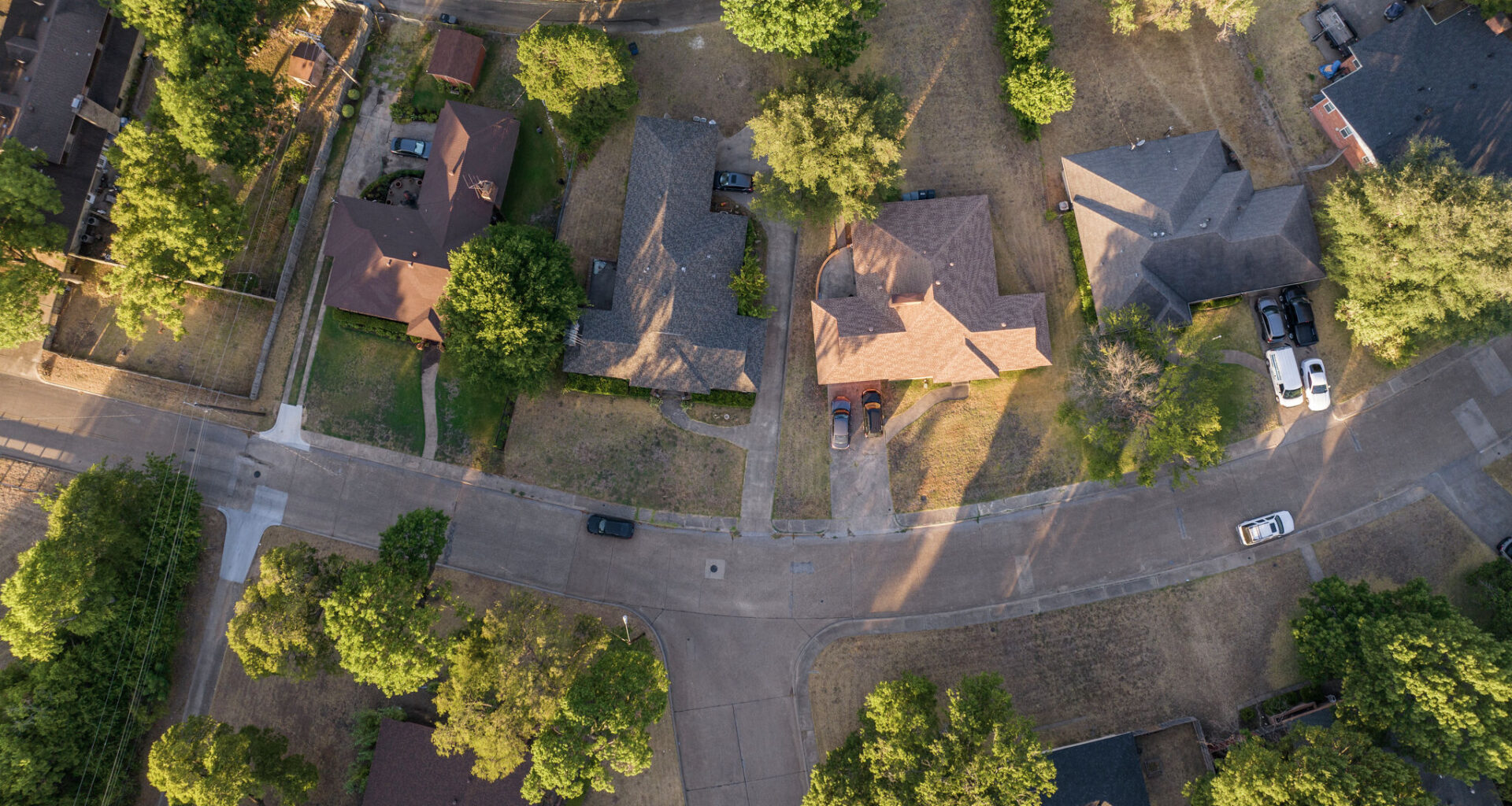
An aerial view of homes in the Wolf Creek neighborhood in South Dallas, Wednesday, July 27, 2022.
Brandon Wade/The Dallas Morning News
Locked in and rising mortgage rates
Many are also hesitant to let go of the low mortgage rates they locked in before interest rates rose in 2022, say experts.
“In many cases, folks are stuck because they can’t afford to sell and buy the next house in the place where they live,” said Timothy Bray, director of the Institute for Urban Policy Research at the University of Texas at Dallas. “So they are just staying put.”
Article continues below this ad
In 2022, mortgage rates for a conventional 30-year home loan more than doubled in a year, from around 3% to a high of about 7%, not seen since 2008, according to Freddie Mac.
Rising interest rates and declining affordability have led to an accumulation of unsold homes in North Texas. Active listings have risen about 140% since 2022, and the time that a house sits on the market – over three months – is now the longest since 2011, according to data from the Texas Real Estate Research Center.
“There’s a big surplus of housing in Dallas-Fort Worth right now that a lot of people don’t understand,” Wilson said, describing the market as “going through a recession” and projecting new housing starts to fall by roughly 10,000 units compared to 2024.
He blamed the slowdown in job growth. “We’re not creating nearly enough jobs for people to move,” he said.
Article continues below this ad
The impact of job growth
“The labor market is a bit on the edge, or not as robust as we’ve grown accustomed to,” said Enrique Martínez García, deputy director at the Federal Reserve Bank of Dallas.
These may be the impacts of a sluggish increase in the labor force participation rate and a potential AI-influenced economy shift, he said. “That also gives pause to households in the decisions they make about buying a house or renting,” he said. “It’s very interconnected.”
Joel Berner, a senior economist at Realtor.com, remains optimistic about the long-term outlook. “The labor market is the underpinning of the housing market,” Berner said. “As long as there continues to be good job growth, there will continue to be people with money in their pockets looking to buy homes.”
Article continues below this ad
Since January 2026, the labor market has strengthened, the Dallas Fed observed in its forecast, noting declining immigration is constraining labor supply in the state.

By signing up, you agree to our Terms Of Use and acknowledge that your information will be used as described in our Privacy Policy.
Meanwhile, the increased number of unsold homes on the D-FW market has led prices to fall pretty consistently since 2024, said Berner, anticipating further price correction this year.
“We’re hoping for the Texas miracle to come alive again,” said Wilson. “One of the biggest challenges we see in the housing industry is current policy is limiting international immigration, and that flies in the face of what developers and builders have been successful at doing.”
Article continues below this ad
This reporting is part of the Future of North Texas, a community-funded journalism initiative supported by the Commit Partnership, Communities Foundation of Texas, The Dallas Foundation, the Dallas Mavericks, the Dallas Regional Chamber, Deedie Rose, Lisa and Charles Siegel, the McCune-Losinger Family Fund, The Meadows Foundation, the Perot Foundation, the United Way of Metropolitan Dallas and the University of Texas at Dallas. The News retains full editorial control of this coverage.