
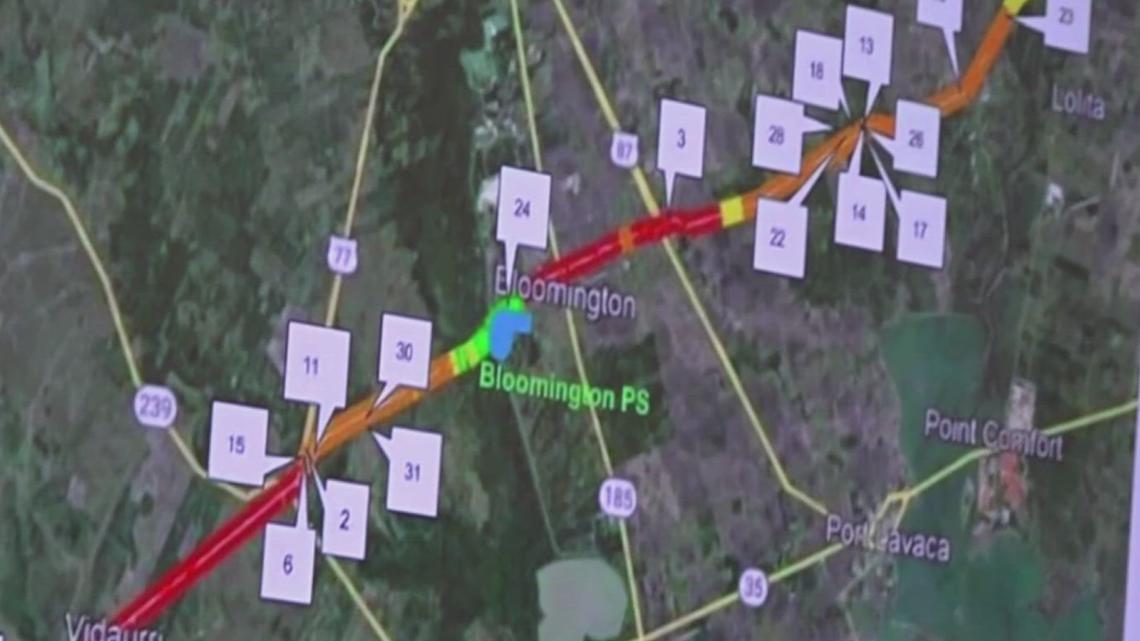
“There are some areas of the pipeline where there potentially are some restrictions,” said Corpus Christi Water COO Nick Winkelmann.
CORPUS CHRISTI, Texas — As Corpus Christi looks to bring in new water sources, city leaders say it is important to protect what the city already has.
Corpus Christi Water COO Nick Winkelmann said that’s why crews are taking a multi-phase approach to maintain the Mary Rhodes Pipeline.
“So as a result of the first phase of the project, we’ve added additional pressure transmitters so that we can understand the operating pressures of the pipeline,” he said.
Winkelmann said the next phase will focus on targeting specific areas of the 100-mile-long pipeline.
“It’s a sonar and pressure device that we will insert into the pipeline to help identify and further diagnose pressure exceedances at different parts of that pipeline,” he said.
Winkelmann said crews are already taking note of findings from the completion of phase one.
“There are some areas of the pipeline where there potentially are some restrictions,” he said.
Roland Barrera said making sure the pipeline is operating at full capacity is critical at a time when water usage is expected to increase.
“Without it, we would be short 70 million gallons a day,” he said. “During our peak in the summer, we’re going to use 130. So, that’s without curtailment.”
Barrera said without the pipeline, Corpus Christi would be in a much worse position than it is now.
“Even then, if you took 25% of the 130, you’re still talking about 85 million gallons a day, and a majority comes from the Mary Rhodes Pipeline,” he said.
Winkelmann said the purpose of the project is to make sure the pipeline can reasonably support the growing resources being added to its intake.