
In the early hours of July 4, 2025, an intense rainstorm pummeled communities in the Texas Hill Country, submerging low-water crossings as segments of the Guadalupe River rose more than 30 feet in 90 minutes. Twenty-seven young campers and counselors died at Camp Mystic, a private Christian girls summer camp located along the river in Hunt.
Those deaths could have been prevented if camp leadership took action sooner or had a written evacuation plan in place, investigators told a panel of state lawmakers tasked with studying the flood response.
“They had the opportunity to save every camper,” Michael Massengale, an attorney on the investigating team, said during an April 27 hearing.
What you need to know
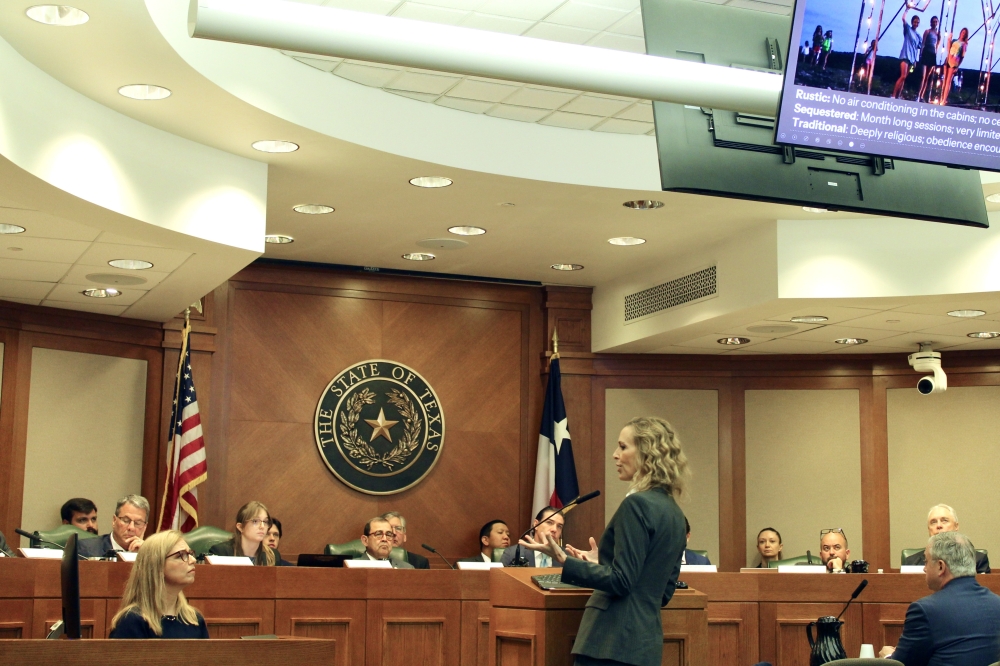
Casey Garrett, a Houston lawyer and the committee’s lead investigator, laid out a detailed timeline of the July 4 tragedy—from counselors’ and campers’ arrival in Hunt days earlier to the local response as floodwaters receded.
Camp Mystic staff had more than two hours to evacuate 386 campers from their cabins, Garrett said. The first flash flood warning for the area was issued at 1:14 a.m. July 4, and campers as young as 8 years old were able to walk through ankle-deep waters and reach higher ground until at least 3:26 a.m., according to the investigators’ timeline.
“To camp owners across the state of Texas: lives could have been saved without changes in [state] statute,” Sen. Lois Kolkhorst, R-Brenham, said April 27.
The details, some of which were not previously publicized, were shared during the first of two days of hearings held by special Texas House and Senate committees, which are meeting jointly. The committees were formed in October, and Garrett said she has interviewed nearly 150 witnesses in the months since, including families who lost children; surviving campers and counselors; and the Eastland family, which owns and operates the camp.
Richard “Dick” Eastland, the camp’s co-owner and executive director, also died in the flood. He was found in his car with a few campers and they likely died while attempting to evacuate, Garrett said.
“Questions about what should happen next are many, but for me, one thing is clear: This tragedy could have been prevented,” Sen. Pete Flores, a Pleasanton Republican in charge of the Senate committee, said at the beginning of the hearing. “Our goal with this investigative committee is to examine the facts, understand where failures occurred, and determine what must be done to ensure that it never happens again.”
House committee chair Rep. Morgan Meyer, R-University Park, addressed the families of the campers and two counselors who died in the flood, assuring them that lawmakers “do not take [the hearings] lightly.”
“We understand that no proceeding can undo what has been lost,” he said. “You deserve to know exactly what happened and why. This committee will not rest—I guarantee we will not rest until we have done everything within our power to provide that.”
Dozens of the girls’ families attended the roughly five-hour hearing April 27, sobbing as Garrett read the names of their late daughters.
 The father of a young girl who died in the July 4 flooding at Camp Mystic wipes his eyes during an April 27 legislative hearing. (Hannah Norton/Community Impact)Garrett said she had been tasked with investigating what happened at Camp Mystic’s Guadalupe River site. In total, more than 130 Central Texas residents and visitors died in the July 4 weekend flooding, Community Impact previously reported.
Garrett also served as the legislature’s investigator after a 2022 mass shooting at Robb Elementary School in Uvalde, where 19 students and two teachers died.
“I never dreamed there’d be another mass casualty of children bigger than what happened, but here we are,” she told the joint committee April 27. “Every single person, including myself, is hungry for you guys to take the call to action and make some change that can make this tragedy at least make a modicum of sense.”
Investigators will release a preliminary report as soon as next month detailing their findings, Garrett said.
Zooming in
Dick Eastland and his relatives who ran Camp Mystic were aware of the dangers of flooding in the Texas Hill Country, particularly on their campsite, where some cabins were located just hundreds of feet from the Guadalupe River.
When the July 4 flood hit, Camp Mystic had a shelter-in-place plan for its cabins, but there was no written evacuation plan, Garrett said. State law requires that all summer camps have disaster evacuation plans before they can be licensed by the Texas Department of State Health Services, although Garrett said Mystic was allowed to operate in the absence of such a plan.
“It became a very complacent sort of flood culture at Camp Mystic,” Garrett said. “[Flooding] was just kind of a part of life there.”
Lawmakers said more regulations may be needed to ensure youth camps effectively prepare for future disasters and are properly licensed by the state. Camp Mystic previously said it would welcome campers this summer to its Cypress Lake location, which was undamaged by the flooding, Community Impact reported. Lt. Gov. Dan Patrick, who leads the Texas Senate, has urged the state health department not to renew Camp Mystic’s license as legislators and the Texas Rangers investigate what happened last summer.
“The fate of those girls was set before the first drop of rain ever fell,” Sen. Charles Perry, R-Lubbock, said April 27. “I want to be clear: Mystic just happened to be the unlucky one, because I think every camp has fallen into this human nature of complacency. … I would say the DSHS has a contributory role.”
Investigators described Camp Mystic as “rustic,” with limited cell service or Wi-Fi. Families often send generations of young women to the religious camp, and Garrett said children are taught there to be obedient and follow rules.
She said Dick Eastland was “deeply loved and respected” and “ruled” over the camp. Counselors told investigators that they were afraid of getting in trouble if they took campers to higher ground without permission from Eastland or his family members, Garrett said.
“We want to teach our children to be obedient and respect authority, but we want to also, of course, give them the tools to feel like they can take action when they need to,” she said.
Counselors and other camp staff were not trained about what to do in an emergency, Garrett told the committee, and emergency drills were not conducted at the beginning of camp sessions.
“Every single person that I’ve spoken with [said] there was never any real training; there were never drills,” she said.
Garrett said counselors also did not have access to emergency equipment, such as life jackets or ladders. Camp leaders used portable radios to communicate, but they were not available in individual cabins, she said.
More details
From about 3-3:26 a.m. July 4, some campers were driven from their cabins to Camp Mystic’s recreation hall, which had an elevated balcony, Garrett told lawmakers. Other campers walked through ankle-deep water to higher ground, although she described the evacuations as unorganized “mayhem.”
Counselors and staff carried some girls through cabin windows, while some campers got caught in the floodwaters and clung onto trees to avoid floating downriver.
All 13 campers and two counselors staying in a cabin called Bubble Inn, which housed the youngest campers, died in the flood, Garrett said. A 10-year-old camper who was walking to the recreation hall with her bunkmates died after she doubled back to retrieve some of her belongings, and eleven campers from the nearby Twins cabins also died.
Garrett and Massengale said those deaths could have been avoided if camp leaders went door-to-door and ordered evacuations before floodwaters got too high around 3:26 a.m. All campers were within a two-minute walk of the recreation hall or other buildings located at higher elevations, they told lawmakers.
Camp Mystic also had a public address system, but no flood-related announcements were made over the loudspeaker on July 4. Garrett said investigators had “no reason to believe” that the PA system was inoperable at the time of the flood.
Flores said lawmakers would work to ensure that parents could safely send their children to Texas summer camps in the future.
“Camp culture is very important to Texas,” he said. “You have an expectation that when they are there, they are safe, and the industry is prepared to take care of them and take all measures… to ensure safety, especially with known hazards. I think that [summer camp] should be a place where your children go to have the time of their life, but not go there to have a high probability of losing your life.”
During the April 27 hearing, Garrett looked back on 1987, when the Guadalupe River flooded and killed 10 teenagers at a church camp in Comfort, Texas.
“When are we going to zoom out and look at, every [few] decades, are we prepared to sacrifice campers on the altar of having cabins on the waterfront instead of up on the bluff?” she asked. “It’s not a matter of if it’ll happen again—it’s a matter of when it will happen. We’ve seen that.”
What’s next
The joint committee’s second hearing is scheduled for 10 a.m. April 28. Committee members said they expected to hear from the Eastland family, the state health department, the Texas Division of Emergency Management and the parents of some campers who survived the flood.
The state legislature is not currently in session, meaning lawmakers do not have the authority to pass laws further regulating youth camps or taking other flood-related action before Texas children head to camps this summer. They passed several flood response laws over the summer, although those measures did not address some concerns raised during the April 27 hearing.
A special legislative session would be required for lawmakers to create new rules before the next regular session begins in January 2027. Only Gov. Greg Abbott has the authority to call a special session.