
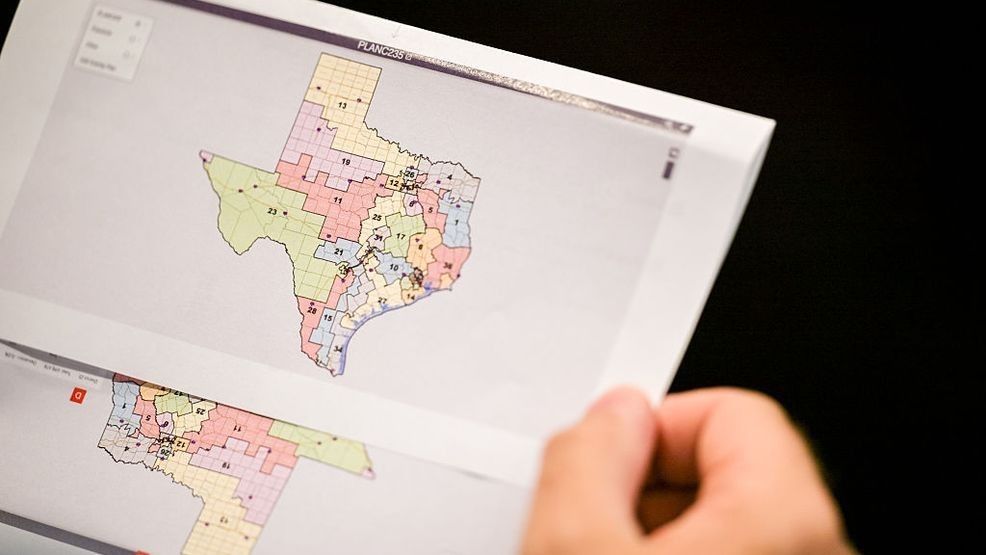
AUSTIN, Texas — The U.S. Supreme Court reversed a lower court ruling on Monday that had blocked Texas from using its redrawn congressional map, allowing the redistricting plan to remain in place for the 2026 elections.
The court’s order in Abbott v. LULAC was a summary reversal, meaning the justices overturned the district court’s judgment. Justices Sonia Sotomayor, Elena Kagan, and Ketanji Brown Jackson dissented.
A three-judge federal panel had blocked the new map in November, finding that plaintiffs were likely to succeed in proving the state had engaged in racial gerrymandering.
PREVIOUS COVERAGE | What’s next after a court blocked Texas’ gerrymandered maps
The lower court had ordered Texas to revert to its 2021 congressional map.
Just days after, Justice Samuel Alito had temporarily paused the lower court’s ruling. Monday’s summary reversal throws out that lower court judgment entirely rather than just delaying it.
“Today’s decision from the Supreme Court doesn’t really change anything,” said David Froomkin, assistant professor at the University of Houston Law Center. “We already had a pretty clear idea from the Supreme Court’s prior order in December that the new redistricting plan that Texas adopted in 2025 was going to go into effect for the 2026 midterm elections.”
The primary elections took place on March 3, 2026, with candidates already competing under the new district lines.
Monday’s reversal cited the court’s earlier decision in Abbott v. League of United Latin American Citizens.
“Obviously, we are very pleased in the state legislature,” said State Rep. Mitch Little (R-Lewisville). “The Supreme Court found that if you’re going to, as a district court, review a legislative redrawing that’s been done with regard to Texas’s maps, you have to infer legislative good faith and presuppose it.”
While the SCOTUS decision settles the issue of the November midterm election in Texas, questions remain about future elections. Voting rights organizations have offered several legal challenges to the new map, including arguments that it violates the Voting Rights Act.
“With the new maps, there are a series of other lawsuits that are pending that essentially continue some of the same claims that applied earlier, in particular that it violated Section 2 of the Voting Rights Act in putting racial minority groups, Latinos and African Americans, in a position where they are less likely to be able to exercise the ability to choose candidates of their preferred choice,” said Kareem Crayton, vice president of the Brennan Center’s Washington, D.C. office.
State Rep. Mihaela Plesa (D-Dallas), vice chair of the Texas House Democratic Caucus, called the decision a legal win for Gov. Greg Abbott, but “not a moral one.”
“This map still dilutes the voices of Black and brown Texans. And the reason why we fought this is the same reason that families are frustrated right now,” Plesa said. “Politicians are really focused on holding on to power instead of the things that most people are worried about, which is lowering costs and delivering results.”
States like California and Virginia have responded to Texas’ redistricting effort by redrawing their own congressional maps with a net benefit to Democrats. Florida Gov. Ron DeSantis unveiled a proposed congressional map on Monday that could give Republicans four more seats in Congress.