
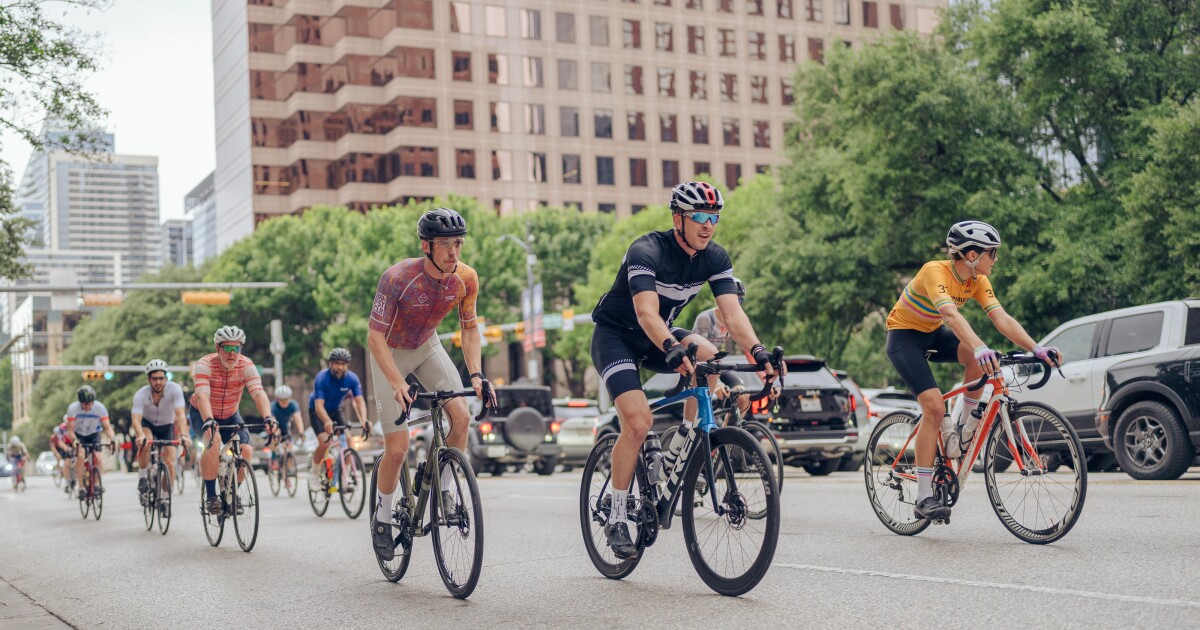
When I first moved to Austin almost five years ago I knew I was going to need a bike. I’ll make no secret of it: I love riding bikes, and even in the small town I grew up in, I made it a priority to ride as much as I could.
While it’s true that Austin historically was built with car travel in mind, the city has also been a champion of bike friendly infrastructure and is continuing to add more bike lanes.
That being said, even for someone like me, the idea of cycling in a big city like Austin took some getting used to. But in time, I grew to love it. It’s my favorite way to get around the city. For some Austinites, it has even replaced car travel entirely.
So, whether you’re interested in becoming a daily bike commuter, a weekend adventurer or you’re looking for a great way to get some exercise, here are a few tips for getting on the road and having a great time doing it.
Finding a bike
My advice for most people, especially those not experienced in buying a bike, is to look for fit.
In a nutshell, your bike should be big enough that your leg extends all the way down on the down stroke, but small enough that you can take your foot off the pedal and touch the ground when you stop. REI has a great guide to finding your best bike fit.
Manoo Sirivelu
/
for KUT News
Group rides, such as those put on by Breakfast Club ATX, are a great way to meet other cyclists and become more comfortable riding around town.
If you’re comfortable with finding a well fitting bike and want a little more guidance about what makes the most sense for Austin, I’ll say this:
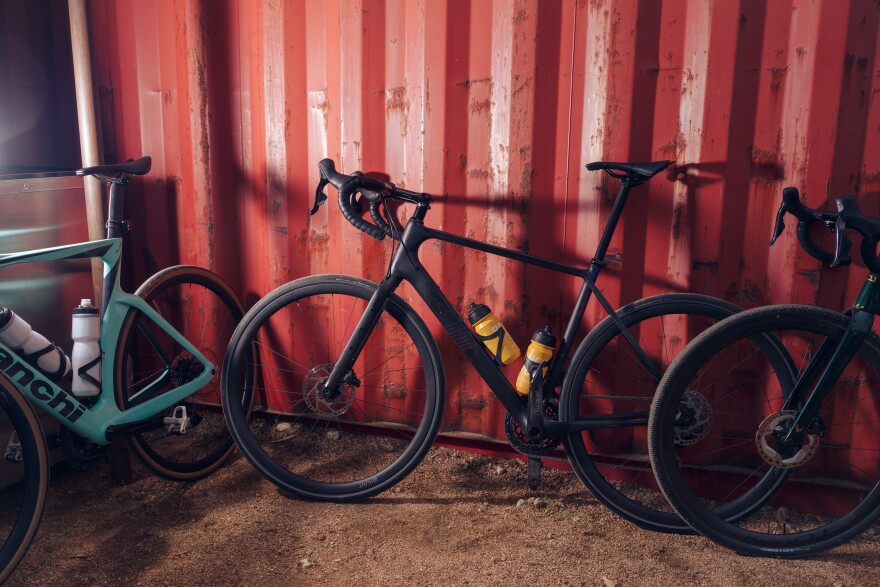
For general use and getting around most of the city with ease, a mountain bike with its front suspension is going to be heavy and bulky. A road bike can be a great choice, but keep in mind there are several bike trails in the city that have sections of gravel that might not suit the thinner tires of most road bikes. For these reasons I’ve found that a gravel or hybrid bike is a great way to get around.
If you have a bike in need of repair, or you’re looking to buy a bike, visit one of our wonderful local bike shops.
A local bike shop is also a great resource for bike fitting, local rides and other bike related events around town.
If you’re interested in learning how to do repairs or finding a great deal on a used bike, I’d highly recommend visiting the Yellow Bike Project on Webberville Road. The volunteer-run nonprofit provides open workshop time where folks can work on their own bikes and refurbish donated bikes to give to people in need.
You’ve got a bike — now what?
When I first moved to Austin, I didn’t ride much outside the 2-mile commute from my apartment to my workplace. I was nervous sharing the road with cars, and unsure of where else I could ride that fit my comfort level. Another thing I was concerned about was distance. Could I really ride 10 or even 20 miles around Austin and make it back home?
If this sounds like you, I would highly recommend riding with a group. Group riding is a great way to meet people and also a great way to learn more about bikes, common routes around the city, and how to safely share the road with cars.
Thankfully, Austin has no shortage of bike clubs and weekly group rides that cover the range of styles and skill levels.
Manoo Sirivelu
/
for KUT News
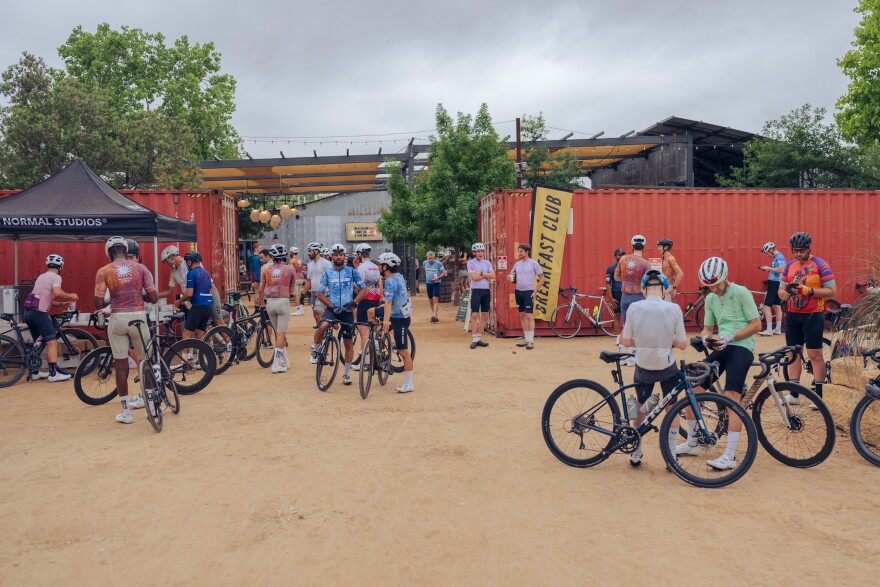
Breakfast Club ATX gathers at Central Machine Works after the group ride.
For those just starting out, Bat City Biking, Social Cycling Austin, and Critical Mass are great group riding organizations that will get you comfortable in hand signaling and calling out stops, turns and obstacles in the road.
If you’re looking for a more challenging ride, Breakfast Club is one of the largest monthly meetups in the country. If you’re interested in riding your bike at Circuit of the Americas, you can do that, too.
The city of Austin provides resources on its website for cyclists, including a handy map that sorts roads in Austin by comfortability. Another great tool is Strava, with its heat map of where cyclists tend to ride the most. These are both useful when coming up with your own routes around the city.
As a general rule of thumb: if you wouldn’t think to drive your car down a road, it might be a wonderful road to ride your bike on. In other words, if driving from one neighborhood to another takes you on a main artery road, a parallel neighborhood road might be less convenient for a driver but much safer for a cyclist. In fact, many of my favorite routes around town are through corridors of quieter neighborhood streets.

Manoo Sirivelu
/
Manoo Sirivelu for KUT News
Gavin, 13, in his helmet after a ride with the Breakfast Club ATX.
A quick note on safety: Wearing a helmet is essential, and if you’re planning on riding at night, remember to bring a headlight and a rear red light to alert others of your presence on the road.
Here are a couple of great places to ride with minimal or no vehicle traffic:
Shoal Creek Trail
For those of you on the west side of town, this trail connects downtown to Pease Park and eventually winds its way up to a protected bike lane on Shoal Creek Boulevard that you can take all the way up to Highway 183 if desired.
Ann and Roy Butler Hike-and-Bike Trail
This 10-mile trail is one of the most accessible in town. It can be heavily trafficked at peak times but is perfect for those looking for a slow and easy ride away from vehicle traffic.
Southern Walnut Creek Trail
This trail, with a connection to the new Austin to Manor trail, takes you on a 15-mile journey from East Austin to Manor with no shared roads with cars whatsoever. It’s one of my favorite routes in the city.
Manoo Sirivelu
/
Manoo Sirivelu for KUT News
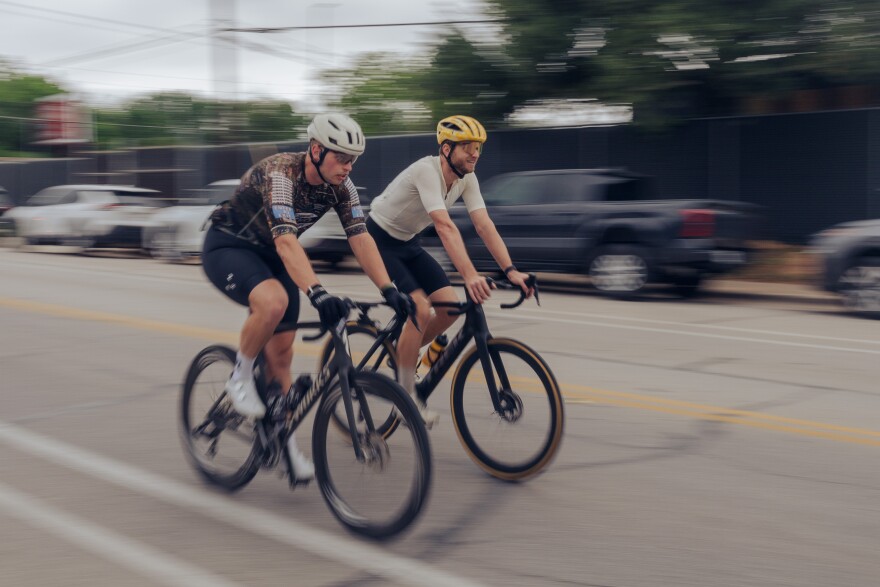
Breakfast Club ATX cyclists ride down Fifth Street on their way to Central Machine Works.
How to get to Barton Springs
One of my favorite places to spend weekend afternoons is, unsurprisingly, Barton Springs. Austinites’ love for Barton Springs seems like such a uniting force that I figured it would be great to prepare a few sample routes for different quadrants of the city that all lead there.
North Austin YMCA -> Barton Springs Pool
Passing through the Wooten and Brentwood neighborhoods on Woodrow Avenue, this route also makes great use of the Shoal Creek Trail to get to the springs.
Mary Moore Searight Park (South Austin) -> Barton Springs Pool
For folks south of the river, planning a bike outing might be a little more challenging, but it can be done. My preferred way to connect to downtown from the south side is via Emerald Forest Drive and Fifth Street.
University Hills (NE Austin) -> Barton Springs Pool
University Hills and Windsor Park connect easily to Mueller and Cherrywood. From there take Cherrywood Road/Chestnut Avenue to 13th Street, wind through neighborhood roads past the Carver Library, and eventually make your way to the Red Line Trail.
St. Johns -> Hyde Park -> Barton Springs Pool
North Central Austinites have the luxury of highly bikeable Speedway to connect to campus. From there San Jacinto Boulevard gets you to the downtown portion of the Red Line Trail.
West Campus -> Barton Springs Pool
For those of you in West Campus, Rio Grande Street takes you most of the way there. Easy peasy!
Manor -> Barton Springs Pool
The Southern Walnut Creek and Manor trails are some of the most pleasant rides in town and among the longest uninterrupted urban bike trails in Central Texas.
Montopolis -> Barton Springs Pool
Montopolis residents have the option to cut through Roy G. Guerrero Park to take the Lady Bird Lake trail to Barton Springs, but I’ve opted in this route to go over the Old Montopolis Bridge to avoid a long section of the often crowded lake trail. Plus, going over the bridge is pretty dang cool.
St. Edward’s University -> Barton Springs Pool
For those of you in South Austin but north of Ben White Boulevard, getting to Barton can be a trip up Fifth Street to Barton Springs Road, or a ride on Mary Street into the Zilker neighborhood.