
Not everyone can afford a car, and not everyone wants one.

That places more of the burden on Dallas Area Rapid Transit, North Texas’ largest public transportation agency, to manage the challenge of providing reliable service for the ninth largest city in the United States and its suburbs.
Related: For more on the impact of growth in North Texas, visit dallasnews.com/futurentx
Article continues below this ad
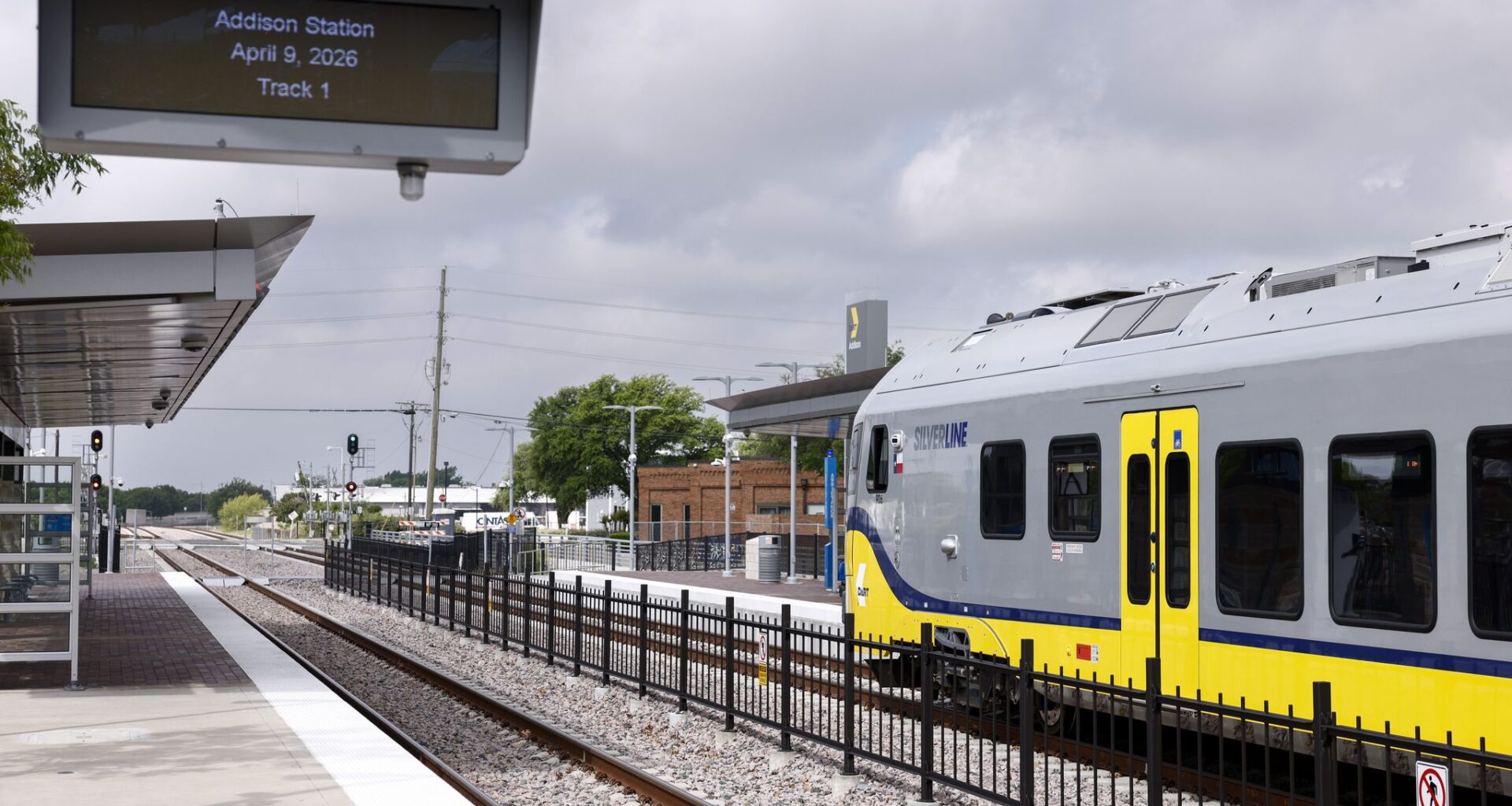
DART covers more than 700 square miles across 13 cities. Its network includes 93 miles of light rail, the new 26-mile Silver Line regional rail, 83 bus routes with more than 7,000 stops, 31 GoLink microtransit zones, paratransit, the Trinity Railway Express, and the Dallas Streetcar system. These services carried about 56 million trips last year, or roughly 171,000 boardings on a typical weekday.
DART aims to put about 74% of residents in its coverage area within a half-mile of service. Core riders remain low-income residents, many of them people of color, who lack cars and rely on transit for jobs, school and everyday needs.
Make Dallas News a preferred source so your search results prioritize writing by actual people, not AI.
Add Preferred Source
Related: As DART struggles, how are other public transportation agencies faring across the U.S.?
Article continues below this ad
But financial pressures are weighing on the agency. DART relies heavily on a dedicated 1% sales tax from its member cities, which provides nearly two-thirds of its revenue. Its long range financial plan shows that earlier rail expansion and the Silver Line project left the agency with significant debt obligations into the 2030s, constraining how much new service it can add.
“We just have to provide more service, but more service is expensive,” said Nadine Lee, who served as DART CEO until April. “Our revenues are not growing at the same pace, and there is constant pressure to spend less money.”
Nadine Lee speaks during a news conference on Oct. 29, 2025, in Dallas. Lee was the president and CEO of Dallas Area Rapid Transit from 2021 until April 2026.
Christine Vo/Staff Photographer
This spring, residents in Addison, Highland Park and University Park will vote on whether to withdraw from DART, a sign of the agency’s central role and the strain in some member cities over how service and sales‑tax contributions line up.
Article continues below this ad
DART rider surveys consistently point to three priorities, which Lee summarized as security, cleanliness and reliability. Under a 10-year, $2.5 billion program called DART Transform, DART is replacing vehicles and upgrading stations and safety systems. It reports violent crime is down and missed trips have fallen from about 15% of runs when Lee arrived to less than 1% today.
But as Dallas grows, gaps in access and opportunity become clearer. Transportation is a necessity across North Texas, and the region is struggling to build a system that works for the people who depend on it most.
Related: Costs, crime rates and riders: Five charts that show how people use DART
“In order to have gainful employment, the person has to be able to get to the job,” said Jessica Galleshaw, Dallas’ deputy director and chief opportunity officer in the Office of Housing and Community Empowerment.
Article continues below this ad
DART knows geography matters. Given that many of the region’s jobs are north of Interstate 30, more direct, faster trips from the south are a key need, according to DART’s 2045 Transit System Plan.
Laura Ward, president and CEO of Workforce Solutions Greater Dallas, said transportation and child care are the biggest barriers job seekers face.
Laura Ward, Workforce Solutions Greater Dallas president and CEO, speaks during a ribbon cutting event for the new Garland Workforce Center on Feb. 26, 2026.
Angela Piazza/Staff Photographer
“There’s a significant number of logistics and construction jobs, which are key sectors for us, and they’re located in areas that have limited DART frequency, and that makes third-shift work or weekend work inaccessible for people,” Ward said.
Article continues below this ad
North Texas needs to think beyond city limits if it wants to match people to those jobs, Ward said. She argued for a regional approach that looks at employer shift times and the number of people who need to move, saying you might not run a bus every 10 minutes on a Saturday, “but you can run it every 10 minutes during a shift change.”
Experts say lasting progress will take coordinated investment and policies, especially to align DART with real-world job locations and employer shift schedules.

By signing up, you agree to our Terms Of Use and acknowledge that your information will be used as described in our Privacy Policy.
For all the investments, voters, companies, agencies, and nonprofits, transportation in southern Dallas remains a patchwork. It’s better than it once was, but still short of letting families move easily from home to opportunity.
Article continues below this ad
“I think Dallas can use all of the resources it can get when it comes to transportation,” Ward said, “and it can use all of our brains and energy around trying to solve for the transportation barriers that job seekers face.”
This reporting is part of the Future of North Texas, a community-funded journalism initiative supported by the Commit Partnership, Communities Foundation of Texas, The Dallas Foundation, the Dallas Mavericks, the Dallas Regional Chamber, Deedie Rose, Lisa and Charles Siegel, the McCune-Losinger Family Fund, The Meadows Foundation, the Perot Foundation, the United Way of Metropolitan Dallas and the University of Texas at Dallas. The News retains full editorial control of this coverage.