
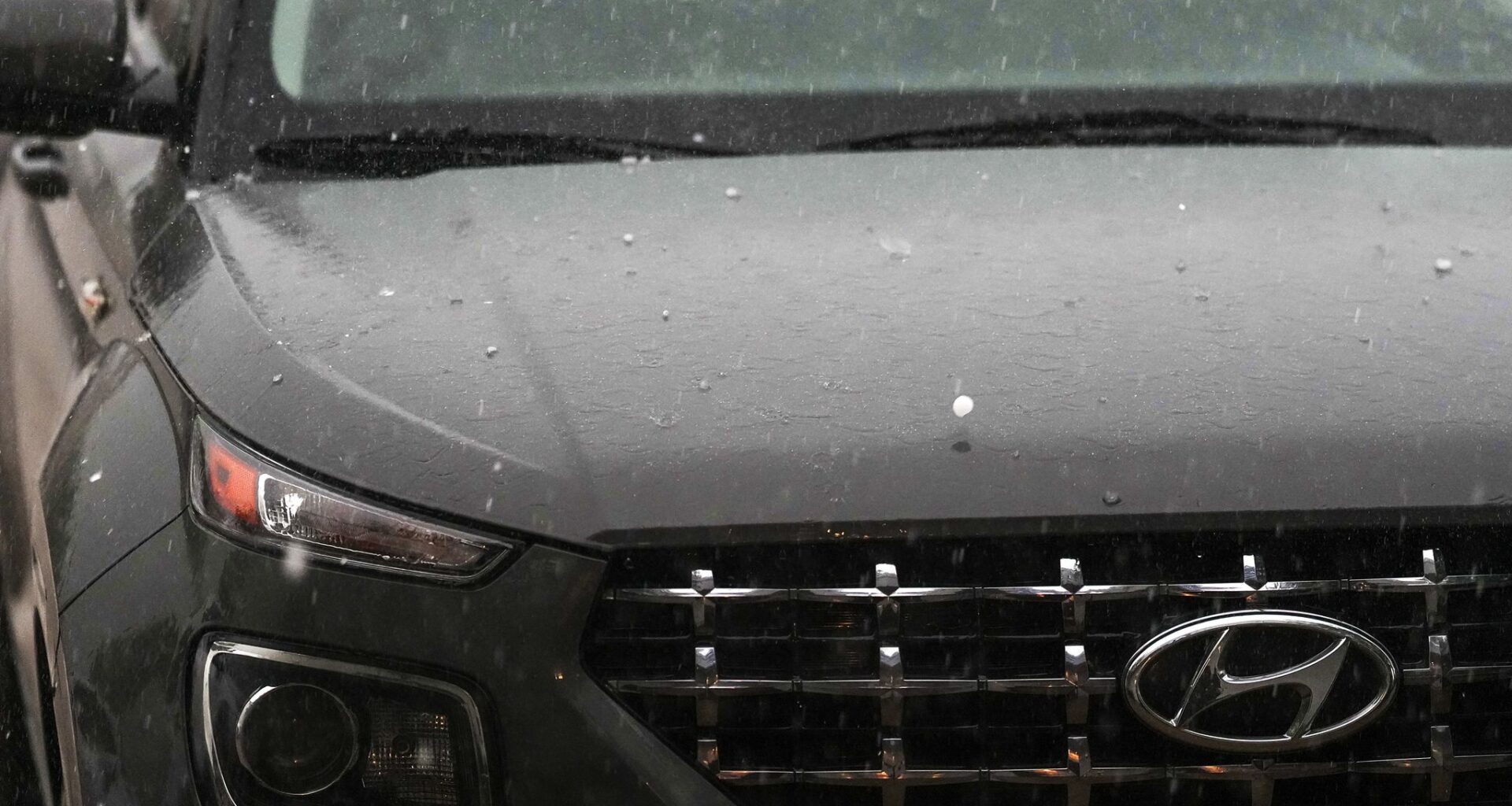
Hail pelt the hood of a parked car in Rowlett, Monday, April 27, 2026.
Smiley N. Pool/The Dallas Morning News
The National Weather Service issued a severe thunderstorm watch and an increased hail threat for areas of North Texas until late Tuesday night.

1:07 p.m. Tornado watch issued
A tornado watch has been issued for parts of Oklahoma and North Texas until 9 p.m., according to the weather service. Wind gusts of up to 80 mph are also expected along with softball-sized hail.
Article continues below this ad
The weather service emphasized in a statement that hail up to 4.5 inches is the main threat with this afternoon’s storms. Officials said storms are expected to hit during rush hour and encouraged people to stay home if possible.
“The tornado threat is lower overall, but not zero,” the statement said.
Towns within Sherman and Graham counties could see hail up to 3 inches in diameter and wind gusts of 60 mph, according to the weather service.
Article continues below this ad
Make Dallas News a preferred source so your search results prioritize writing by actual people, not AI.
Add Preferred Source
The weather service said areas north of Interstate 20 and west of Highway 281 will be under a moderate hail threat from 4 p.m. to 10 p.m. Hail could potentially be larger than baseballs, about 3.5 inches in diameter, forecasters said.
This story will be updated live throughout the afternoon and evening with the latest.
What to know about hail, how to protect yourself
Hail forms when a raindrop is carried by a thunderstorm updraft to an extremely cold part of the atmosphere. It grows in size as other liquid water droplets collide with the hail and freeze onto the surface, according to the National Severe Storms Laboratory.
Article continues below this ad
When the updraft can no longer support the weight of the hail or the gust weakens, the hailstones will be dropped from the sky. The stones must be at least 0.2 inches to be classified as hail, and to be considered severe, hailstones must be at least one inch in diameter.
Here are a few things to keep in mind.
If you’re outside when a hailstorm strikes, it’s important to seek immediate shelter, the U.S. Forest Service said. If it’s not possible to protect your entire body, focus on the head.
If you’re driving, the forest service recommends pulling over, waiting inside the car and avoiding parking near large trees or under overpasses. It also recommends getting on the floor or backseat of the vehicle face down to avoid getting hit by broken glass.
A garage is the best way to protect a car against hail, but thick blankets or mats can help soften the landing if covered parking isn’t available.
Driving tips for when it’s storming
If you’re planning on traveling on wet roads, there are some safety tips you can use to stay safe in the case of heavy rain or any flash flooding.
Article continues below this ad
Make sure your car is equipped for the rain. Ensure your tires have enough pressure and your windshield wipers are functioning properly. They may need to be replaced.
Don’t use cruise control. It’s more likely to lose control of your car when using this feature when it’s raining.
Drive in the tracks of the vehicle in front of you.
Drive slow. Avoid hard braking and turning sharply in order to maintain traction on the road.
Don’t panic if your vehicle starts to skid. Instead, ease off the gas pedal and continue to steer the car in the direction you want to go. Avoid slamming on the brakes.
Don’t ignore the flooded roadway signs. If you drive around them, you could be fined up to $2,000 and/or up to 180 days in jail. Additionally, tampering with signs can cost you up to $1,000 and/or up to two years in jail.
What to do when you hear a weather siren

By signing up, you agree to our Terms Of Use and acknowledge that your information will be used as described in our Privacy Policy.
Dallas’ weather sirens, officially known as the Outdoor Warning System, alert people to weather threats that could cause injury or damage. The city’s sirens are divided into six sectors and are activated based on which areas are experiencing a weather threat. When they go off, they blare for about three minutes.
Article continues below this ad
The city of Dallas uses five activation criteria:
A tornado warning issued by the National Weather Service
A severe thunderstorm warning from the weather service with winds 70 miles per hour or higher
A confirmed tornado on the ground in Dallas.
Hail 1.5 inches in diameter or larger
Other emergencies as deemed necessary
If you hear them, immediately find shelter and check official social media pages and news outlets or tune in to NOAA weather radio for more information. Don’t call 911 to inquire why the sirens are going off or report that the sirens are sounding in your neighborhood, emergency management staff said. The emergency management office will have notified first responders and other city departments.