
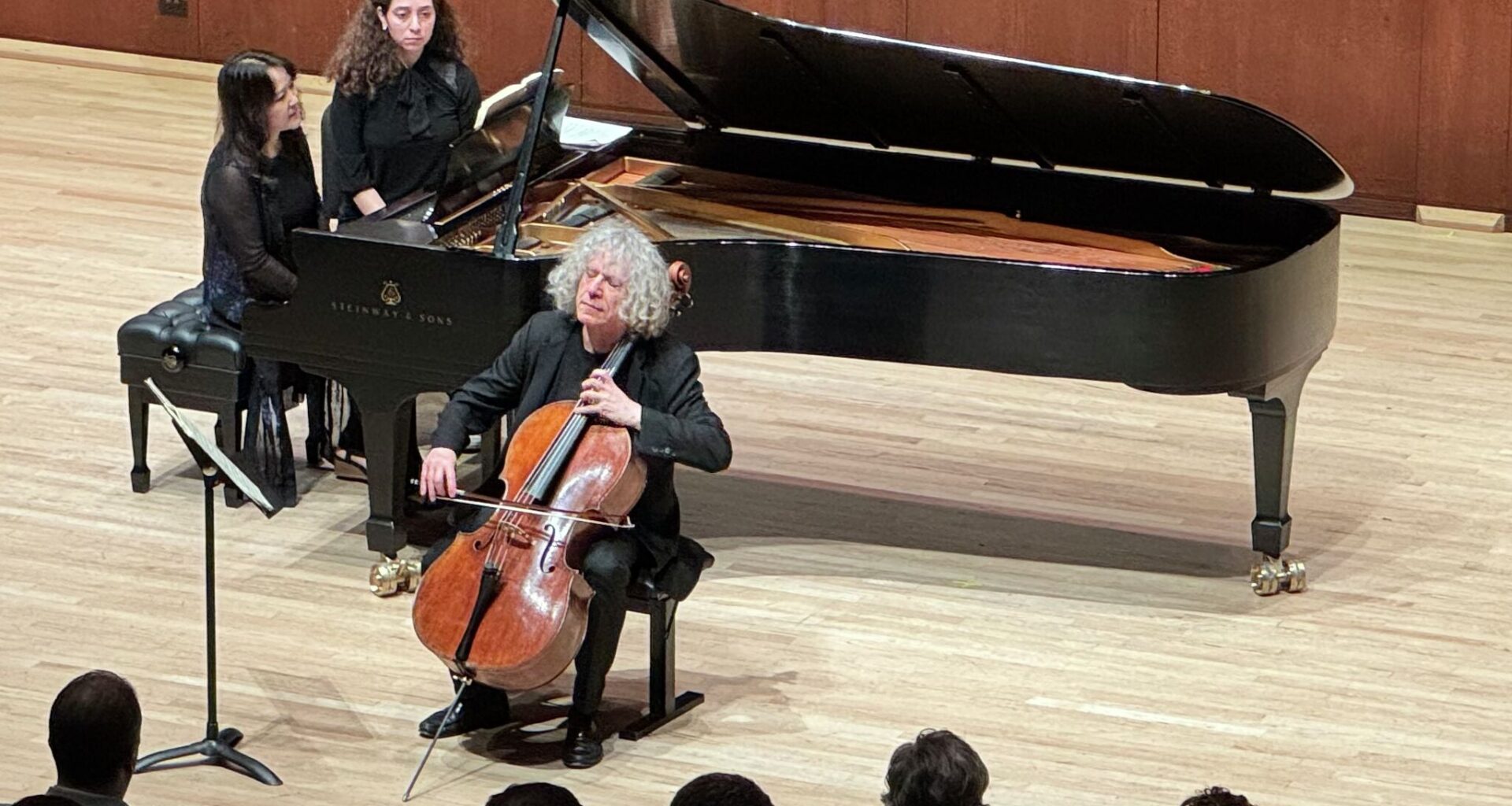
It was one of those concerts you feel lucky to experience, a great program performed with a wonderful balance of passion and elegance. Presented Monday night by the Dallas Chamber Music Society, at Southern Methodist University’s Caruth Auditorium, British cellist Steven Isserlis and Canadian pianist Connie Shih framed two 20th-century French works — by Gabriel Fauré and his protégé Nadia Boulanger — with classics by Beethoven and Schumann.
We’re so accustomed to thinking of Beethoven as a monumental figure in music history that we tend to overlook, or forget, his playfulness. But both aspects of his music were amply, indeed extravagantly, demonstrated in performances of the composer’s Variations on “Ein Mädchen oder Weibchen,” from Mozart’s Magic Flute, and the A major Sonata, Op. 69.
In the opera aria, the ditzy birdcatcher Papageno sings of his wish for “a girl or a little wife.” The Beethoven variations cycle through music feisty, reflective, even mysterious.
Right from the start, Isserlis spun out a tone of silken suavity, and even the most impassioned passages never got raw or mistuned. Shih was very much an equal partner, the two musicians playing off each other with imagination and panache.
It was more of the same in Op. 69 — and in Schumann’s Op. 73 Fantasy Pieces: two musicians vividly characterizing music of considerable emotional range, but also hugely enjoying themselves. Songful passages, delicate arabesques, tempestuous outbursts, surprising hushes — all were brought to life and savored. Only in two places in the finale of the Beethoven sonata did I think Shih too aggressive, yielding unnecessarily steely sounds.
Like Beethoven, Fauré suffered hearing loss in later years. Unlike Beethoven, he could still hear, but pitches were so distorted that he could scarcely bear listening to music. His genius was undimmed, though, yielding some of his greatest chamber music masterpieces.
There’s a yearning sensuousness in these late works, the first movement of the Op. 117 G minor Sonata luxuriating in melodies and harmonies that keep slipping into unexpected places. The slow movement is an arrangement from a solemn march, for military band, commissioned for the centenary of Napoleon’s death. The finale, energetic, even ecstatic, couldn’t be more different. It doesn’t rage against the dying of the light; it keeps the light defiantly flashing.
Although she started out to be a composer, Boulanger largely renounced composition to become one of history’s most influential teachers of music theory and composition. The first two of her Three Pieces for cello and piano, from 1941, could almost pass for Fauré, although with a sparer piano part in the first. The very different third piece is indeed “Fast and nervously rhythmic,” almost suggesting gussied-up folk dances à la Bartók or Falla.
Performances throughout were sensitively molded and colored. The encore was an arrangement of Schumann’s song “Sängers Trost,” so exquisitely played that the audience paid the ultimate compliment of long silence before breaking into applause.