

As North Texas moves through the end of April and into May, the region is entering one of its most active periods for severe weather.
DALLAS — As North Texas moves through the end of April and into May, the region is entering one of its most active periods for severe weather.
This time of year often brings multiple rounds of storms, sometimes within just a few days. That setup creates more than just a weather concern. It can also have a significant impact on traffic, especially during peak travel times.
It happens faster than most drivers expect
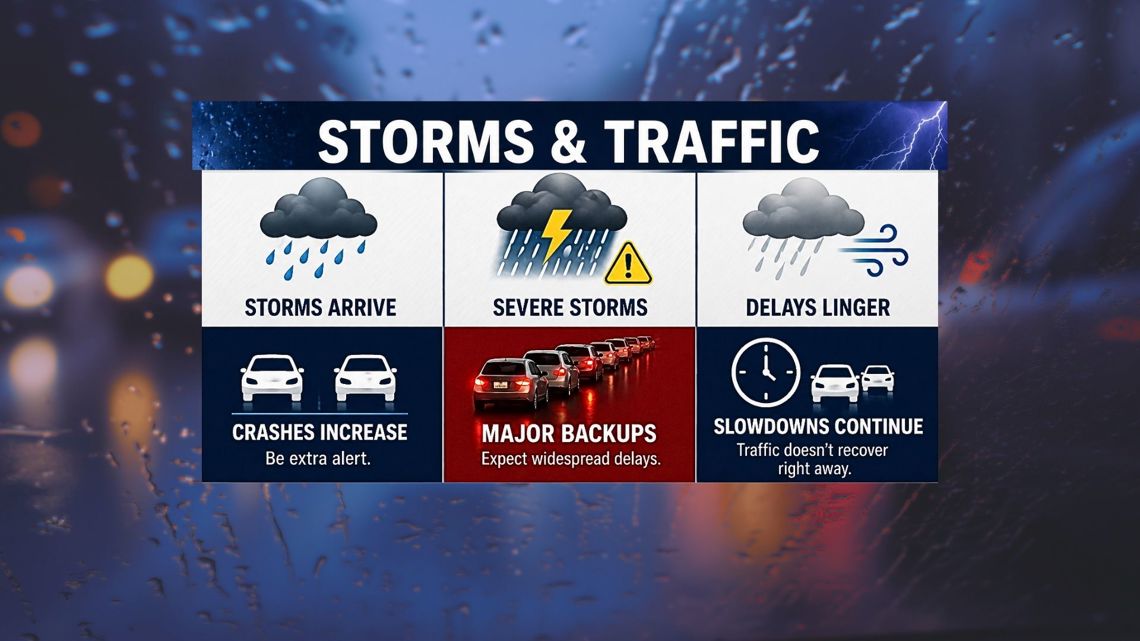
Severe weather does not have to be extreme to create problems on the roads. In many cases, it begins with a quick downpour. When that happens during busy travel periods, drivers naturally slow down. Brake lights stack up, and traffic begins to tighten almost immediately. From there, delays begin to build. And once they start, they rarely stay in one place.
As rain becomes heavier, conditions change quickly. Visibility drops, and roads become slick. Following distances shrink and reaction times shorten. That combination leads to a higher chance of crashes, particularly along major highways and interstates where traffic volume is already high.
Once an accident occurs, the impact spreads. A single crash can slow traffic for miles. Multiple incidents can overlap and create a much larger problem. What starts as a slowdown in one area can quickly affect surrounding roads and corridors.
When storms turn severe
If storms intensify, the impact on traffic becomes more noticeable. Large hail is one of the biggest disruptors in North Texas. Drivers often react immediately by slowing down or trying to take cover under overpasses. That sudden change in behavior can create abrupt backups and dangerous conditions within seconds. Strong winds and heavy rain can make things worse by further reducing visibility and increasing the risk for additional crashes.
Timing plays a major role
One of the most important factors in how severe weather impacts traffic is timing. Storms that develop during peak travel times tend to have the greatest effect. Late afternoon and early evening are especially vulnerable periods because traffic volume is already at its highest. In those conditions, even minor issues can escalate quickly.
A brief downpour can lead to widespread slowdowns. A single crash can trigger a chain reaction. A stronger storm moving through at the wrong time can affect travel across the entire region.
Why this time of year matters
Late April and early May are part of the peak severe weather season in North Texas. Warm, humid air from the Gulf interacts with drier air from the west, creating an environment that supports storm development. That pattern often leads to multiple rounds of storms and increases the likelihood that at least one will overlap with busy travel periods.
Severe weather and traffic do not just overlap. They amplify each other. It does not take a major storm to create significant problems on the roads. Just one moving through at the wrong time can lead to rapid slowdowns, multiple crashes, and widespread delays. And in North Texas, especially this time of year, those conditions can develop quickly.
What drivers should know
Expect conditions to change quicklySlow down and increase following distanceAvoid stopping under overpassesStay alert for sudden backups
Because when storms move in, the biggest challenge is often not just the weather. It is how quickly traffic conditions can deteriorate alongside it.