
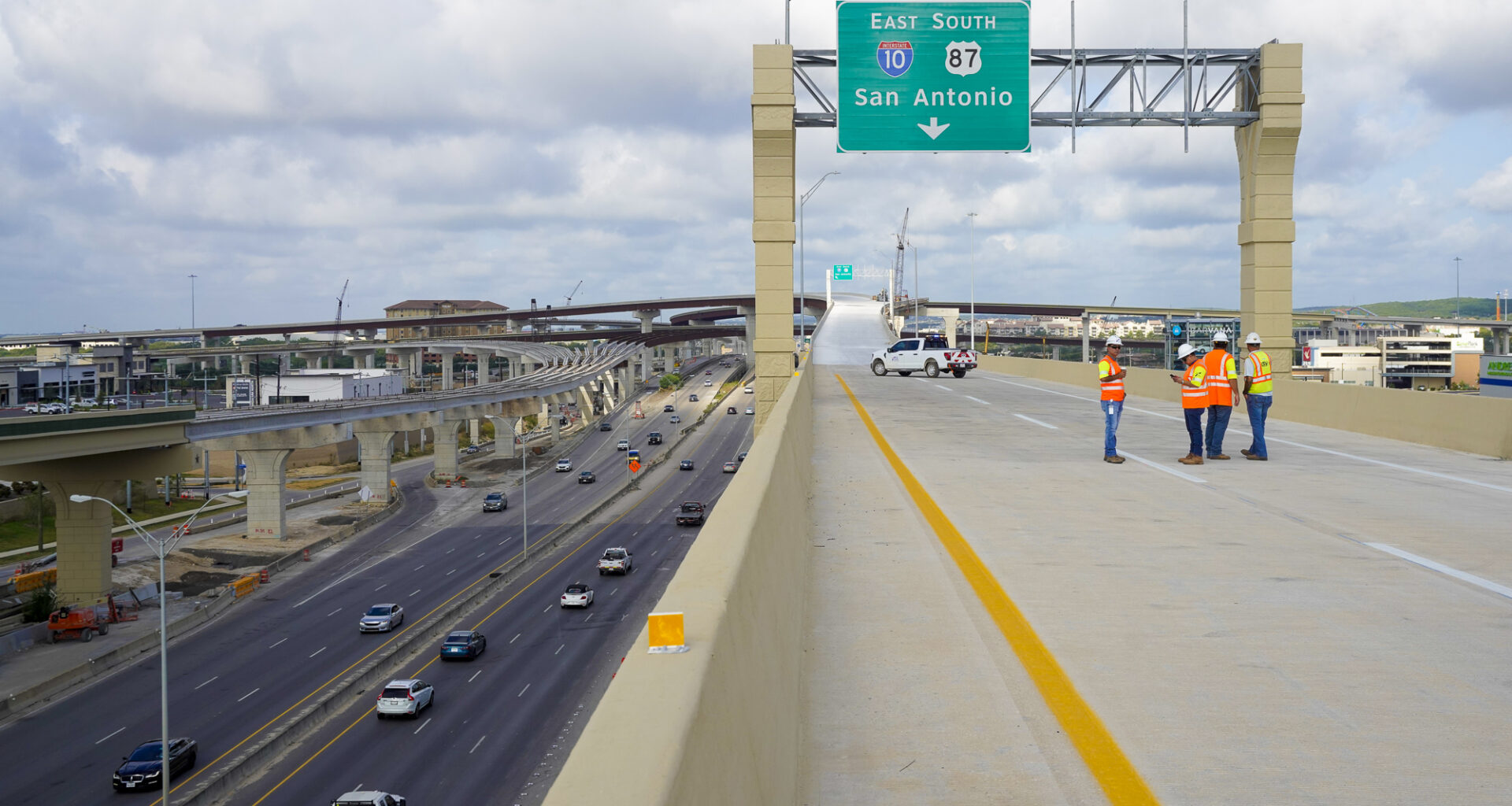
The reshaping of the I-10 and Loop 1604 interchange is ramping up (literally), but it means the number of closures and detours cropping up every week are as well. Now, drivers are going to have to traverse the construction-laden underbelly of the interchange every night this weekend which could induce some highway headaches.
The main lanes of westbound Loop 1604 will be closed where they meet at I-10 between 9 p.m. and 5 a.m. through Monday, May 4. This means drivers will have to hop off the highway before the intersection and continue underneath I-10. The area can get pretty congested with traffic cones and stop lights, but the Texas Department of Transportation says officers will be on site to direct traffic.
For those on the access road heading east along Loop 1604 in the evening, things get a little trickier. You’ll have to hook a right onto the I-10 access road at the I-10 intersection, head down to the UTSA Boulevard turnaround and drive the opposite way up I-10 to get back to the eastbound Loop 1604 frontage road.
This is all coupled with the permanent closure of the La Cantera Parkway exit ramp off westbound Loop 1604. So, folks are going to have a lot of learning curves traversing the Northside highway this weekend.
While most shops will be shuttered by 9 p.m., there are still restaurants and nightlife hangouts drivers will be heading to and from at these hours. Given the weekend timing, finding an alternate route may be wise.
It’s all for the sake of progress on what officials say will transform the largest state highway loop in Texas – a $1.4 billion project converting a huge stretch of 1604 into 10 lanes and completely reworking the way the two busy highways intersect. Farewell iconic four-leaf clover design, and welcome the series of stacked, direct connector ramps.
“It’s one of the most congested corridors in the state,” TxDOT Public Information Officer Jennifer Serold previously told MySA. “Over the next 20 to 25 years, the amount of daily drivers is expected to double. So, this expansion project is to prepare for future growth but also to give benefits to drivers in the next few years … It’s bringing a lot of congestion relief to drivers by giving them more lanes to travel on. And then, of course, when you reduce congestion, you increase safety for the drivers.”