
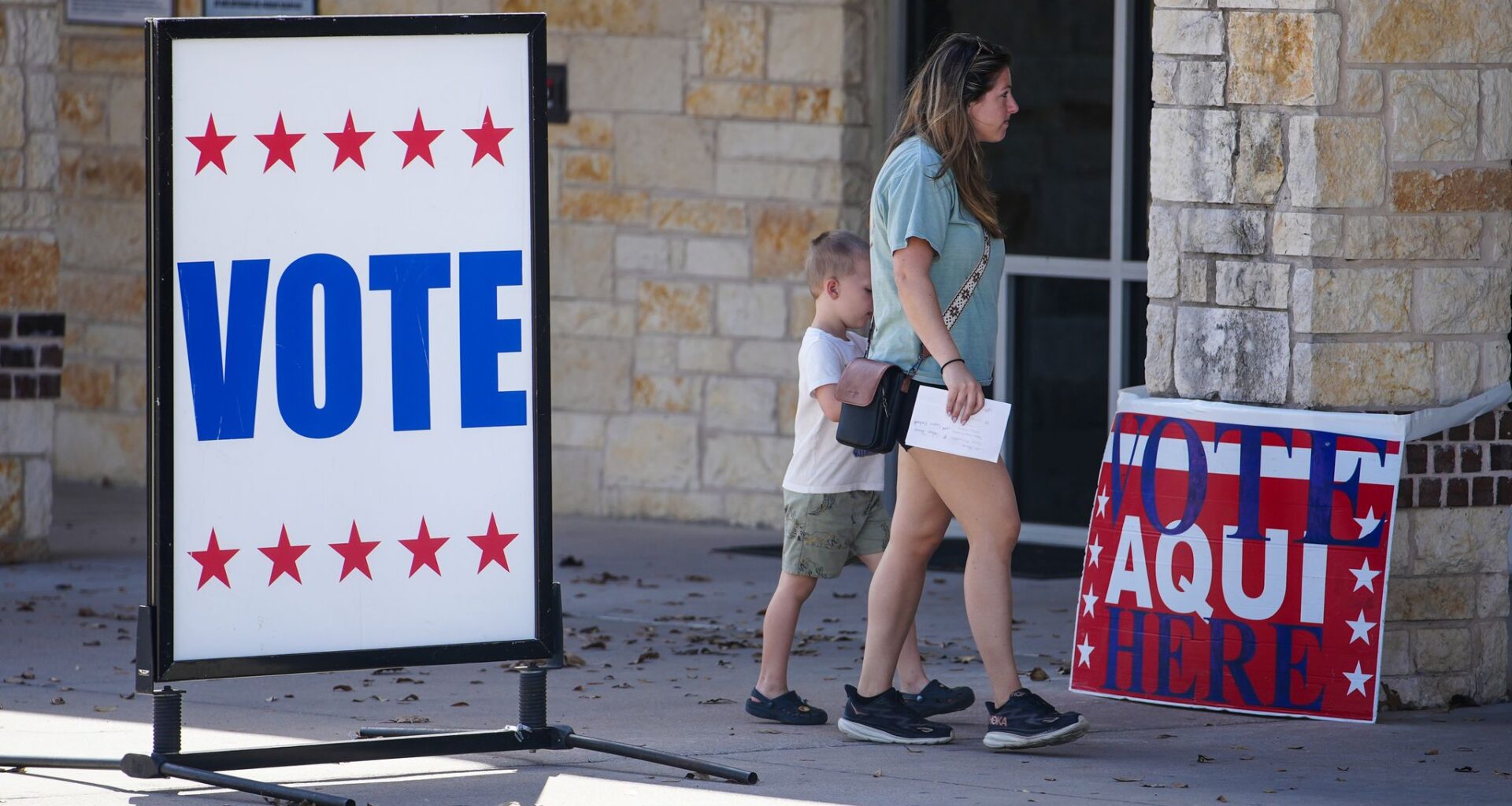
A women visits a voting center in Pflugerville for the March 3 primary. The latest Texas Lyceum poll found that only 27% of Texans believe their children will have a more prosperous future than their own current economic situation.
Ricardo B. Brazziell/Austin American-Statesman
Texas has long been regarded as a place of opportunity, with a strong economy and a thriving career market. Here, everything is bigger and anything is possible. But according to a 2026 Texas Lyceum poll, only a quarter of Texans believe they are in a long-term career, and some are losing faith in democracy.

Texans are questioning the very systems that are designed to support and represent our best interests. And this disconnect should serve as a warning, not just for today but for the future of our state and the generations that come after us.
Article continues below this ad
As president of the Texas Lyceum, I have the privilege of hearing directly from residents. Each year, the Lyceum conducts a comprehensive poll to gauge Texans’ perspectives on issues shaping our state. Our purpose is not to advocate for specific positions, but to raise awareness and foster informed dialogue so leaders are better equipped to serve their communities.
This year’s poll reveals a troubling reality: 75% of Texans believe they have a job, not a career. In a state with the eighth-largest economy in the world, this should raise serious concern. Texas is an economic powerhouse, but that success must translate into meaningful, long-term opportunities for its workforce. If Texans see only a paycheck and not a pathway to careers, something fundamental is missing.
Equally worrisome, only 27% of Texans believe their children will have a more prosperous future than their own current economic situation.
Addressing that gap starts with education. Career pathways are shaped early, through the combined influence of families, educators and public systems. Preparing students not just for employment, but for long-term success — through skills training, career exposure and real-world learning — should be a central priority. State and local leaders play a critical role in ensuring those opportunities exist.
Article continues below this ad
SIGN UP FOR THE AUSTIN ANGLE and get Statesman commentaries in your inbox
That sense of uncertainty extends beyond the workplace. The poll also found that one in four Texans are unsure whether democracy is the best form of government, pointing to a deeper disconnect from civic life and a lack of confidence in public institutions. A healthy democracy depends on informed, engaged citizens who believe their participation matters.
From my experience as a municipal leader, I have seen firsthand that government is only as strong as the people who engage with it. Civic participation, including voting, attending meetings and running for office, is essential to maintaining responsive and effective governance.
In recent years, various factors have discouraged people from stepping forward. The increasing polarization of politics, the demands of public service and the scrutiny that comes with it have all contributed to a decline in civic involvement.
Article continues below this ad
This trend is especially concerning at the local level. Local offices are often the entry point for future leaders, shaping the pipeline for higher levels of government. When fewer people are willing to run, communities lose diverse perspectives and fresh ideas. Over time, this weakens not only local governance but the broader democratic system.
ALSO READ: We need a return to civility and respect in politics. Here’s how we get there
If Texans are dissatisfied with their government, the question becomes: how are they engaging to create change? Dissatisfaction alone is not enough. Meaningful change requires participation from people willing to invest time, energy and leadership in their communities.
Rebuilding careers, strengthening education and encouraging civic engagement are not separate challenges; they are deeply connected. An education system that emphasizes critical thinking, civic responsibility and real-world skills can help bridge these gaps. It prepares Texans to build careers and to actively participate in shaping their government.
Article continues below this ad
Texas has the resources and the talent to lead, but we must use them efficiently. Ensuring Texans see a future of opportunity, and feel empowered to shape it, will determine whether the “Texas Miracle” continues to ring true for Texans or becomes a myth of a bygone era.
Get engaged with your local government to support the changes you want to see and ensure the children of today have the tomorrow they deserve.
JR Trevino is the mayor of Castle Hills, chief operating officer of Treco Enterprises Inc. and president of the 2026 Texas Lyceum, a statewide leadership organization that brings together voices from business, academia and public service.