
Editor’s note: This story was written by Ana Campbell, the special projects editor for The Texas Newsroom — a collaboration of public radio stations across the state — who is based at KUT.
When the University of Texas at Austin — home to KUT News — announced on Tuesday that it was forcing the public radio station to relocate a major portion of its inaugural KUT Festival away from campus, journalists at KUT News started reporting the story.
But questions were also raised about our relationship with the university and how KUT would cover a story involving not only ourselves but our landlord — one that has long facilitated our ability to operate.
What is KUT News’ relationship with UT Austin?
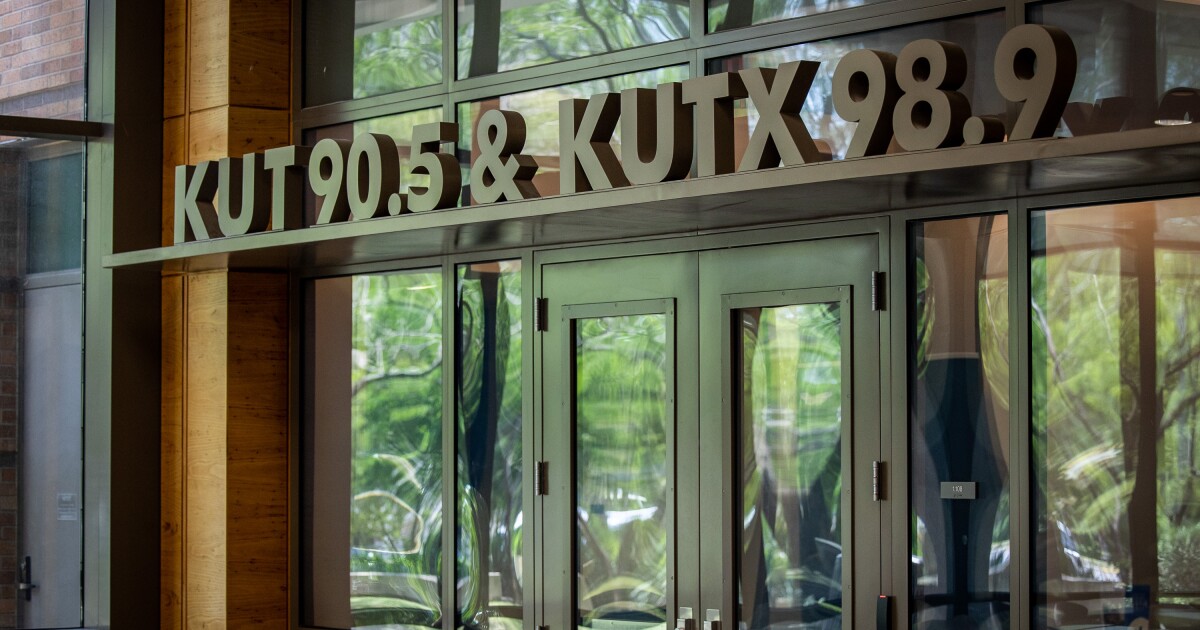
Established in 1958, KUT News is licensed to operate with the FCC through UT Austin and housed at the university’s Moody College of Communication.
Many public radio stations across the country and even here in Texas — KTTZ in Lubbock and Houston Public Media, to name a few — have long been licensed with the FCC through universities. (And KUT became a member of the NPR network in 1971, which is why you hear NPR and KUT reporters when you tune into 90.5.)
That technically makes people who work for university-licensed public radio stations university employees. KUT News journalists get UT benefits, including retirement accounts through the Teacher Retirement System of Texas.
As university employees, journalists at KUT News could be subject to open-records laws. But the First Amendment and state laws presumably protect communication about reporting.
While KUT General Manager Debbie Hiott is overseen by the dean of Moody College, neither she nor any other university employees outside the newsroom are involved in or direct news coverage at KUT.
KUT News is funded by donations from community members and businesses.
How is KUT covering the recent festival news?
KUT wanted to fairly interrogate all perspectives, getting the university on the record as well as managers at KUT and the festival’s organizers. But we didn’t want anyone in the KUT newsroom who had been involved in discussions about the festival with senior leadership to direct or edit our coverage. That immediately excluded certain editors in our newsroom who would normally be involved in news coverage from participating in conversations about our coverage or reviewing stories.
This also quickly became an investigative story, since there are differing accounts of how the university made the decision to move part of the festival. KUT wanted to know what had gone on behind the scenes, from every perspective, so the newsroom quickly filed open-records requests for communication between the university and the station.
We also considered the larger context.
Universities have started to reconsider their relationships with on-campus public radio stations, citing budgetary restraints and dwindling support from federal and state sources.
For example, Penn State University’s board of trustees voted in 2025 to effectively shutter WBSU, the local NPR and PBS affiliate, after Congress rescinded funding for the Corporation for Public Broadcasting. Citing budgetary reallocations, Baylor University announced last year that it would no longer fund KWBU.
This is an evolving story, and KUT is continuing to have conversations about our coverage. If you have any questions, thoughts or ideas, let us know here.