
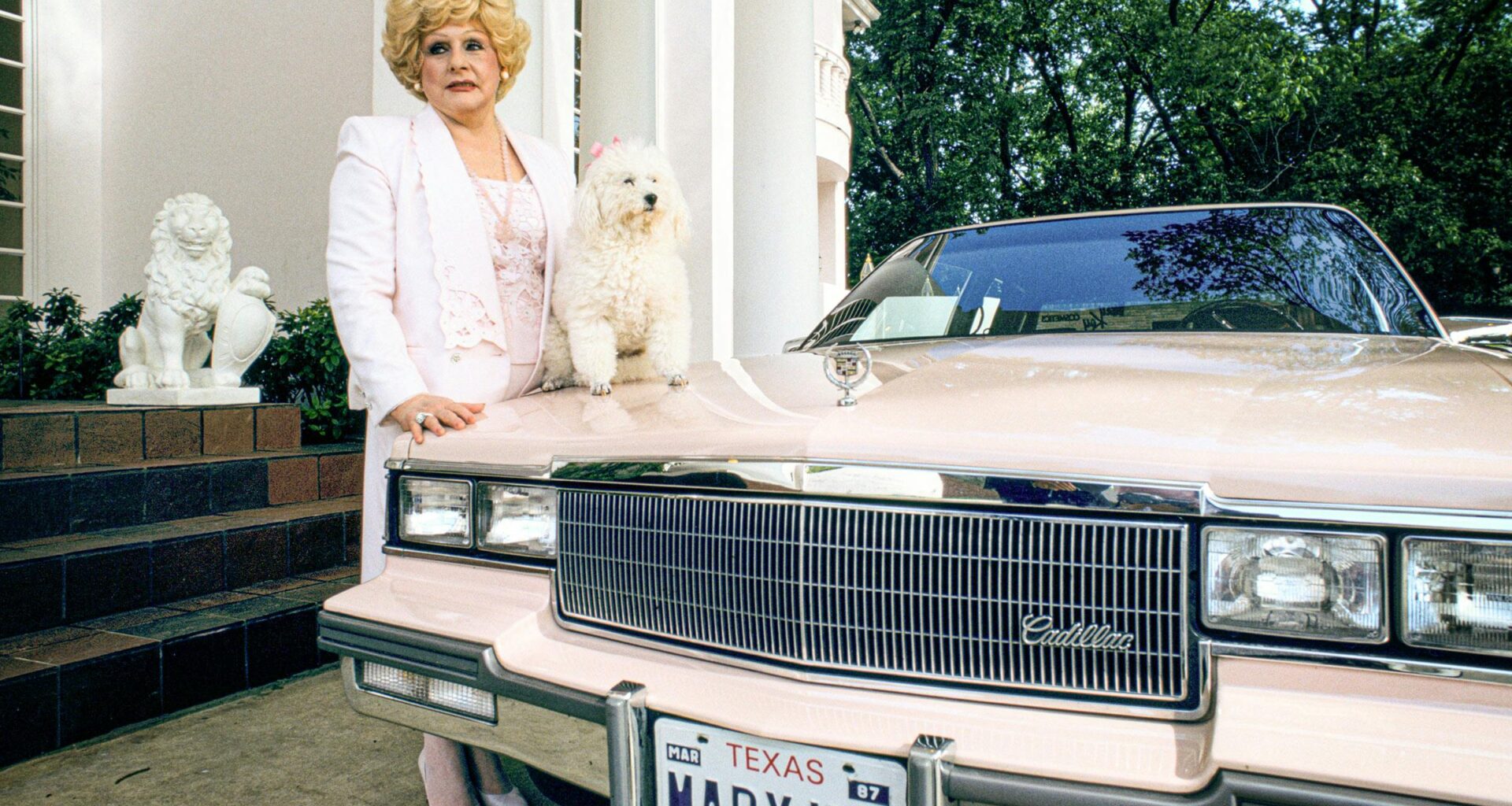
If you lived in Dallas in the eighties, as I did, Mary Kay Ash, founder of the eponymous Mary Kay cosmetics company, seemed to be everywhere all at once, promoting her business and herself. Ash telegraphed the kind of show-offy wealth that was so often a staple of Dallas—the city and the then-popular TV show. She wore a capacious blond bouffant wig that perilously topped her tiny frame and sky-high stilettos, and she had a cockeyed smile and a faraway gaze that was sometimes compared to Mona Lisa’s—if Mona Lisa had worn bright lipstick and heavy eyeliner. She had a bathtub the size of Switzerland. She had a mansion painted her signature pink.
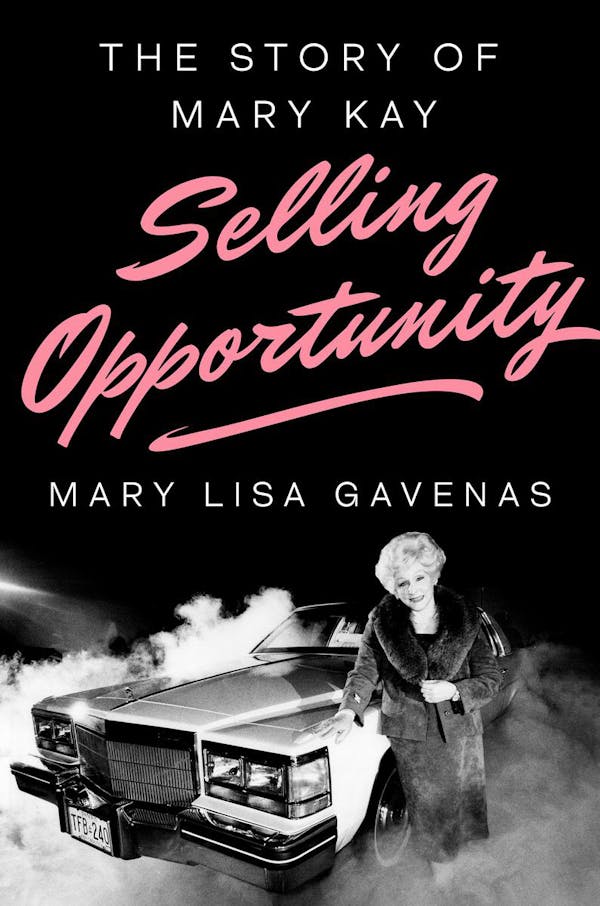
As Mary Lisa Gavenas makes clear in her new book, Selling Opportunity: The Story of Mary Kay (Viking), Ash wanted those who joined her company to believe that with hard work, they could become just like her—a woman born into poverty who managed to make it inconceivably big. Of course, Ash didn’t think her success was inconceivable. She had enough empathic aphorisms to put any other self-help goddess to shame. “What you believe, you can achieve,” she would say. Or “God first, family second, career third.” (In her more self-deprecating moments, she used to say, “I go to bed looking like Elizabeth Taylor and wake up looking like Charles De Gaulle.”)
Her advice seemed to work a kind of magic. One had only to cruise Preston Road or the parking lot at NorthPark Center to catch the pink Cadillacs that were the reward for the company’s most successful salespeople, who were virtually all women. The cars simultaneously served as motivational tools for Ash’s staff and literal advertising vehicles for those who dreamed of joining the team. In the great American tradition, Mary Kay and her squadrons of workers were living proof that if you worked very, very hard, your reward could be the era’s stereotypical trappings of hitting it big, ladies’ version: furs, diamonds, your own mansion, and, of course, a head-turning pink luxury car.
Being hopelessly naive, and happy just to have enough to live on, I would ask myself, “Who would want all that . . . stuff?” The answer was a whole lot of women, of course, especially those barely getting by, as Gavenas chronicles in her lively, extensively researched biography. An expert on the beauty industry and female entrepreneurship, Gavenas spent fifteen years reporting and writing this book, which is actually three stories in one: a biography of Mary Kay, a history of direct selling in the U.S. (i.e., the evolution of door-to-door selling into what’s known as multi-level marketing, or MLM), and a look at the economic binds that fetter so many American women.
Growing up in the ramshackle Sixth Ward in Depression-era Houston, Mary Kathlyn Wagner didn’t have much going for her. Her father was often MIA—he might have had tuberculosis; he might have been an alcoholic—and her mother supported her four children any way she could, which eventually meant cooking and running a restaurant while Mary Kay, her youngest, took on more and more household duties. Mary Kay was the only child with outsized ambitions, the one who worked hard, made good grades, and was still stymied by bad luck and, later, sexism.
There weren’t many jobs available for women when Mary Kay came of age, so she found one of the few that was: working as a salesperson for Stanley Home Products, created by a veteran of the Fuller Brush Company, which had made the door-to-door salesman something of an American Pest. Mary Kay, who had studied psychology and read Dale Carnegie, turned out to be a very good seller, even though she had married at seventeen and was busy raising children of her own.
Gavenas has unearthed a wonderful Rosebud moment when Mary Kay, hosting in-home sales parties in the late thirties and early forties to sell Stanley products, set the goal of becoming the Queen of Sales at the company’s annual convention. The prize, along with the opportunity to wear a crown and receive approbation from the entire sales force, was an alligator-skin bag, which “at that point was as far out of my reach as anything could be,” she would later write in one of her autobiographies. Ash cut out a photo of the handbag and carried it with her everywhere, as she sold window cleaners, furniture polish, and other goods designed for the housewife who was determined to keep a spotless home. In the end, Mary Kay won the crown—but not the alligator bag. “Some area manager—some man—had gone and switched prizes,” Gavenas writes. Ash never got over the bait and switch (though she eventually forgot what the booby prize was). “As the years went by, she would sound freshly frustrated every time she mentioned it.”
From that point on, the Mary Kay story is a feminized version of a Horatio Alger tale. The idea of launching her own cosmetics company came from her second husband, George Hallenbeck, who died over breakfast one morning after a jog in the Dallas heat when they had been married less than a year. It was left to Mary Kay and her adult son Richard Rogers to dig themselves out of the financial mess Hallenbeck left behind.
In 1963, Mary Kay founded her own company, Mary Kay Cosmetics, with $4,500 from her oldest son, Ben Rogers, and the assistance of Richard. Selling Opportunity demonstrates that in many regards, the company reflected Mary Kay’s impoverished upbringing and her commitment to the kind of maternal care her mother had modeled. The house parties she embraced—in which guests were encouraged to try products that they were assured would make them more gorgeous—resembled sorority-girl slumber parties; they were mini vacations from the housework and child-rearing sapping the life out of their attendees. Mary Kay made a fuss over her best salespeople, replicating the award-heavy conventions Stanley had thrown (minus the alligator-bag bait and switch). There was a lot of singing and clapping, and even some weeping when award winners would tell their sob stories about triumphing over adversity.
“You can do it!” Mary Kay told her employees, lavishing her best people with handwritten notes of encouragement (“Precious things are few, that’s why there must be just one of you”), diamond bumblebee pins, and, of course, pink Cadillacs. “She knew how to love her women,” one business rival told Gavenas. That was especially true of poor women and women who had been neglected or abused by parents, husbands, or (mostly male) bosses. Gavenas also notes that Mary Kay was an equal opportunity employer, hiring women of all creeds and colors.
The result, after several decades, was an iconic leader beloved by the Dallas establishment, the business press, and the business world in general, which was hungry for a woman executive who could be lavished with praise for her acumen but wasn’t a scary harridan. By 1996, the company had reached $1 billion in wholesale sales and Mary Kay had been inducted into Fortune’s National Business Hall of Fame.
I was with Gavenas for most of the way with this book. It’s immensely readable; she has a gift for storytelling and the revealing anecdote. (Full disclosure: Gavenas and I share a literary agent.) What it lacks, however, is a level of skepticism, one that showed up in Bridget Read’s recent book, Little Bosses Everywhere: How the Pyramid Scheme Shaped America. Like Gavenas, Read covers the history of direct selling and multi-level marketing, using Mary Kay, Amway, and Herbalife as her main test cases.
MLM, Read argues, is essentially a variation on the pyramid scheme, itself a descendant of the Ponzi scheme. The goal of such companies is not to sell products but to get buy-in from unsuspecting (and often desperate) participants, each of whom must then kick back a portion of their profits to the person who brought them in, and so on up the chain. As she explains, “Instead of approaching participants as investors, pyramid promoters will tell a recruit that they have an amazing product for them to sell. The opportunity is not only to sell the product but to recruit others to do the same. In a pyramid scheme, the product acts as a cover for the same type of money transfer that occurs in a Ponzi, from new participants to earlier ones.”
Little Bosses Everywhere shows how as Mary Kay’s profits grew, many of the women closer to the bottom of the pyramid, who bought the cosmetics at their own expense, failed to recruit enough members to cover their costs and often wound up in debt. “MLM’s statistics of success are closer to those of gamblers in a casino,” Read writes. She also dug up some pretty devastating statistics. While American law doesn’t require MLMs to disclose their contractors’ incomes in their tax filings, Canadian law does. Read reports that 85 percent of Mary Kay Independent Beauty consultants in Canada earned no commissions in 2022.
This isn’t a new critique. As Gavenas notes in her book’s final chapter, in 2012, Harper’s magazine ran a cover story (“The Pink Pyramid Scheme”) that aired similar complaints, which was followed by stories from Forbes and NPR. Gavenas notes that in the NPR story, Mary Kay’s head of compliance claimed that the company had a 90 percent buyback policy for unsold inventory, “a fact unreported in most of the exposés.”
Gavenas notes this as well earlier in the book, explaining that “many women never attempted returns. Some became embittered, enraged, or embarrassed. Some still hoped to give it another go. Nobody wanted to admit she had gotten carried away.” The very same drive to succeed that Mary Kay had instilled in so many desperate women made it difficult for them to acknowledge failure when they were experiencing a different form of desperation. Convincing people that their self-worth depends on their business success can be a powerful motivating tool. But it has its downside when success doesn’t come.
At the end of Selling Opportunity, Gavenas, while hailing Mary Kay as a feminist icon, notes that women in the U.S. still average 82 cents for every dollar earned by men. It would be churlish to lay the blame for that at Mary Kay’s feet. But maybe she didn’t do as much as legend would have it to rectify the situation.
When you buy a book using a link on this page, a portion of your purchase goes to independent bookstores and Texas Monthly receives a commission. Thank you for supporting our journalism.
Read Next