
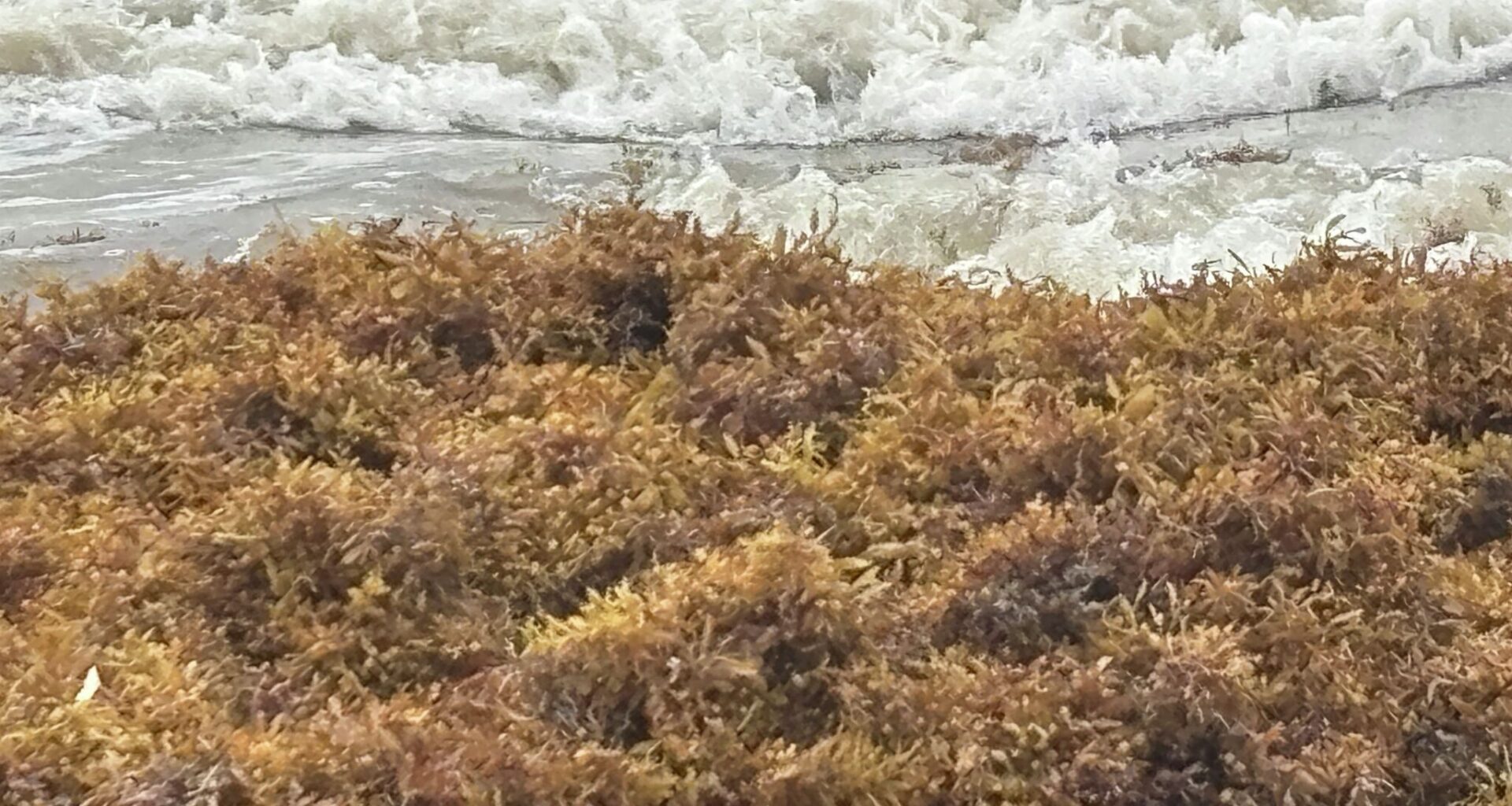
Just in time for the pre-Memorial Day crowds to begin visiting the island in earnest, Galveston’s beaches have been overwhelmed this week by an ungodly amount of the pungent seaweed known as sargassum.
To many people, it looks gross and smells worse—the stuff of tourism officials’ nightmares. But some folks invested in the city’s tourism industry say that shouldn’t deter them from showing up.
“Seaweed is a nuisance for beachgoers, but it’s not something that should stop people from coming to the beach,” Visit Galveston’s Director of Communications, Chris Stanley, told Chron. “It’s by no means unsafe. It’s just something that might get in your way when you’re here, but besides that, there’s lots of things to do here besides just coming to the beach.”
Unless the amount of sargassum on a particular beach passes a certain threshold, officials tend to leave it alone. Tourists may hate it, but seaweed does harbor a raft of benefits for the beaches themselves. However, Stanley said visitors are free to rearrange the piles of plantlike matter—actually a form of brown microalgae—at their leisure.
They might even find a few surprises.
“The interesting thing is if you kind of dig down in the seaweed, you’ll find sea beans and some sea horses, and bull crabs and even shrimp that are in the seaweed,” Stanley said. “It’s part of the ecosystem of the seaweed. You can actually find some very interesting coastal animals that are in there if you kind of dig in there and see what all you can find.”
Elsewhere, the sargassum is business as usual for the Galveston Beach Patrol. Chief Austin Kirwin likened the malodorous organic drifts to another periodic presence on the island’s beaches that many visitors consider a nuisance.
“When we have jellyfish coming in, it doesn’t change how we operate; it’s just we have jellyfish coming in,” Kirwin told Chron. “It’s the same kind of concept with seaweed.”
Galveston musician and surfer Robert Kuhn, a founder of the La Izquierda Surf & Music Festival, has seen it all before. His team will be ready when the festival returns this weekend.
“We’ve always had rakes down there to clean out that stuff,” he told Chron. “That’s pretty much always been a part of the event.”
Provided a high tide or the line of storms expected to hit the coast this weekend doesn’t carry the sargassum back out into the Gulf, Kuhn said it is something surfers need to watch out for.
“Sometimes when the seaweed gets so bad, you’ll be surfing and your fin will get caught on a big [glob] of seaweed,” he said. “It’ll fling you right off the board like you hit a sandbag or something.”