
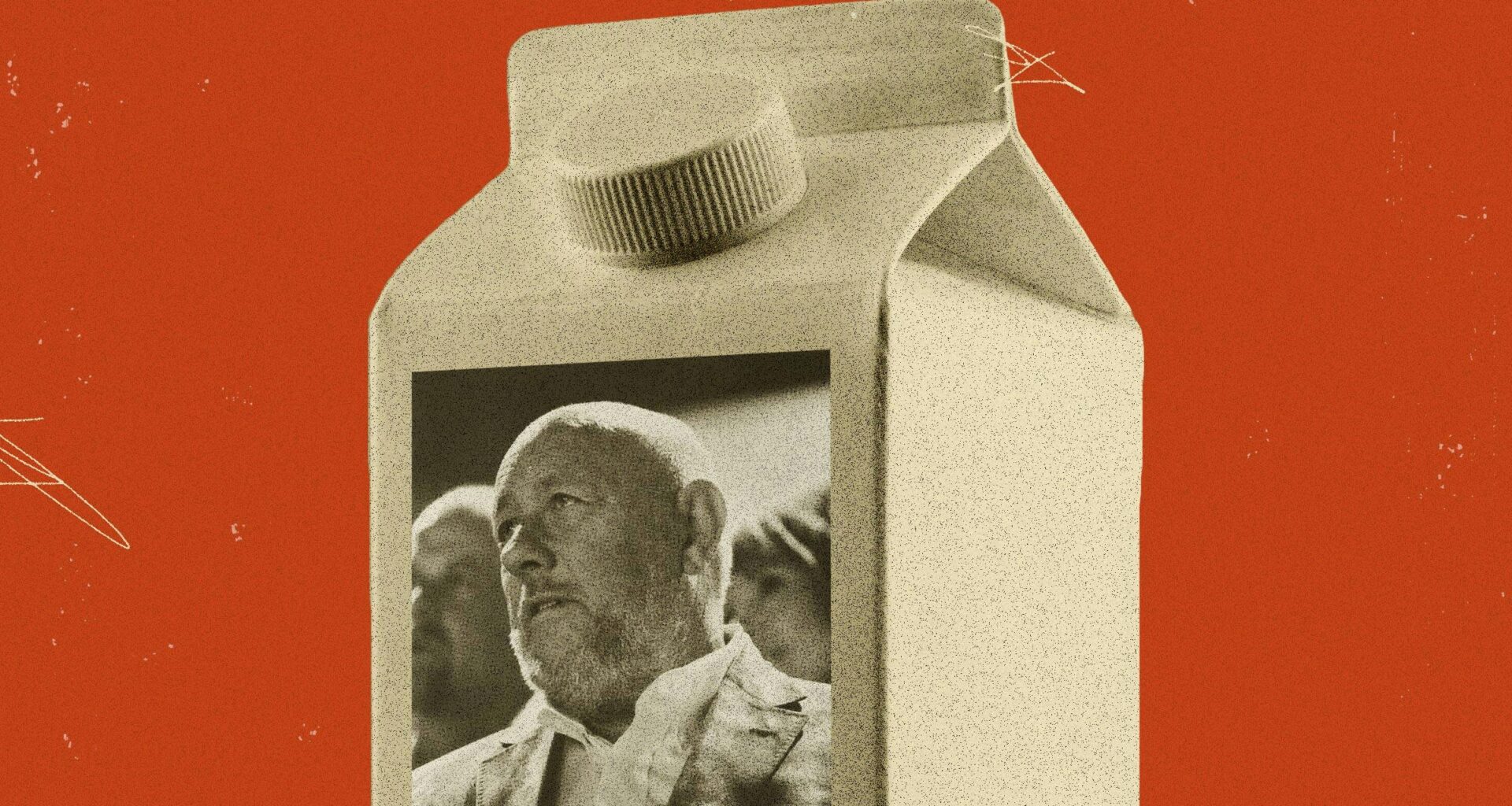
These were once the months of Farris Wilks, the time when the far-right billionaire’s fortune would shape Texas GOP primaries. Since 2015, when Wilks, his brother, and their wives made a record-breaking $15 million donation to a super PAC supporting Ted Cruz’s presidential campaign, the fracking tycoon has injected a mountain of cash into Republican groups and primary candidates, working with Midland oil billionaire Tim Dunn to steadily pull the state and national GOP toward their hard-line religious and political views.
But this cycle, Wilks has been all but missing. The longtime Republican kingmaker appears to have given just one large donation. And while it is possible that he has continued to cut checks to untraceable, dark-money groups, numerous sources have said that Wilks has largely pulled back from politics following a private break with Dunn. Why might one of the state’s most prolific donors have stepped away from his movement at the ostensible height of its power? Neither Dunn nor Wilks have responded to interview requests or publicly discussed the status of their relationship. But those close to them point to fallout from a white supremacist–related scandal from 2024 that they say frayed the billionaires’ already distant relationship, and may have added to mounting familial pressure on Wilks to curtail his political activity. Regardless of the cause, the result is a seismic shift for a state that he once bent to his will.
Even among Texas’s eccentric billionaire class, Wilks is a singular figure. He has eleven children, is one of the largest private landowners in the country, and has said that when he was growing up, his family was so poor that he sometimes slept in a goat shed at their ranch in Cisco, a roughly 3,800-person town in Eastland County where he is now a major public benefactor.
Most of what’s known about the intensely private 74-year-old has come from a handful of brief interviews he’s done over the years or from audio recordings of sermons he’s delivered at the Assembly of Yahweh, a county-road church just outside Cisco that was founded by his father and mixes elements of Judaism, biblical literalism, and Seventh-Day Adventism. (The church, for instance, celebrates Sabbath on Saturday and eschews “religious holidays of the Gentiles,” including Christmas and Easter.)
Like their dad, Farris Wilks and his younger brother, Dan Wilks, started their careers as masons. Then in 2002, amid the early days of the Texas fracking boom, the two founded FracTech, a hydraulic fracturing company, and nine years later sold their 70-percent stake for a reported $3.2 billion. Until then, Farris Wilks had made only a few modest political contributions, but in 2011 he began giving tens of thousands of dollars to support the Republican Party and Mitt Romney’s challenge to President Barack Obama, who Wilks feared would destroy the country. Shortly after Obama’s reelection, Wilks warned in a sermon that America was headed for darkness. “I do believe our country died that Tuesday night to all that’s honorable, that’s good, that has ambition, that is justice,” Wilks said. “And I’m afraid that the crash of this country is not long in coming.”
Over the next few years—and in the wake of the U.S. Supreme Court’s ruling in Citizens United that barred most limits on individual political donations—the newly ultrarich brothers began cutting massive checks to right-wing political campaigns and groups, and by the mid-2010s, they had become little-known power brokers. Deemed at one point “the Koch brothers of the Christian Right,” they were major backers of Ken Paxton’s 2014 campaign for attorney general. Farris Wilks gave the initial $4.7 million in seed funding for Ben Shapiro’s The Daily Wire and, along with his brother, was a significant booster of PragerU, a right-wing media organization that publishes curricula that challenges the reality of climate change. All told, over the last fifteen years, Wilks has given more than $27 million to support state and federal political candidates and has donated roughly $110 million through the Thirteen Foundation, a charity that he and his wife created to fund right-wing causes.
Beginning around 2014, the Wilks brothers also increasingly focused on the Texas Legislature, joining Dunn and a small group of other megadonors in their yearslong campaign to oust then–House Speaker Joe Straus and other GOP lawmakers who they claimed had betrayed conservative voters and values. Through a well-funded network of political groups, media websites, and nonprofits—namely, Empower Texans, an influential advocacy group founded by Dunn—the billionaires threatened incumbents with expensive, bruising primary challenges. Though lawmakers usually retained their seats, the Dunn-Wilks strategy forced them to campaign and legislate further to the right, which steadily pulled the whole statehouse with them.
Dan Wilks quietly retreated from most political giving around 2021. But by fall 2023, his brother and Dunn were on the verge of gaining more power than ever before. Paxton, whose political life they had bankrolled, had just survived a contentious impeachment trial in the Texas Senate. The 2024 GOP primaries were shaping up to be a bloodbath for incumbents who supported Paxton’s impeachment and opposed Governor Greg Abbott’s school voucher legislation—putting the governor and the billionaires on the same side of many races. And Dunn and Wilks had unprecedented influence over the Republican Party of Texas—they were by then its biggest donors—which in turn proactively campaigned against their longtime enemies in the party’s more establishment, but still deeply conservative, wing. They also enjoyed a particularly close relationship with then-party chair Matt Rinaldi, a former House member whose legislative career they had financially supported and who, it was later revealed, was working as a lawyer for Wilks during his chairmanship.
Things were looking pretty for the duo. Then in October 2023, while still working at The Texas Tribune, I staked out a secretive meeting in Tarrant County between Nick Fuentes, the prominent anti-Semite and white supremacist, and Dunn and Wilks operatives. Among those present was Jonathan Stickland, the rabble-rousing leader of Defend Texas Liberty, the billionaires’ main political action committee. The confab prompted serious backlash: Most of the House Republican caucus called for the Texas GOP to sever ties with the billionaires. After I reported that several other white supremacists were working for their operation, Lieutenant Governor Dan Patrick announced he would reinvest the $3 million he had recently received from the billionaires into pro-Israel bonds; after months of debate, the Texas GOP’s executive committee eventually passed a resolution that explicitly barred neo-Nazis, Holocaust deniers, and anti-Semites from the party. Perhaps just as consequentially, Stickland was removed as president of Defend Texas Liberty.
At first, the scandal did not seem to affect Wilks and Dunn’s relationship. Through January 2024, Wilks continued to cut big checks, including a $1.3 million donation to Texans United for a Conservative Majority, the political action committee that the billionaires founded after mothballing Defend Texas Liberty. They were massively successful in the March primaries that year.
But over the next few months, there was a slow trickle of signs suggesting behind-the-scenes acrimony. That June, the network was again thrust into controversy after one of its main groups, Tarrant County–based True Texas Project, announced plans to hold a pro–Christian nationalism conference that had ties to extremists and included a panel on combatting “a war on white America.” A few months later, True Texas Project leader Julie McCarty wrote in a fundraising email to supporters that their second-largest donor, who she did not name, had recently told them he was ceasing all political contributions. (When I recently asked McCarty for an interview and to clarify if she had been referring to Wilks, she told me in an email to “F— off. You can quote me on that.”) Around the same time, Amarillo businessman and conservative megadonor Alex Fairly says he was recruited by Dunn to be his new political partner. (Fairly rebuffed the invitation, he later told the Tribune, because of what he described as Dunn’s dishonest approach to politics.) And last summer, filings show that Defend Texas Liberty refunded a $1 million donation from Wilks—further signaling a break from Dunn.
Since then, an investment company overseen by Wilks and his wife, Farjo Holdings, has given $150,000 to Don Huffines, the right-wing candidate for Texas comptroller. But save for that February donation, Wilks has, at least publicly, all but vanished from state and national politics. A source close to the family told me that, for years, Wilks had faced mounting pressure from relatives and Cisco community members who had grown tired of the negative attention brought on them by his political activity. (The source, who asked not to be named so he could speak freely, said Dan Wilks began curtailing his political giving a few years ago for similar reasons.)
Others have pointed to the removal of Stickland as the president of Defend Texas Liberty, which they said was a point of tension between Dunn and Wilks, the latter of whom appears to have maintained a relationship with him. Stickland did not respond to an interview request. Several people have described Stickland to me as a sort of intermediary between the two billionaires, whose relationship was far more distant than was often portrayed in the media. “[Stickland] could pull bullshit out of his rear end,” the person close to the Wilks family told me. “He’d tell one of them one thing and the other another thing and then broker a deal based on his lies.”
Months after his ouster, Stickland founded RaTmasTeR Holdings, a pest-control company that, according to state filings, was listed at the same Cisco mailing address as a real estate company owned by the Wilks family. (Stickland worked as an exterminator before his unlikely rise in Texas politics; the company name is an homage to his longtime alias as an online gamer and troll.) When I recently called the main phone number for that location, an employee told me that Stickland’s company, which is now operating as RED Pest Control, still uses the address for some business purposes. Perhaps it was fallout from scandals. Or maybe Wilks felt that his work was done—that, after more than a decade of pulling the strings of Texas politics, the state sufficiently reflects his worldview. Whatever the cause of his apparent exodus, that much is true.
Read Next