
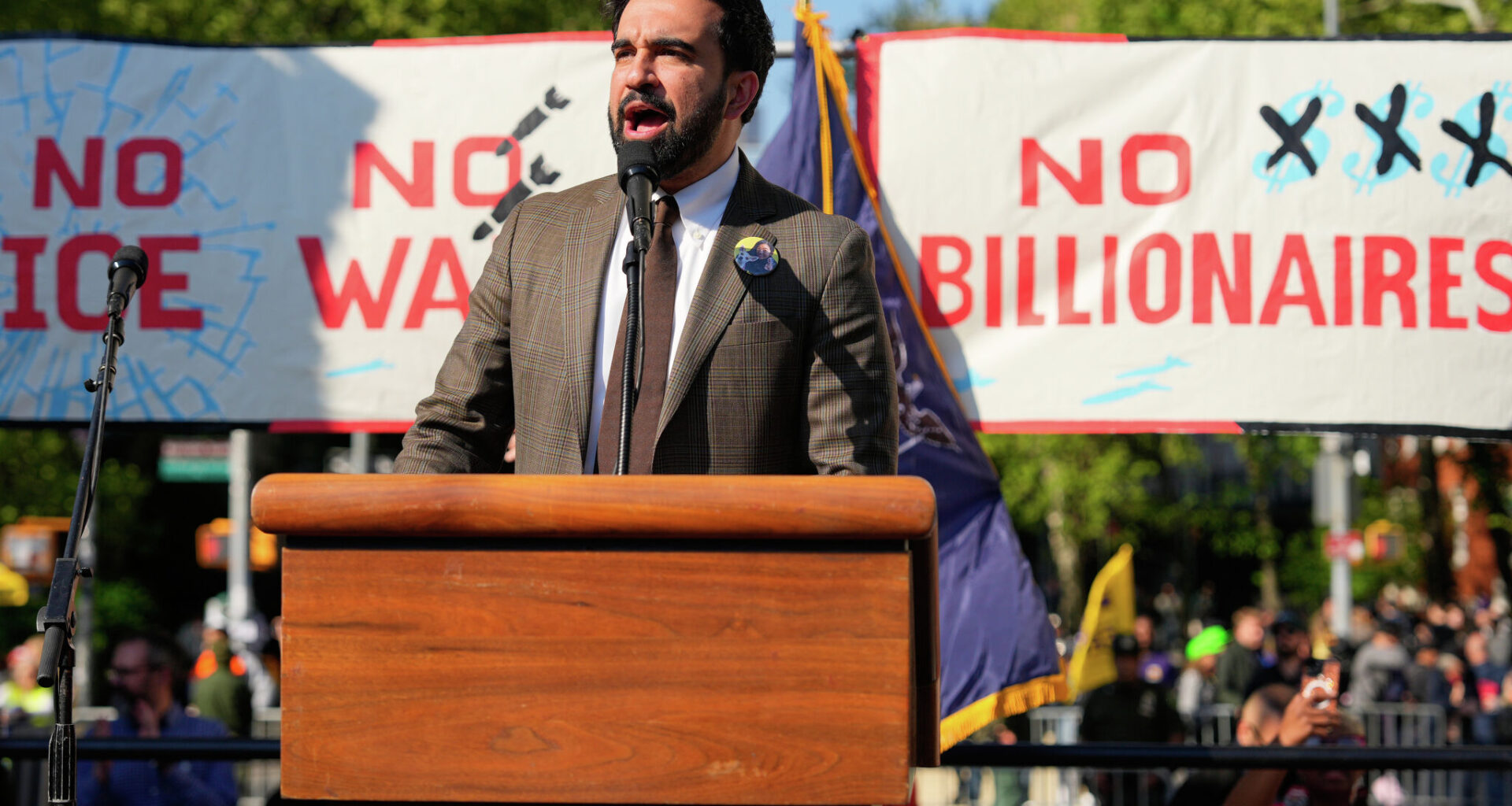
New York’s rising political voices, including New York City Mayor Zohran Mamdani, have put inequality back at the center of public debate. The focus is familiar: the gap between rich and poor, and what government can do to close it. But America’s most important inequality problem isn’t about income. It’s about rules.
When Americans talk about inequality, they usually mean outcomes — who has more and who has less. But a deeper divide runs beneath those outcomes: the growing gap between states that enable economic mobility and those that quietly restrict it.
The Economic Freedom of North America report, from market-oriented think tank Fraser Institute, captures this divide. It measures how much freedom people have to make economic choices — where to work, what to invest in and how to build a life. It evaluates states across three areas: government spending, taxation and labor market regulation.
The results are striking. States like New Hampshire, Tennessee, South Dakota and Texas consistently rank near the top, thanks to relatively light fiscal burdens and flexible labor markets. States like New York, California, Hawaii and New Mexico rank near the bottom. Policy ideas like Mamdani’s proposed rent freezes and raising corporate taxes, along with higher minimum wages, threaten to keep New York perennially stuck at the bottom.
These rankings aren’t just abstract scores. They correlate strongly with real-world outcomes. States with higher levels of economic freedom tend to see faster income growth, stronger job creation and larger inflows of new residents.
This isn’t mysterious. Rules shape incentives. Incentives shape behavior. And behavior shapes outcomes. If the wealthiest New York City residents are going to face new tax burdens to fund Mamdani’s programs, what’s the incentive to stay in the city?
If policymakers want to understand inequality, they should begin by evaluating rules that negatively impact economic freedom.
Consider New Mexico. For the first time in the nearly 20-year history of the EFNA report, it now ranks last among all 50 states. A recent analysis by Matt Mitchell of the Fraser Institute and Paul Gessing of the Rio Grande Foundation finds that New Mexico is the only state to have experienced a long-term decline in economic freedom over the past four decades. That decline has coincided with sluggish job growth, persistently high poverty rates and weak population growth. The authors estimate that even a modest 10% improvement in economic freedom could raise average family incomes by roughly $10,000 per year.
Just across the border, Texas tells a very different story. For decades, it has ranked in the top tier of economic freedom. Between 2012 and 2022, Texas added nearly 4 million residents, more than any other state, and it has led the nation in population growth for at least 14 consecutive years, according to Census data. Businesses expand here. Workers move to our state. Families stay. They do so for a simple reason: the rules make opportunity easier to pursue.
This is what often gets lost in today’s inequality debate. Opportunity cannot be mandated. It emerges from a system that either empowers people to act or quietly constrains them.
Call it institutional inequality: when people face radically different economic environments depending on where they live. In one state, starting a business or changing jobs is relatively straightforward. In another, it is burdened by higher costs, stricter regulations and fewer opportunities.
Those differences compound over time, and they matter far more than any snapshot of income inequality.
No state is perfect. But the pattern is clear. States that allow people to work, invest and build with fewer barriers tend to generate more opportunity — not just for some, but for everyone.
If Americans are serious about inequality, they should spend less time arguing over how to redistribute outcomes and more time examining the rules that shape them in the first place.
Meg Tuszynski is a Research Assistant Professor at the SMU Cox School of Business, where she is Managing Director of the Bridwell Institute for Economic Freedom.