
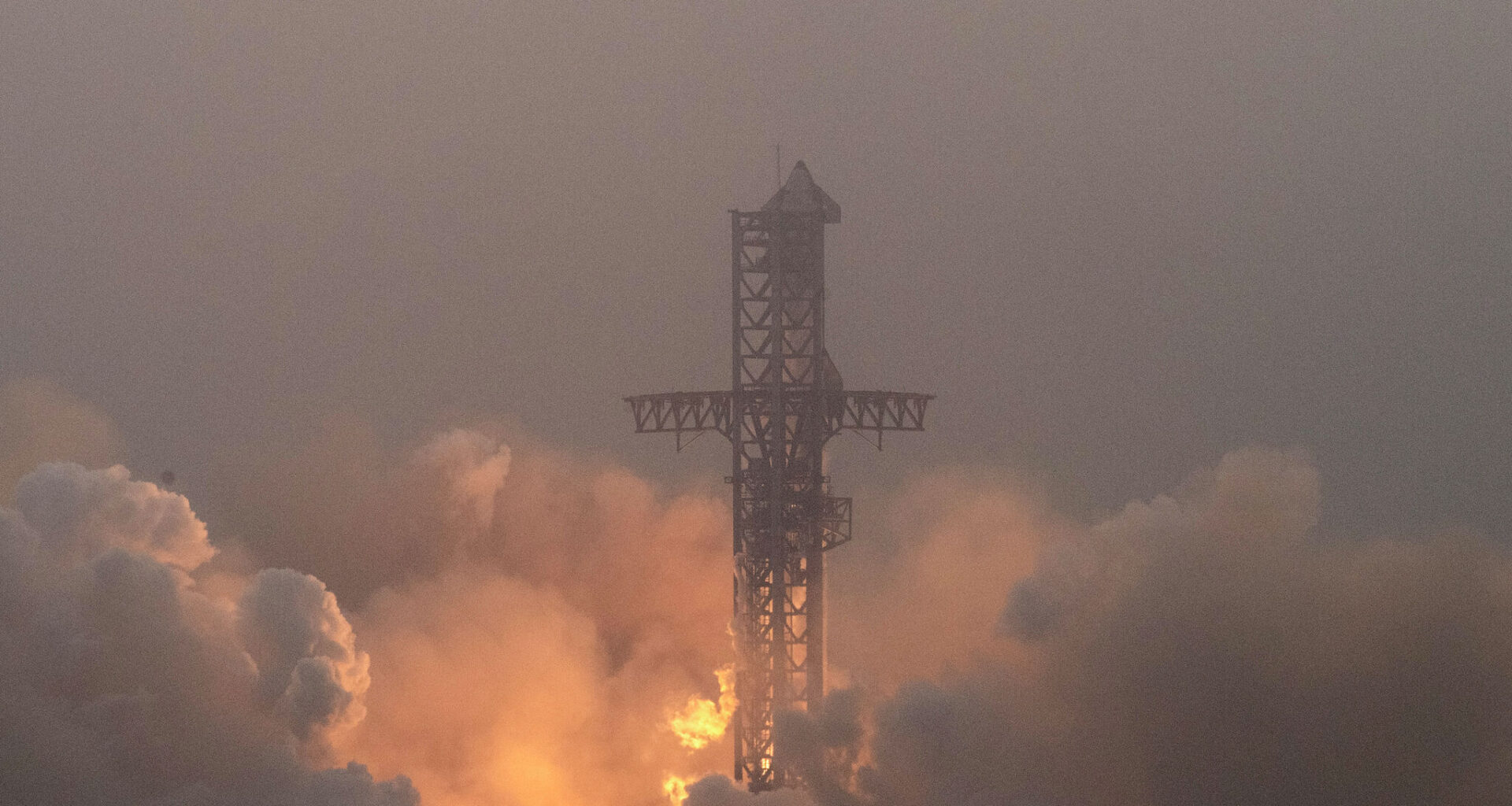
Dozens of South Texas families are suing SpaceX, alleging Elon Musk’s soon-to-be-public spacefaring company has damaged their homes through the multiple sonic booms and vibrations that occur every time a Starship launches from Starbase.
The 80 plaintiffs, who filed the lawsuit in Brownsville federal court on Thursday, April 30, further allege that SpaceX revised its own estimates for when damages could occur — raising the thresholds after the company’s first few test launches far exceeded levels they had initially estimated. Here’s everything MySA has learned about the lawsuit so far.
The lawsuit has been filed by 80 people from the nearby cities and towns of Port Isabel, South Padre Island, Laguna Vista and two residents from Laguna Heights. Together, the plaintiffs own and live in more than 50 homes located within 15 miles of SpaceX’s launch facilities on the South Texas coast at Starbase. Residents of Laguna Madre claim that every one of SpaceX’s 11 Starship test flights since 2023 has caused damage to their homes.
“The sheer violence of these recorded metrics is difficult to overstate,” the plaintiffs’ 59-page federal lawsuit says of the powerful sonic booms that occur during a Starship launch.
The lawsuit claims that each starship launch has the same cumulative effect as 4 to 6 of NASA’s most powerful rockets—including the one that recently powered the Artemis II mission to the moon—and 10 launches of SpaceX’s Falcon 9 rockets. The plaintiffs say the launches amount to the “most energetically violent and acoustically severe rocket launches in human history.” The blasts are so forceful that the very first Starship test in 2023 destroyed the launchpad in what Musk later referred to as a “concrete rock tornado.”
SpaceX acknowledged that the power of its Starship launches put space science in uncharted territory. Nonetheless, before the company ever launched a Starship, it published thresholds for when it estimated that acoustic vibrations — as much as 110 decibels — could potentially cause damage to structures.
But the Laguna Madre residents claim that SpaceX later raised that threshold once it became clear that the first few Starship launches had far exceeded that limit. In subsequent filings, SpaceX estimated that damage was “improbable” below 140 decibels and not to be expected below 135 decibels, the lawsuit states. The U.S. Air Force, NASA and the FAA all maintain a 110-decibel threshold for potential structural damage.
The lawsuit doesn’t specify what kinds of structural damage the plaintiffs’ homes have allegedly experienced. But it does include a chart of what kinds of damage can occur at different levels of noise, including broken windows, cracks to ceilings, plaster and stucco, broken roof tiles, ceiling and wall collapses, and more. The lawsuit also states that structures within the Laguna Madre can be subject to as many as three sonic booms during a single Starship test — one as Starship ascends and additional booms when a Super Heavy booster returns to the Gulf of Mexico or to the launchpad.
The homeowners claim SpaceX has been willfully negligent in developing the most powerful rockets in history that launch so close to a populated area. They are accusing SpaceX of negligence and gross negligence and trespassing for producing the sounds that allegedly infiltrated their properties without their consent. SpaceX has yet to formally respond to the lawsuit.