
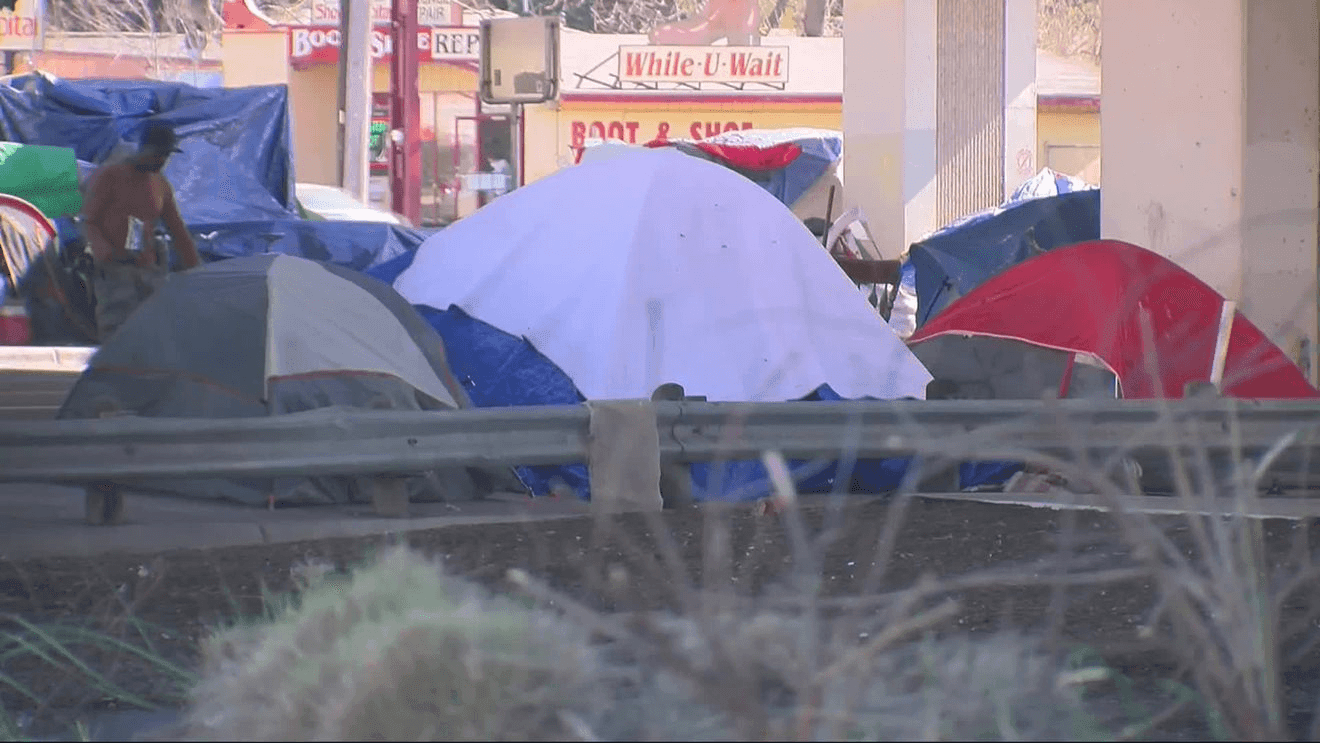
AUSTIN, Texas — Austin is preparing to ramp up homeless encampment sweeps under a revised strategy the city says is aimed at reducing health and safety risks while connecting people experiencing homelessness with services — a plan that drew sharp criticism from some residents and advocates during a City Council work session Tuesday.
David Gray, the city’s Homeless Strategy Office director, said the city created the updated process “with the goal of providing a consistent response across the city to help reduce health and safety risk at high priority sites.”
Under the plan, increased sweeps by some members of the Austin Police Department would establish six dedicated teams operating Monday through Friday. Three teams would be responsible for encampments in parks, greenbelts and residential areas. One team would focus on transportation corridors such as highways and major roadways. Another would be dedicated to waterways and flood-prone areas. A sixth team would handle post-sweep cleanup to ensure sites are restored.
“The goal of this team is to clear and clean locations to restore them back to their original condition for the enjoyment of all,” Gray said.
The plan prompted angry comments from some speakers in council chambers Tuesday, including one who said, “The city is choosing to waste our money on cruelty. This is inhumane, ineffective and extremely costly.”
PREVIOUS COVERAGE | Austin to establish six homeless encampment teams to maintain cleared sites
Advocacy group VOCAL-TX criticized the approach, arguing it could weaken protections for people living in encampments. “The way that this plan reads is actually drastically undercutting some of the rights and some of the protections that people are entitled to under the code,” said Eli Cortez, a VOCAL-TX organizer.
Gray said the Homeless Strategy Office also wants to take a more structured approach to managing camps while connecting people with supportive services. “Understanding what the unique challenges are and how do we make sure we’re prioritizing services to connect people with the right resources,” he said.
Some Austin City Council members also raised concerns about oversight and whether protocols will be followed. Council Member Jose Velasquez, who represents District 3, asked, “What oversight is gonna be in place to ensure that protcols regarding the outreach connection with services and proper communication will be followed?”
In response, Gray said, “Patricia Berrera on our encampment management team has also created a very specific operational plans for each of these locations so that folks understand who’s there, what sites have been cleared, for cleanup enclosure. What sites are still undergoing active outreach.”
Cortez said he would like to see the plan paused. “It is irresponsible of the city,” he said.
Gray said the city would provide a 72-hour notice to encampments before a team comes through for cleanup and closure, though he said there could be exceptions primarily related to safety. In those cases, Gray said the city would bypass the notice and move people from encampments as fast as possible.
Under state law encampments are banned statewide.
The increased sweeps are expected to launch in mid-May.