
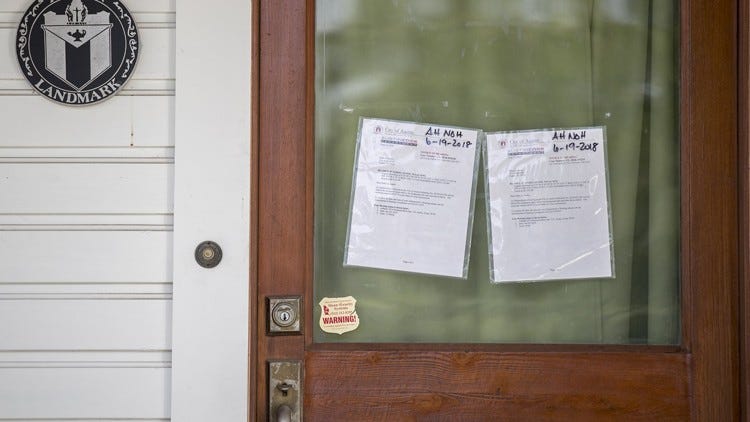
Notices alert the owner of a house on East Eighth Street about administrative hearings regarding the property, which has been cited as an unlicensed short-term rental by Austin code enforcement officers. RICARDO B. BRAZZIELL / AMERICAN-STATESMAN
Austin American-Statesman
Austin officials say a sweeping overhaul of the city’s short-term rental regulations is beginning to show results, with higher compliance and a surge in hotel occupancy tax revenue as new enforcement tools come online.

In a recent memo to the mayor and City Council, Austin Development Services Director Keith Mars said recent changes to the city’s short-term rental, or STR, program are improving oversight and bringing more operators into compliance.
Article continues below this ad
The update follows City Council’s September 2025 vote to tighten STR rules after years of legal setbacks and uneven enforcement. At the time, city leaders described the issue as “thorny and difficult,” noting lawsuits had weakened earlier regulations and made it difficult to track or penalize illegal rentals. The new ordinance, paired with some other changes, shifted the city to a business-licensing model and, for the first time, imposed requirements on platforms like Airbnb and Vrbo.
Those rules require platforms to display license numbers, remove unlicensed listings and collect hotel occupancy taxes on behalf of hosts — changes aimed at addressing widespread noncompliance. City data last year showed about 94% of complaints involved unlicensed rentals.
The April 30 memo suggests those efforts are beginning to pay off.
Austin now has about 2,750 active STR licenses, a 19.6% increase over the past year, according to the memo. At the same time, STR hotel occupancy tax revenue totaled $11.6 million last year — up from $7 million in fiscal year 2024. So far this year, collections have totaled $10.6 million, according to the memo.
Article continues below this ad
A chart included in the April 30 memo shows a sharp increase in hotel occupancy tax (HOT) collections after new regulations took effect
City of Austin
Enforcement has also ramped up. Using new software that scans online listings, city staff have identified 2,785 unlicensed properties since January, issuing 65 notices of violation, 28 citations and 32 new application submissions.
City spokesperson Robbie Searcy said enforcement takes time as the city must ensure due process. But bringing all short term rentals into compliance will require more than citations and court proceedings, he said, adding that cooperation from the short term rental platforms is critical.
More changes are on the way. A new online licensing system is set to launch May 18, designed to streamline applications and improve processing times. Starting July 1, platforms will be required to verify license numbers in listings and remove illegal rentals when notified by the city, though officials plan to phase in enforcement over several months.
Article continues below this ad
City staff also evaluated whether to create a provisional STR license — a temporary approval while applications are under review — but concluded it would increase costs and slow the process. Instead, the city will pause enforcement against applicants operating without a license while their applications are pending.
License fees remain tied to administrative costs, with new permits set at $789 and renewals at $338 for fiscal year 2026, though officials said efficiencies from the new system could lead to future reductions.
City staff said the combination of stricter rules, platform accountability and improved enforcement is helping Austin regain control of a market that for years operated largely outside the city’s reach.
Article continues below this ad
The increased compliance and escalating tax revenue “indicate that recent ordinance changes are having a positive community impact,” Mars wrote in the memo. “As the new licensing system goes online, staff expects compliance to continue improving.”
Staff writer Chaya Tong contributed reporting