
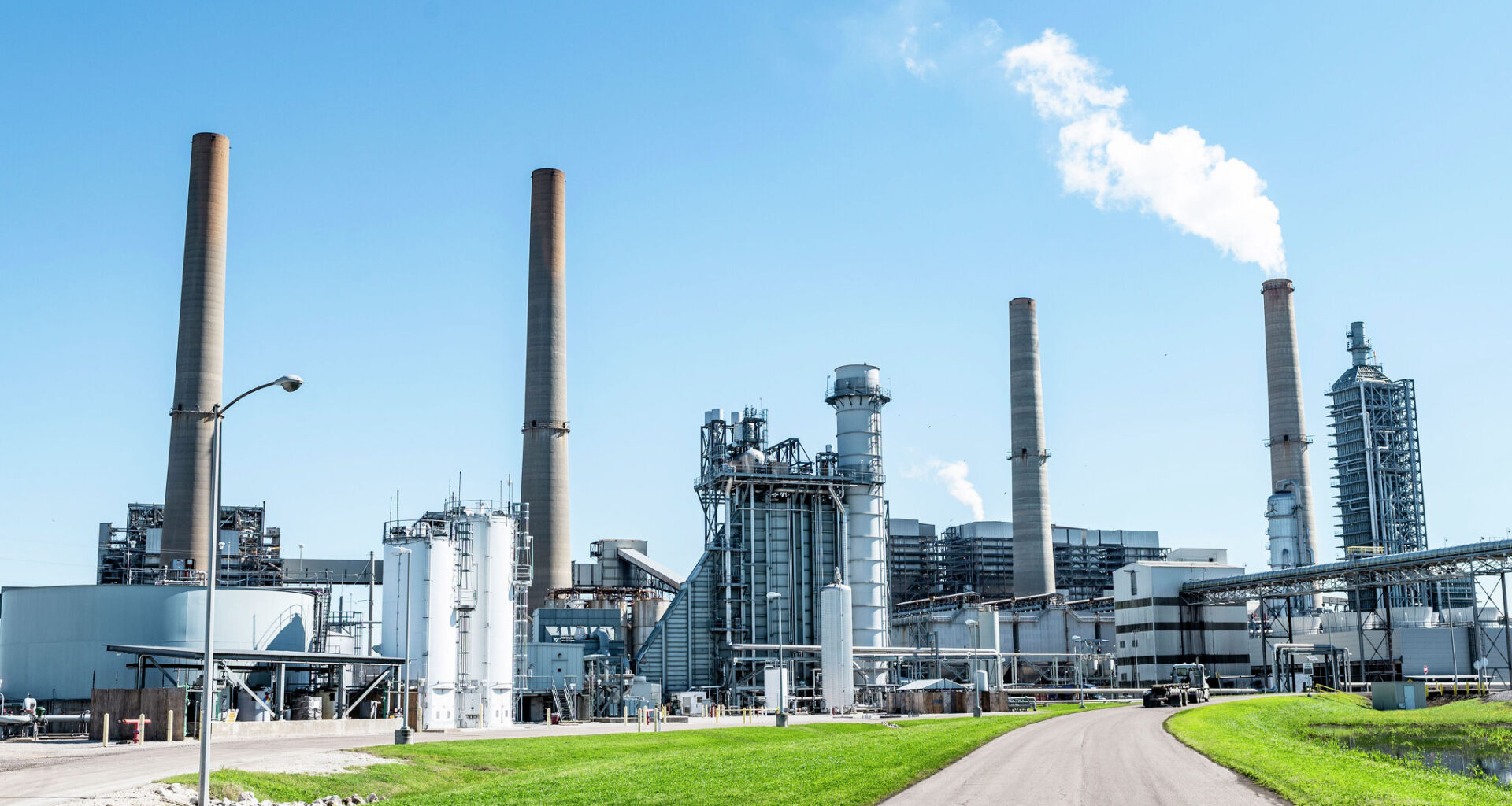
The stacks of coal powered electric generation units are visible at the WA Parish Generating Station Monday, Feb. 19, 2024 in Richmond.
Kirk Sides/Staff photographer
As water shortages loom in Texas, the fast-growing data center industry is under intense public scrutiny for the large amount of water many of these facilities use to stay cool. In response, data center companies have pledged to move to less water-intensive cooling technologies.
But cooling is only part of the picture.
A new report from the Sierra Club points to a more substantial burden on the state’s water systems: power plants.
Article continues below this ad
SEARCHABLE MAP: See where data centers are planned or operating near you
The analysis illustrates how the electricity source for a data center project can be more consequential to the facility’s water footprint than the cooling technology it uses, according to Margaret Cook, a water expert with the Houston Advanced Research Center.
Earlier this year, Cook published a report finding that by 2030, Texas data centers could consume up to six times more water than they need today.
“If data centers push for natural gas as their supply, or even small modular nuclear reactors … that will increase our water use. That’s what pushes the demand,” Cook said.
Article continues below this ad
Nuclear, coal and natural gas power plants — also known as thermal plants — are the most water-intensive types of power generation. In Texas, these plants require between 200 gallons and nearly 700 gallons of water to generate a megawatt-hour of electricity, according to the Sierra Club’s analysis of federal data.
In contrast, a typical data center consumes 95 gallons of water for every megawatt-hour of electricity used to cool the computer servers inside, according to national estimates.
Texas agencies focus on predicting rather than influencing industrial water use, leaving these decisions largely up to the burgeoning industry. Many data centers are choosing to build their own natural gas power plants as they wait for Texas’ electric grid to catch up, even in drought-stricken West Texas.
“We have stretched our water supplies very thin to be able to add new users,” Cook said. “And at the local level, it can be very significant for some communities.”
‘Water-guzzling’ facilities
In a press briefing, Sierra Club advocates called on Texas to double down on renewable energy, which uses negligible water to generate electricity, and encourage data centers to install their own clean energy resources.
Article continues below this ad
They also urged an accelerated phase-out of coal-fired power plants, which also emit high levels of health-harming and climate-warming emissions.
“We have alternatives to these really water-guzzling thermal plants that are being used,” said Noah Ver Beek, a Sierra Club data analyst.
Since 2015, Texas’ thermal power plants have consumed roughly 100 billion gallons of water per year, according to the Sierra Club report, a figure that includes only the water that is lost during cooling. An even larger amount of water is reused and largely unavailable for public supply.
In a statement, Walt Baum, CEO of the trade association representing Texas’ largest power generation companies, noted that power plants’ consumption accounts for only 4% of the state’s total water use. Eliminating every coal and natural gas power plant in the state, he said, “would not meaningfully address Texas’ long-term water needs.”
Power plants continuously cycle the vast majority of the water that they use, Baum said. Many plants also reuse wastewater and employ air-cooled condensers to minimize overall water use, he said.
Article continues below this ad
“It is unfortunate, but not surprising, that this study fails to include any meaningful context,” Baum said. “Electricity remains the lifeblood of the Texas Miracle, and ensuring a reliable, affordable, and sustainable grid must remain a top priority.”
Power plants’ water use, the fourth-largest source of water demand in Texas, is a small fraction of the scale of agricultural and municipal water use in the state.
Sierra Club advocates, however, said it’s still important to scrutinize the electric power sector, as Texas faces unrelenting drought and stares down $174 billion in necessary upgrades to the state’s water systems.
“They are still a massive water user in the state, and we think it’s far past time to look in every nook and cranny for where we can find water savings,” said Lindsay Maher, who authored Wednesday’s report for the Sierra Club.
Gary Lofton, of Rosenberg, fishes for catfish in Smither Lake north of the WA Parish Generating Station, Tuesday, June 29, 2021, in Fort Bend County. The facility burns coal to generate electricity.
Mark Mulligan/Staff photographer
Nearby water giant
Among Texas’ power plants, one of the largest water users is W.A. Parish, a complex of coal-fired power plants owned by Houston-based NRG Energy in Fort Bend County.
Article continues below this ad
The coal plants on-site consumed 3.5 billion gallons of water in 2024, according to Energy Department data cited in the Sierra Club report. Residents driving by can often see white steam rising from the facility’s stacks as heated water spins turbines to generate electricity.
W.A. Parish also holds long-standing rights to use much more water — 40.3 billion gallons annually, by far the most of any facility in the state, according to the Sierra Club report.
Haley Schulz, a lifelong Fort Bend resident who is now an organizer for Public Citizen, said the company’s water usage was not common knowledge in the area. Even as their residential water bills climbed, she and many of her neighbors had no idea about W.A. Parish or its water burden.
“Every year we’re given the drought warning: Conserve your water. So the onus is always on the consumers and residents,” Schulz said.
In a statement, NRG spokesperson Erik Linden said some of the company’s power plants do use local water sources to stay cool. However, the majority of this water is returned to its source in its original state, he said.
“Providing reliable and affordable electricity to Texans means that we sometimes use local natural resources to effectively operate our facilities,” Linden said.
In releasing the report, the Sierra Club and other advocates called on state agencies to study power plant water use and conservation practices, suggesting they mirror an ongoing effort by multiple agencies to study data center water use.
According to Matt Nelson, the Texas Water Development Board’s deputy executive administrator for planning, industrial water use predictions have always been difficult for the agency, which combines regional plans into a statewide picture every five years and has no rulemaking or enforcement authority.
Nelson said data centers are especially tricky, since the nascent industry is still in its early stages. The agency didn’t have enough information to predict water demand from AI data centers in time for the 2027 state water plan. His team has been working on methods for the next cycle, though.
“The plan does not determine what happens in the future. The plan is trying to anticipate what will happen,” Nelson said. “The tail doesn’t wag the dog.”