
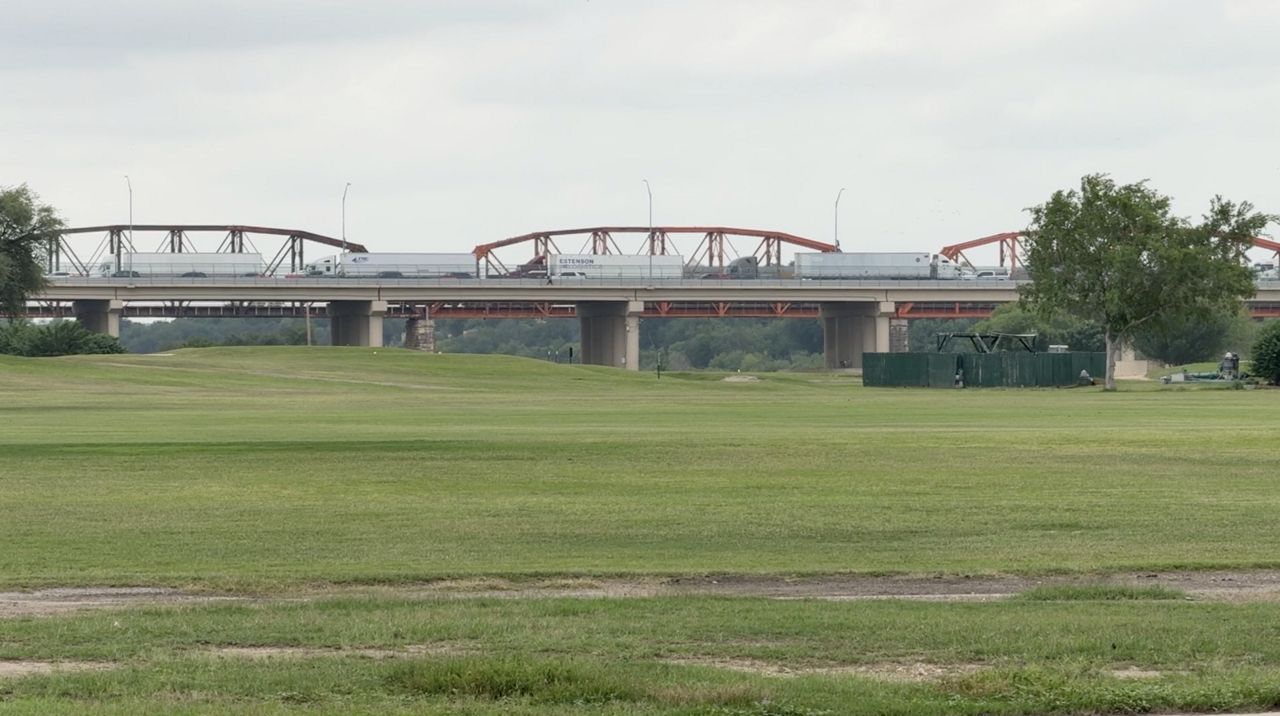
EAGLE PASS, Texas — Graciela Maldonado enjoys sitting in her rocking chair, admiring her plants and her quiet neighborhood. The quiet is what residents in the historic Seco Mines neighborhood, just north of Eagle Pass, love most about their homes. In the last few months, they’ve been loudly fighting to keep it that way.
A third international bridge coming to the Eagle Pass area has been proposed to be built just behind Maldonado’s house. The Puerto Verde Global Trade Bridge project will build a privately owned bridge focused on commercial traffic like tractor-trailers and trains. It could bring lots of revenue and hundreds of jobs to the area, which Maldonado doesn’t mind. It’s the location that worries her.
“All that noise, all that pollution, [everything] is going to come out. We’re going to be smelling it,” Maldonado said.
International bridges are usually great economic boosters for Texas’ border towns, but local leadership is just as split as the community. The City of Eagle Pass rejected a deal with Puerto Verde, saying the new bridge would compete with city-owned bridges and also cited concerns about the location.
Maverick County, however, approved an agreement to move forward with the project. Maverick County Judge Ramsey Cantu said if they didn’t agree to work with Puerto Verde, the local communities wouldn’t benefit from the project at all.
That agreement is now up in the air while a federal judge is deciding whether officials legally entered into it. In a separate but related case, a federal judge temporarily suspended Cantu from office after he was accused of misconduct.
Puerto Verde Holdings Chairman Ruben Garibay told Spectrum News that the controversy around the bridge is based on misunderstandings of the project. He says his team is simply picking up the slack to bring a much-needed boost to the area.
“They [the county and city] themselves did not have the capital to get this done. So this is kind of where we stepped in; we filled that gap. You can look at it as we’ve been a purveyor up to this point,” Garibay said. “Somebody needed to do it.”
As lawsuits and controversy continue, Maldonado and her neighbors are continuing to push for more clarity on the project.
“We were here first,” Maldonado said. “Since 1928, so we don’t want to move.”