
HOUSTON — Colorectal cancer patients are getting younger in Texas and around the country, according to the University of Texas MD Anderson Cancer Center in Houston, the largest cancer center in the world. A new facility inside UT MD Anderson is bringing art, design and technology together to meet the growing demand for more specialized care.
Rajalakshmi Chungath Puthen was just 35 years old when doctors diagnosed her with stage 4 colorectal cancer in 2020, saying it had already spread to her lungs.
“When I opened my eyes, the doctor told me some bad news. It’s a tumor,” Puthen said. “It was shocking news for us, because we had a 3-year-old little girl and an 8-year-old boy. That night, I told my husband, ‘Can I do suicide?’”
Her husband and family gave her a change of heart, and she said two years after treatment at UT MD Anderson, she was cancer-free.
“I literally cried, because that was the big news we were waiting for,” she said.
Sadly, many patients never see that moment, Dr. Van Morris, a gastrointestinal oncologist at UT MD Anderson, confirmed.
“More and more people are dying each year under the age of 50 with this diagnosis of colorectal cancer,” he said, explaining doctors have seen an alarming increase in younger patients over the last five to 10 years, with the number of cases rising by 2% each year. He said there is no single cause, but an unhealthy diet, genetics and the environment are risk factors.
“We certainly see this in Texas, but this is a trend that we’re seeing across the United States,” Morris said.
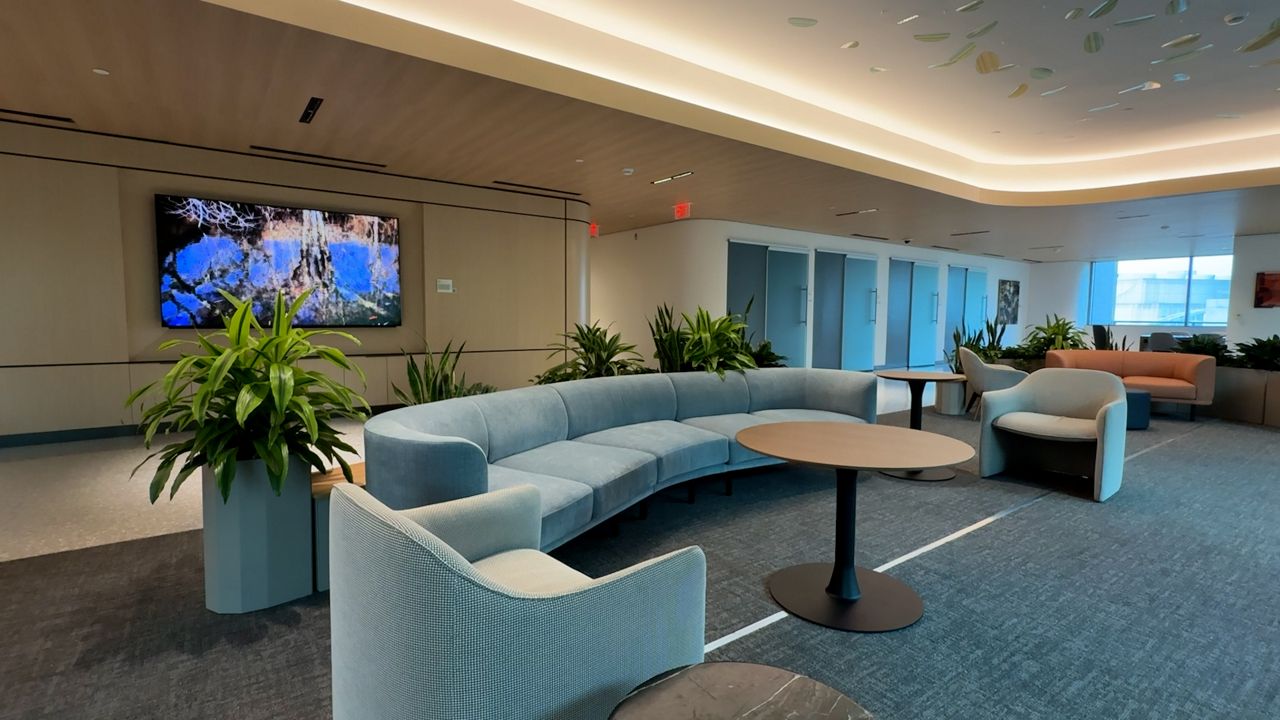
UT MD Anderson recently opened its new Colorectal Cancer Center, which doctors say will help them better diagnose and treat patients.
“We want to create an environment where they’re not alone. We’re here with them,” said Dr. Nancy You, a colon and rectal surgeon and the director of the young-onset colorectal cancer program.
The more than 24,000 square foot facility includes 32 exam rooms for procedures and supportive services. Doctors for each patient all work together at one location that combines technology, design and an art installation for a soothing environment.
“Each of the exam rooms has artwork in it. Some of the rooms are equipped with a digital art display,” said You. “We really wanted to build a center to improve patient experience, particularly as they’re going through a time in their life that’s super stressful and maybe a little fearful.”
Puthen is thankful for the doctors and the divine intervention she says saved her life, and she believes the center will serve as a ray of hope for others.
“Be positive. Be focused. Enjoy every moment. Value life,” Puthen said.