
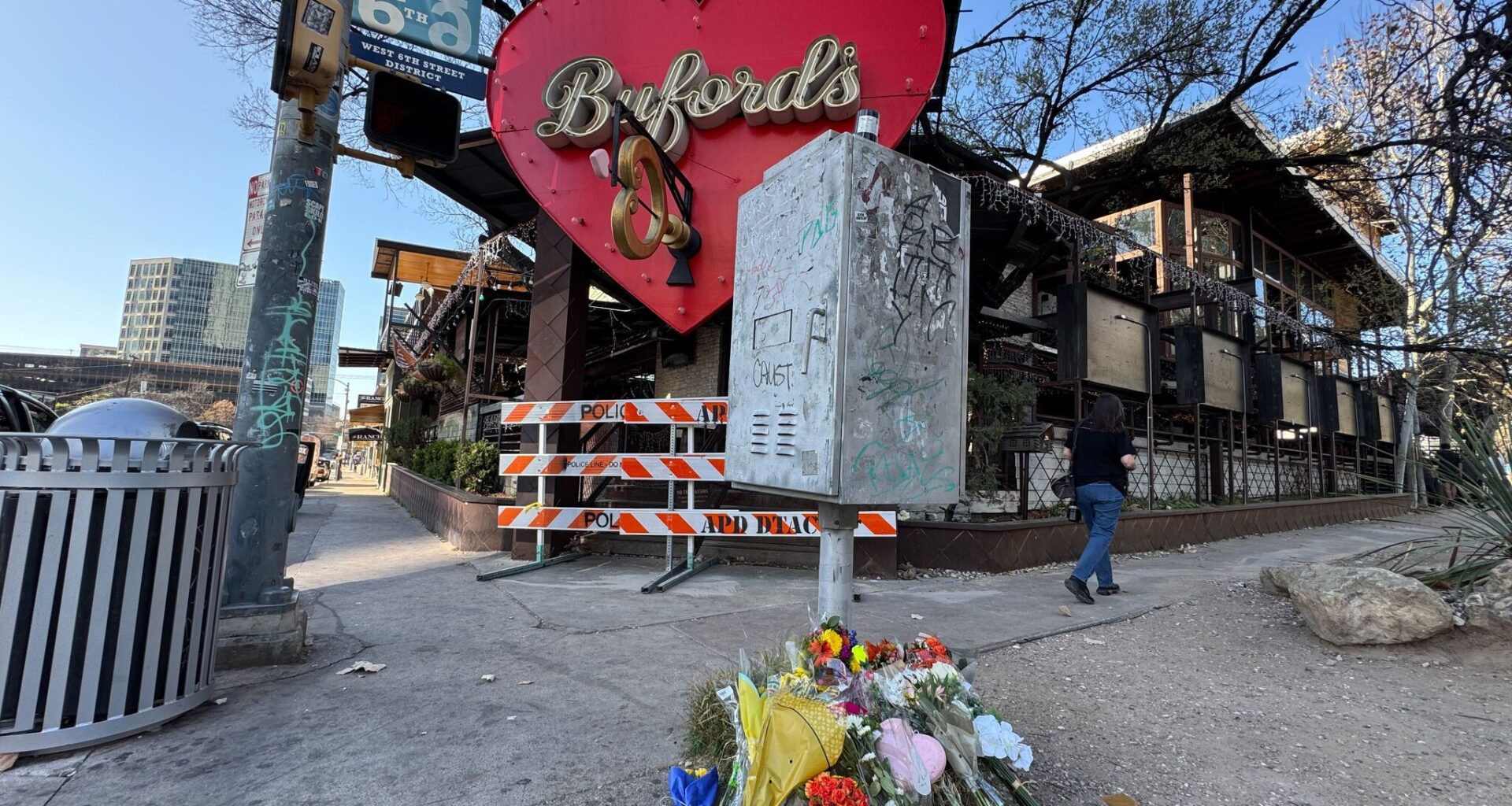
The Federal Bureau of Investigation (FBI) has released its findings about the motives that led to the deadly Austin mass shooting on West Sixth Street in the early hours of Sunday, March 1, that left four people dead, including the shooter, and 19 others injured.
Austin Police identified the shooter as 53-year-old Ndiaga Diagne, a naturalized American citizen born in Senegal who died from wounds sustained during an exchange of gunfire with Austin Police Department officers. The FBI launched an investigation into the shooting after authorities found evidence in Diagne’s vehicle that indicated a potential nexus to terrorism.
At the time of the shooting, Diagne was also wearing an Iranian flag design T-shirt and a sweatshirt that read, “Property of Allah.” The shooting came less than 24 hours after the U.S. and Israel launched a joint strike on Iran.
According to the FBI, Diagne legally purchased a handgun in August 2017 and a rifle in October 2017, both of which were used in the March 1 shooting. The FBI’s investigation indicated Diagne acted alone, and there is no evidence that he was associated with a Foreign Terrorist Organization or that he received any direction, funding, or operational support for his attack.
“There is no evidence of outside direction or radicalization; rather, the investigation indicates an escalation in violent behavior in part tied to specific personal triggers and grievances related to U.S. and Israeli military actions involving Iran, culminating in a violent, impulsive attack,” the FBI report said.
Before the shooting, he had also never been a subject of an FBI investigation. The investigation revealed that Diagne also admired the recently deceased Iranian leader, Ayatollah Ali Khamenei, who was killed in an Israeli-US joint airstrike in late February designed to disrupt Iran’s leadership and support regime change.
“While Diagne’s affinity for Iran and the Ayatollah were most certainly factors in his mobilization to violence, the FBI has not identified conclusive evidence to explain Diagne’s motivation or how and why he selected the location for his attack,” the FBI said.
About 400 people, including FBI agents from 14 field offices and multiple Headquarters divisions, along with local, state, and federal law enforcement partners, responded to the scene and supported the initial stages of the investigation. The FBI gathered over 3,000 digital media videos, equivalent to over 200 hours, processed more than 150 million digital files and seized 30 devices, including cell phones, laptops and tablets.
The FBI confirmed that the investigation remains ongoing.