
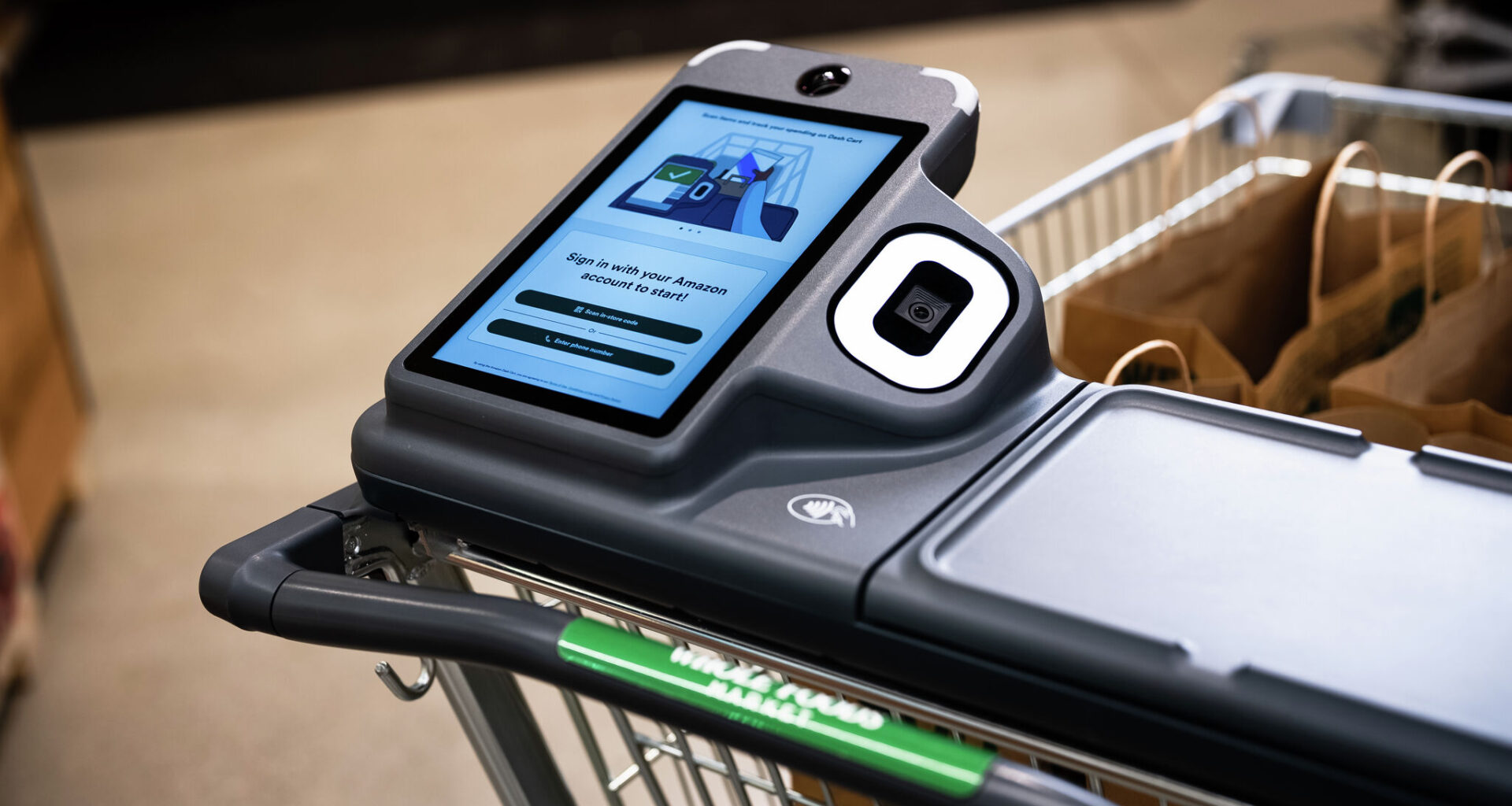
At Whole Foods Market on North Lamar Boulevard, the future of grocery shopping now arrives with a mini computer screen, a barcode scanner and a gentle request to trust the machine.
The Amazon Dash Carts — shopping carts equipped with cameras, sensors and a built-in touchscreen — promise shoppers at the Austin flagship a faster, more seamless way to buy groceries. Scan items as they go into the cart, roll past the checkout lane and walk out. No conveyor belt. No cashier. They arrived on April 28.
In some ways, the Dash Carts feel naturally calibrated for Austin, where driverless Waymo vehicles already cruise downtown streets, food delivery robots roll along sidewalks and coffee shops are remote-work hubs for software engineers and startup founders. The idea of a tech-powered grocery cart may still feel faintly dystopian, but in a city that has spent the last decade branding itself as a testing ground for tech-forward living, the carts feel like the next logical step.
The carts are part of Amazon’s borader effort to integrate technology into Whole Foods, the upscale grocery chain it acquired in 2017 for $13.7 billion. The purchase marked Amazon’s largest retail acquisition at the time and gave the e-commerce giant a physical footprint in affluent neighborhoods across the country, including Austin.
The Dash Cart, first introduced in 2020 at Amazon Fresh stores, is one of the latest evolutions of that relationship.
Cameras, sensors and “deep learning” software track items as shoppers place them into the cart, while a built-in scale weighs produce automatically. A screen displays a running total in real time and can sync with Alexa shopping lists. The built-in screen also displays a map of the store, directing shoppers to aisles for specific items and suggesting nearby deals based on a shopper’s location.
When the trip is finished, customers exit through a designated Dash Cart lane and payment is processed automatically through their Amazon account or a linked card. They can also check out with tap-to-pay.
For some, the appeal is obvious. During busy evening rushes at any grocery store, checkout lines can snake into the aisles. Skipping that bottleneck could save time for shoppers.
Yet the Dash Cart also introduces new friction of its own. Every item must be scanned correctly. Produce must be weighed carefully. Shoppers must log into an Amazon account through the Whole Foods or Amazon app or put in their phone number before they can begin.
And unlike a traditional checkout lane, where mistakes can be corrected in conversation with a cashier, Dash Cart errors leave shoppers staring at a screen trying to decipher what the system thinks happened.
Even so, Austin shoppers are likely to try them, if only out of curiosity. The future of grocery shopping in Austin could be pushing a computer around the produce aisle and hoping it can reliably tell cilantro from parsley.