
This year’s March primary elections sent a signal that the political winds in Texas may be changing.
Participation in the Democratic primary reflected a remarkable increase of 107% over the 2022 turnout, with 12.4% of registered voters showing up. In contrast, turnout for the Republican primary election was up by about 5.5% from the last mid-term election cycle, with 11.6% of registered voters participating, pretty much in line with Republican participation in the last 10 years.
This year, 2.3 million voters showed up for the Democratic primary, compared to 2.2 million voters in the Republican primary. The dramatic increase in Democratic primary participation may have been attributable to energized Democrats, or to independents and disenchanted mainstream Republicans who reject the MAGA movement that has taken over their party.
The Texas Democratic party has aggressively recruited candidates to compete in all statewide races and every state legislative district race. Many of these Democratic contenders are mainstream candidates being presented as rational alternatives to MAGA Republican nominees. This may be the year for mainstream voters to demand that both parties start representing all Texans’ interests rather than catering only to the far-right and far-left constituencies.
Whatever your party, voting in the runoffs is your final chance to ensure that more balanced candidates appear on the general election ballots.
The runoff races are both consequential and unpredictable, and because of extremely low turnout, every vote has a magnified effect. In the 2024 election cycle, there were primary runoffs in 19 Texas state legislative races, and the margin of victory was smaller than 400 votes in four of them. When considering whether you should take the time to vote in the runoffs, let that miniscule margin of victory sink in.
And don’t get complacent, thinking your preferred candidate will win the runoff because he or she led in the primary balloting. In six of the 19 runoffs in 2024, the winner of the most votes in the primary lost in the runoff.
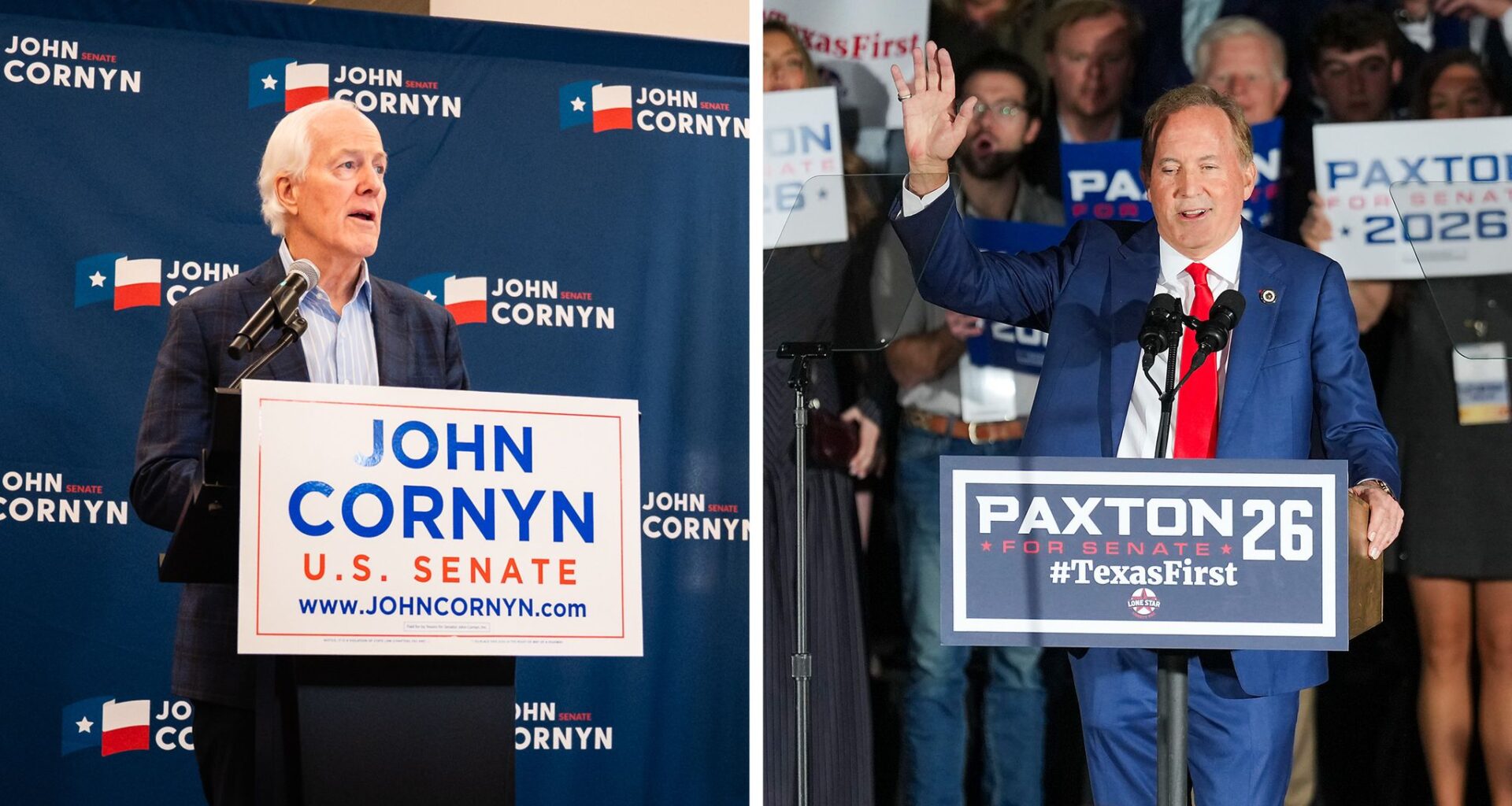
Republican runoff races include the John Cornyn vs. Ken Paxton matchup for U.S. Senate, the Mayes Middleton vs. Chip Roy matchup for Texas attorney general, the Bo French vs. Jim Wright matchup for railroad commissioner, and the Alison Fox vs. Thomas Smith matchup for the Texas Court of Criminal Appeals.
Democratic runoff races include the Vikki Goodwin vs. Marcos Vélez matchup for lieutenant governor and the Nathan Johnson vs. Joe Jaworski matchup for attorney general.
In addition, there are 19 congressional runoff races (10 Republican and nine Democratic), including the Democratic races for District 24 (Kevin Burge vs. TJ Ware) and District 33 (Colin Allred vs. Julie Johnson).
All of these races are important, and since the turnout for the runoffs is typically around 60% of primary turnouts, there are no sure winners in any of them.
Every registered voter is eligible to participate in the runoff elections even if you did not vote in the March primary elections. If you did vote in the primaries, you can vote only in the runoff for the party in which you already participated. If you are one of the 76% of registered voters who did not participate in the primaries, you are free to vote in either the Republican or Democratic primary runoffs, and you can really have an impact in the races that concern you most. Runoff elections will be held on May 26, and early voting will be available from May 18 through May 22.
Some of Texas’ most powerful and polarizing politicians got their start by winning a primary runoff election to become the Republican nominee for the office they now hold. Sen. Ted Cruz came in second in the 2012 primary race that went to a runoff, 10 percentage points behind Lt. Gov. David Dewhurst. Cruz won the runoff by almost 14 percentage points.
In 2014, Lt. Gov. Dan Patrick, Attorney General Ken Paxton and Commissioner of Agriculture Sid Miller all won their runoff races and sailed to an easy win in the November elections. Incumbent Railroad Commissioner Wayne Christian led by 12 percentage points in the primary, but lost to Ryan Sitton in the runoff in 2014.
Party loyalists and agenda-driven political action committees welcome primary runoff races because very low voter turnouts make it much easier for them to help their ultra-conservative or ultra-liberal candidates win their party’s nominations.
Several people have recently asked me why they should bother voting in the runoffs. The answer is clear. Your vote in the runoff has much greater impact because so few people participate.
The far-right and far-left base voters are most likely to show up for the runoffs. You can neutralize that advantage by participating and encouraging your friends and neighbors to vote.
Let’s join together to help ensure that there are mainstream options in November. Your vote could make the difference.
J. Peter Kline is a private investor in Dallas.