
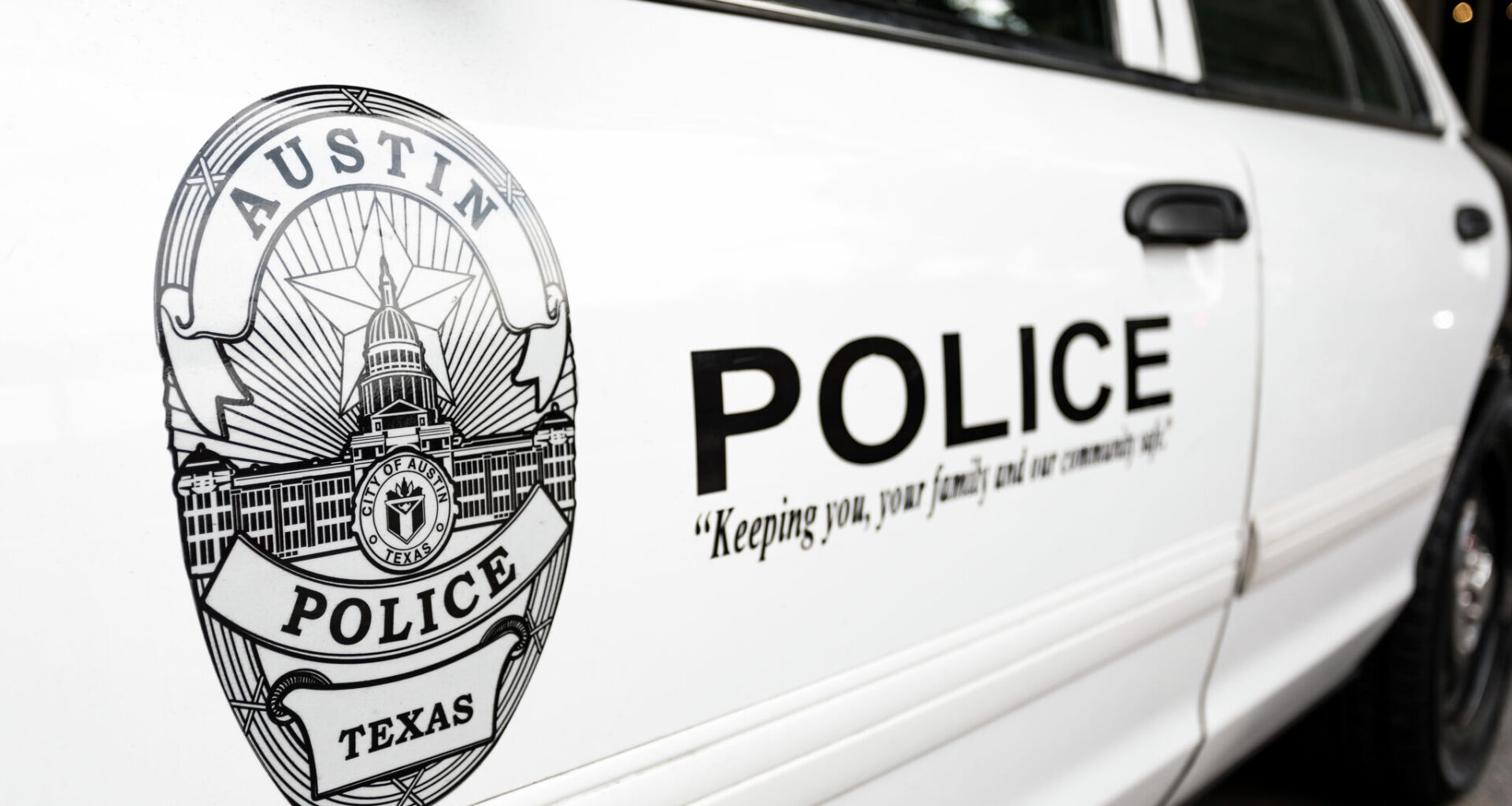
The Austin Police Department released new details, including a suspect arrest, related to the murders of two Central Texas women in 2018 and 2024.
Onfokus/Getty Images
The Austin Police Department unveiled new details and the arrest of a man linked to two unsolved murders in Central Texas, with officials confirming the possibility of him being a serial killer based on case profiles.

On Tuesday, May 12, Austin Police officials revealed that Luis Fernando Benitez Gonzalez, 26, had been arrested in Dallas on April 27 for his alleged involvement in two cold case murders dating back to 2018 and 2024, with Gonzalez confessing to the murders while in police custody. The revelation comes nearly two years after police publicized that DNA found at the scene of the 2024 murder matched DNA uncovered at the 2018 crime scene.
Article continues below this ad
Background on Luis Fernando Benitez Gonzalez
Deputy United States Marshal Brandon Filla confirmed on Tuesday that Gonzalez is a Mexican National who had voluntarily been deported back in 2020 before reappearing in Texas. Officials described him as transient and having criminal connections in Austin, Dallas-Fort Worth, Houston, Hidalgo County, Lockhart and the Dale area.
On January 9, Filla said APD requested the assistance of the Lone Star Fugitive Task Force to locate and apprehend Gonzalez for his alleged involvement in two aggravated assault cases against women that happened in November and December 2025. The task force also sought assistance from the U.S. Immigration and Customs Enforcement regarding his potential legal status, with Gonzalez later determined to be a Mexican National.
Article continues below this ad
How law enforcement caught Luis Fernando Benitez Gonzalez
On April 26, the task force arrived in Dallas and began surveilling the Cornerstone Apartments the following day. On April 27, they saw a Hispanic man, later identified as Gonzalez, walking around and getting a ride in a blue pickup truck. After traveling for some time, the truck parked with the passengers exiting to load up a trailer.
Dallas Police conducted a traffic stop on Harry Hines Boulevard; during the exchange with law enforcement, Gonzalez gave a false ID before ICE agents confirmed he was the suspect. Gonzalez was taken and booked in the Dallas County Jail, and later admitted to both murders and the two 2025 aggravated assault cases when questioned by the Austin Police.
Article continues below this ad
The women involved in the aggravated assault cases fought back against Gonzalez, with one obtaining his phone. She turned it over to the police, and law enforcement found photos and other materials that had location data and pinpointed him to the Dale area in Bastrop County, where the 2018 murder happened. DNA found on the women involved in those assault cases matched the DNA linking the two murders, ultimately broadening the scope of possible crimes connected to Gonzalez.
Austin Police confirm the possibility of serial killer status
When asked whether Gonzalez is potentially a serial killer or serial aggravated assaulter, APD Homicide Detective Chris Anderson confirmed that it is a strong possibility. Anderson said, based on his violent history of attacks against women, his motives and the nature of these crimes, it is unlikely Gonzalez took a six-year break between the two murders.
Police are now reviewing other cases in the greater Austin area, including cold case murders, to see if there is any evidence or similar criminal patterns that could prompt further review.
Article continues below this ad
Anderson also commended the heroic nature of the two women involved in the aggravated assault cases who fought back, retrieving both Gonzalez’s phone and DNA, which each helped aid the investigation.
Murders of Alyssa Ann Rivera, Alba Jenisse Aviles
On June 21, 2024, police discovered a woman dead in the 2600 block of Metcalfe Road in Southeast Austin. Officials later identified that woman as Alyssa Ann Rivera, 34.
At the time, police released surveillance footage depicting a possible person of interest who’d been caught on camera walking with Rivera within 24 hours of her murder. That person of interest appeared to be a short Hispanic man, per case records.
Article continues below this ad
DNA discovered at Rivera’s crime scene matched DNA linked to the unsolved murder of Alba Jenisse Aviles, whose body was found in Bastrop County six years prior. Law enforcement found Aviles, 28, dead in the 300 block of Old San Antonio Road in Bastrop County on April 14, 2018. Police confirmed she had been strangled, and her cause of death was classified as a homicide.
Law enforcement uncovered that Aviles had reportedly left Club Caribe After Party in Southeast Austin the day before her death, with that nightclub located just a few miles away from where Rivera’s body was discovered six years later. Officials noted parallels between the two women’s deaths, including evidence that each had possibly been sexually assaulted.
Both Anderson and Filla specifically addressed the victims’ loved ones on Tuesday, saying that while no arrest takes away the loss of Rivera and Aviles, they hope that this begins the process of closure for the families.
Article continues below this ad
“We haven’t forgot about you,” Anderson said. “We won’t forget about you.”