
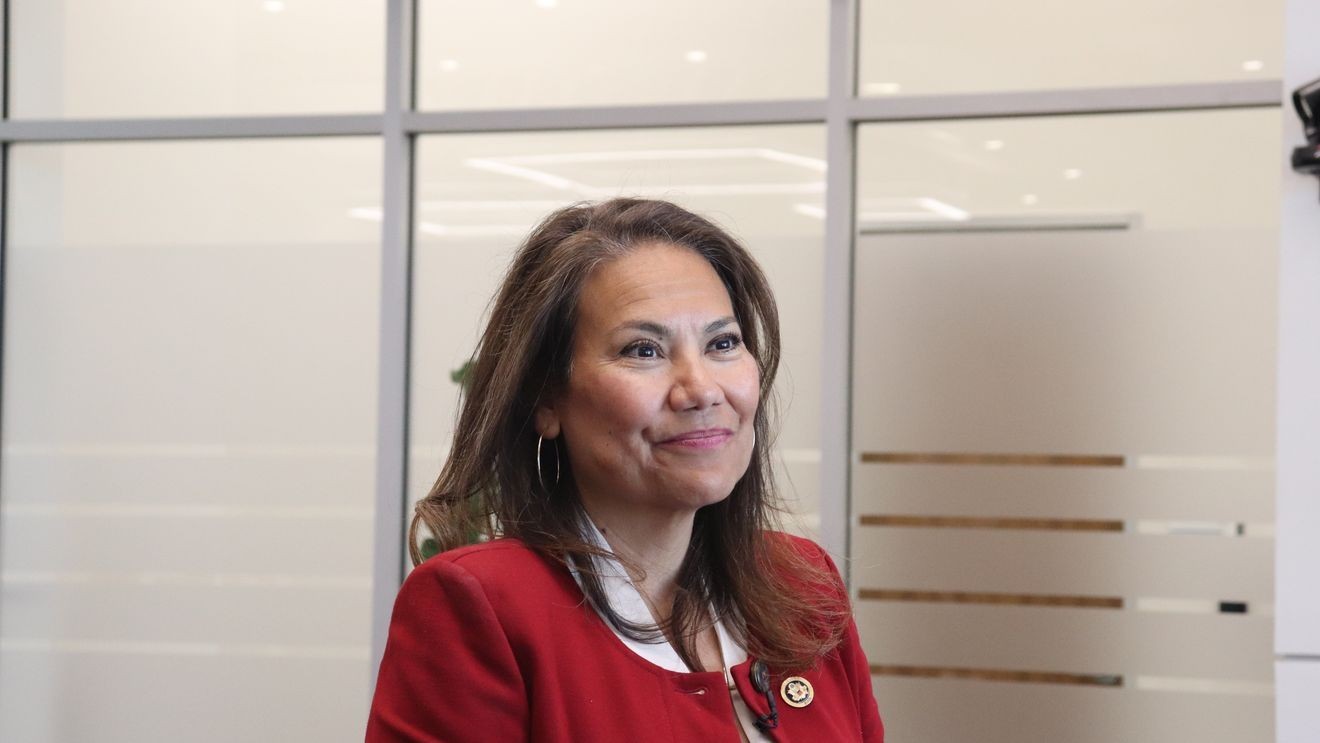
EL PASO, Texas (KFOX14/CBS4) — As artificial intelligence data centers expand in El Paso County, U.S. Rep. Veronica Escobar is urging the El Paso Water Public Service Board to move quickly to protect the region’s limited water supply and prevent costs from being shifted to residential ratepayers.
Last Friday, Escobar, D-El Paso, sent a letter to the members of the El Paso Water Public Service Board requesting that the board follow several recommendations aimed at prioritizing El Paso residents while ensuring transparency and accountability from data centers.
In the letter addressed to Chair Morris and board members, Escobar pointed to El Paso’s long-standing conservation efforts and the community’s compliance with mandatory water restrictions that have been in place since 1991. She noted that El Pasoans have made changes such as replacing “water-thirsty lawns with xeriscaping” and limiting outdoor watering to certain days of the week. She also highlighted El Paso Water’s work in inland desalination and wastewater reuse.
RECOMMENDED: Rep. Veronica Escobar presents $1.031M for Texas Tech Health El Paso cancer tech
Escobar also underscored ongoing gaps in basic service across the county, writing that in El Paso County “there are still 1,878 individuals who live in colonias and cannot open their faucet for water,” and that residents without wastewater connections must rely on septic tanks, “many of which routinely fail.” She said some residents still have to truck in water for daily needs such as cooking, drinking, showering and laundry.
At the same time, Escobar warned that rising temperatures and persistent drought are adding pressure to the region’s water outlook. She wrote that El Paso is “one of the fastest warming communities in the country,” and that alternative water supplies are becoming increasingly costly as residents feel the impact on their budgets.
Escobar said “adding multiple large volume industrial water users, specifically multiple data centers, threatens to strain our already limited water supply,” and she called it “crucial” that the Public Service Board and El Paso Water establish safeguards to protect customers from “unexpected and significant demands and water usage that come with data centers.”
Escobar said she has worked with colleagues on legislation to create federal “guardrails on data centers,” but argued that a broader approach is needed because of how quickly data centers are being built and what she described as limited information and consultation provided to residents.
As the Public Service Board reviews El Paso Water’s plans to provide water for data centers in El Paso County, Escobar recommended several steps, including requiring AI data centers to use a “closed loop” liquid cooling system that recycles water; establishing clear metering that can be regularly reported to the board; and adopting transparency and reporting requirements that would provide real-time reporting to the community and full public disclosure of water usage.
She also urged the board to ensure data centers subsidize infrastructure improvements rather than shifting costs to residential customers, and to adopt protections during drought periods that prioritize residential and existing commercial users over AI data centers.
Other recommendations included creating a separate rate structure for data centers, including system development fees, charges for peak capacity and up-front capital contributions. Escobar also called for ensuring that investment promised by Meta “(and any other data center) is made and is appropriately deployed to sustainability.”
Escobar closed by telling the board that protecting El Pasoans is a shared obligation and offered her team’s help as the board considers next steps.
Sign up to receive the top interesting stories from in and around our community once daily in your inbox.