
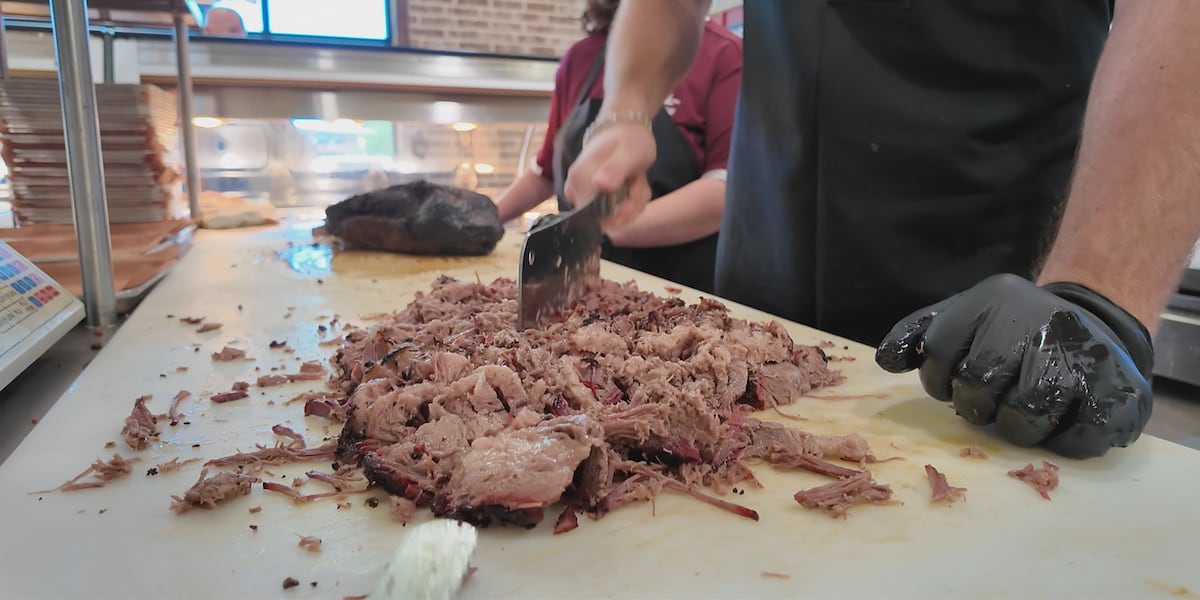
BRYAN, Texas (KBTX) – Some would say brisket is the heartbeat of Texas barbecue. But for restaurants across the Brazos Valley, rising beef prices are threatening to put them on the chopping block, and industry leaders say relief isn’t coming anytime soon.
Ground beef now costs $6.70 a pound, up over 15% from a year ago. Beef steaks are sitting at $12.73 a pound, up 16% from last year. And the U.S. Department of Agriculture warns that prices could climb another 10 to 18% before the end of 2026.
For Texas barbecue restaurants, those numbers aren’t just statistics. They’re an existential threat.
The math doesn’t lie
Justin Manning, co-owner of C&J Barbecue, has been in the restaurant business his entire life. He knows the numbers better than most, and right now, they’re not adding up.
“The brisket for us barbecue restaurants specifically, it’s everyone’s most popular, it’s everyone’s most expensive, and it’s our worst yield,” Manning said. “If I pay $5.25 a pound and I get a 50% yield, that beef is really costing me $10.50 a pound.”
And that’s before factoring in the labor to trim it, the wood to smoke it, the time to cook it, and the overhead to serve it.
“To have a margin, I would need to be selling beef for $40 a pound, which no one can do,” he said. “So you always have to stay in competition with everyone else. It’s really hard for us with these rising costs to stay competitive.”
Manning says the pressure isn’t just coming from beef. Styrofoam containers, sausage, insurance, fuel surcharges, everything is going up at once.
“Every aspect of business, people’s jobs, the cost of goods, it all just adds up,” he said. “And it’s the middle class that pays for all of this because we’re the largest consumers.”
A 30-year problem in the making
The root of the crisis, according to the Texas Restaurant Association, goes deeper than inflation.
Emily Williams Knight, president and CEO of the TRA, says the U.S. is facing a 30-year shortage of cattle, a problem that has been building for decades and has no short-term solution.
“We have a 30-year shortage of beef,” Knight said. “And so what we’re hearing from operators, especially our protein operators, think of steakhouses and barbecue restaurants, is really two things. One, they’re being squeezed at the cost they have to buy beef at. But then also there’s no room to push it on the consumer.”
Knight says the shortage is the result of a perfect storm of factors, a pandemic-era labor shortage that slowed meat processing plants, rising feed costs driven by fuel prices, international supply disruptions, and a surging consumer demand for protein, fueled in part by the GLP-1 movement.
“We’ve had this sort of craving of protein,” Knight said. “Protein is at an all-time high from the consumer wanting to have it, and you have the shortage of beef. So restaurants are trying to think about ‘how do I re-engineer my menu? How do I maybe make a smaller portion and put a different type of protein on the plate?’”
For barbecue restaurants, she says, there is no workaround.
“If you’re a barbecue restaurant, you don’t really have anywhere to move,” Knight said. “And I think that’s where you’re seeing a lot of these smaller barbecue restaurants begin to close, because they just don’t have any options as the price continues to increase.”
It starts with the land
Bryan cattle rancher Andrea Woods has watched the beef shortage unfold from the other side of the industry. She and her family have been raising cattle in the Brazos Valley for nearly a decade, and she says the crisis starts long before the meat ever reaches a restaurant.
“In Texas alone, we’re losing close to 1,000 acres a day to development,” Woods said. “You take away the land, you don’t have the resource to raise the cattle. So it’s just simple economics, when the supply goes down, the price is going to go up.”
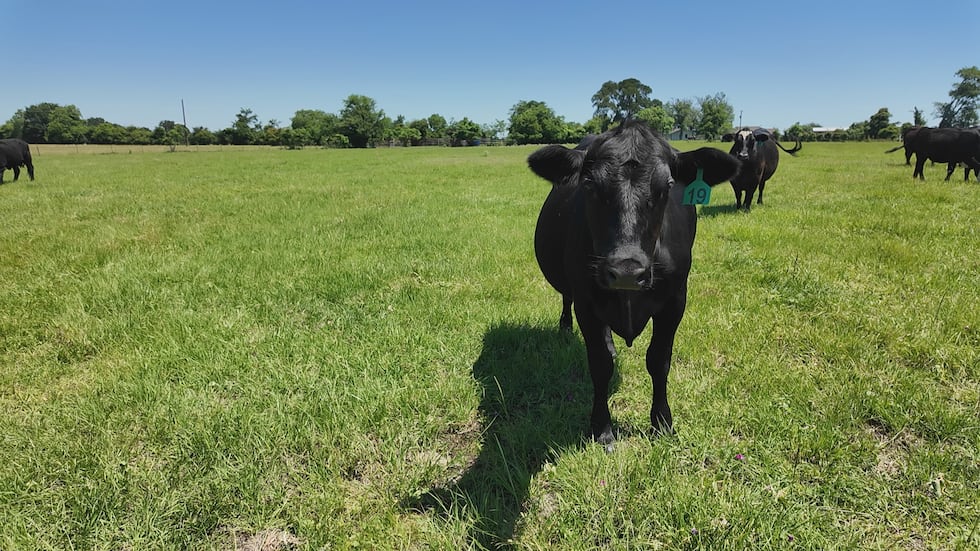 From the ranch to the restaurant, rising beef prices are squeezing every side of the industry(KBTX)
Woods said the exit from the cattle industry is often generational. Large ranches get passed down, heirs disagree on what to do with the land, and development wins out.
“A lot of people are just wanting the money. It’s all it is to it,” she said.
And while the cattle market is currently strong for ranchers like Woods, meaning they’re getting good prices when they sell, she’s careful to point out that doesn’t mean they’re getting rich.
“Both my husband and I have full-time jobs, and we have to keep those to stay afloat,” she said. “Right now we’re getting enough for our cattle that it pays for the cattle, pays their feed bills, fertilizers, all of the things that require continuing on out here.”
Woods says the long-term consequences of losing ranch land go far beyond price.
“If our cattle go away, we’re going to have to import,” she said. “And when we do that, the quality drops through the floor. The United States has an incredible amount of beef quality. When you take away the land they use to produce it, you take away that quality.”
Adapting to survive
Back at C&J Barbecue, Manning isn’t waiting for prices to drop. He’s engineering his way around the problem, finding ways to use every part of the product so nothing goes to waste.
“We take the fat, and we’re going to start rendering that into beef tallow and selling that,” he said. “So I’m trying to use 100% of that meat or that product so I have zero waste, so increasing all of my margins.”
Pork trimmings go into the beans. Brisket scraps become hamburger grind, chili meat, and sloppy Joes. Every cut has a purpose. But Manning is realistic about how long that strategy can carry a business.
“We are not making more money, we’re just trying to stay profitable,” he said. “How long are you going to keep doing what you’re doing when you’re not making any money? It’s really, really hard.”
C&J has been a fixture in the Bryan-College Station community since 1981, and Manning said that community connection is ultimately what keeps the doors open.
“We live in this community. I’m from this community, so this community is everything,” he said. “I think people see a lot of value in coming here and supporting a family that cares so much.”
What comes next
The Texas Restaurant Association says it is working with lawmakers at the state and federal levels to push for policies that could help offset rising costs, from work permits for meatpacking plant employees to better regulation of credit card processing fees and insurance.
Knight said awareness is the first step.
“If we’re paying a lot in the restaurant, the consumer is paying a lot in the grocery store too, so everyone is feeling it,” she said. “There’s no doubt that the fuel price is also impacting the beef price right now. It goes back to the cost of feed. When fuel prices go up, it’s going to cost more for that feed, and that cost is going to get passed right onto the consumer.”
For Woods, the hope is simple and urgent.
“Hopes and dreams are that Texas would do something to limit the amount of development going on right now on ranch lands,” she said. “It’s very scary.”
And for Manning, a man who has spent his life in the restaurant business, the only option is to keep adapting.
“The only thing guaranteed in life is change,” he said. “We just have to change with it and try to figure out how to navigate. It’s a crazy world.”
Copyright 2026 KBTX. All rights reserved.