
Walt Collins doesn’t know where the millions of dollars went that people invested in Lubbock’s Ferrum Capital.
Collins – namesake of Collins Asset Group, which partnered with Ferrum – was deposed more than a year ago and transcripts were only recently added to court records.
In the transcript, Collins:
Thought very highly of Ferrum’s Joshua Allen and Michael Cox, and their San Antonio affiliate Brooklyn Chandler Willy.
Feels terrible investors lost money.
Said problems from an earlier “horror story” opened the door to work with Ferrum.
The latest court records said 300 or more victims lost $67 million in Ferrum.
Ed Price, a Lubbock attorney working to help Ferrum victims get their money back, was not impressed with Collins’ answers.
“I think, in that deposition, he tries to put this off on anybody but him,” Price said.
How we got here
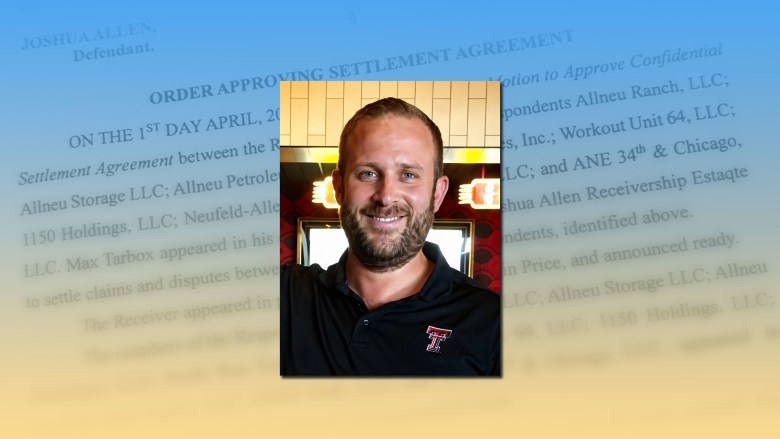
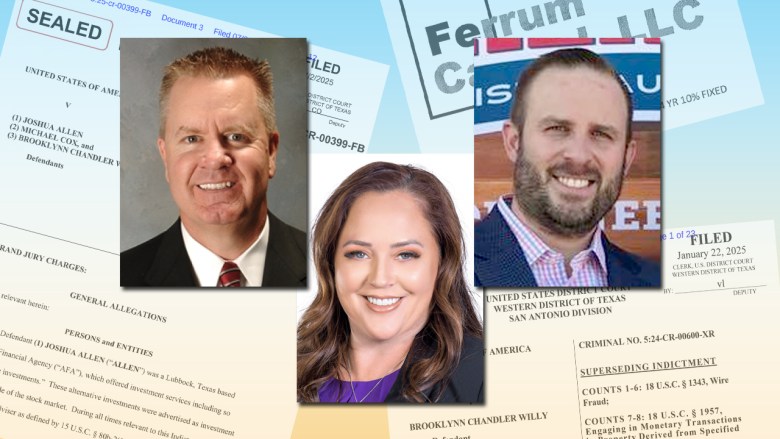
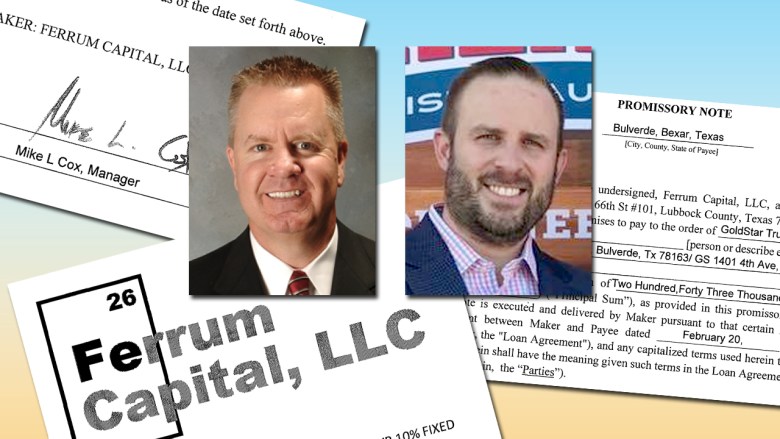
Lubbock businessmen Joshua Allen and Michael Cox started Ferrum Capital in 2017. They solicited investors in the Lubbock area while their affiliate Brooklynn Chandler Willy solicited people in the San Antonio area. Court records in multiple lawsuits said Ferrum loaned most of that money to Austin-based Collins Asset Group.
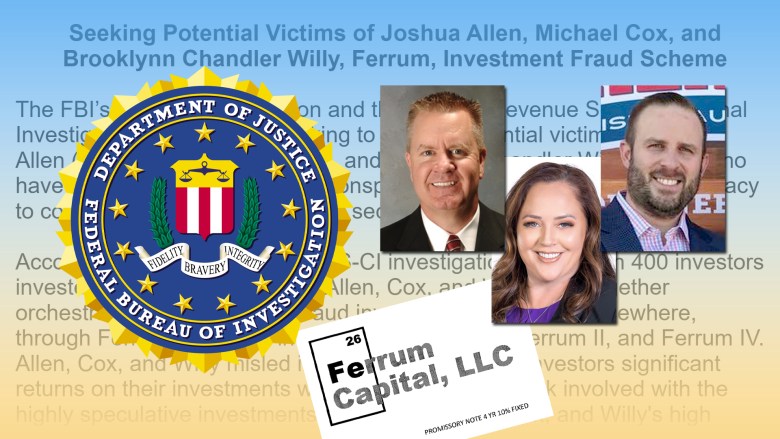
CAG defaulted in 2023, court records said. Investors began to sue and Ferrum was put under a court ordered receivership in early 2024. Allen, Cox and Willy were all indicted for securities fraud and other charges. Willy accepted a plea deal this year on 10 counts and will be sentenced after the scheduled federal trial date (August 10) for Allen and Cox in San Antonio.
Attorneys in the case said some of the Ferrum lost their life savings or their retirement savings. An FBI statement used words like “fraud” and “scheme.”
CAG filed for bankruptcy nearly a year ago. Lawyers in the Ferrum case are going after CAG’s partner company, Oliphant, to recover some of the money.
CAG was accused of doing the same thing previously with a company called Sonoqui. CAG settled out of court in the Sonoqui case for $16 million in 2020.

Ferrum victims may have one place to file claims if judge approves at May 19 court hearing
April 28, 2026
April 15, 2026
March 23, 2026
March 19, 2026
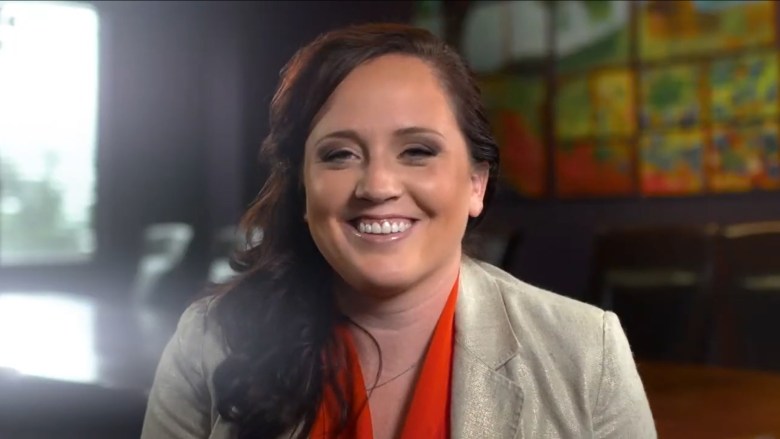
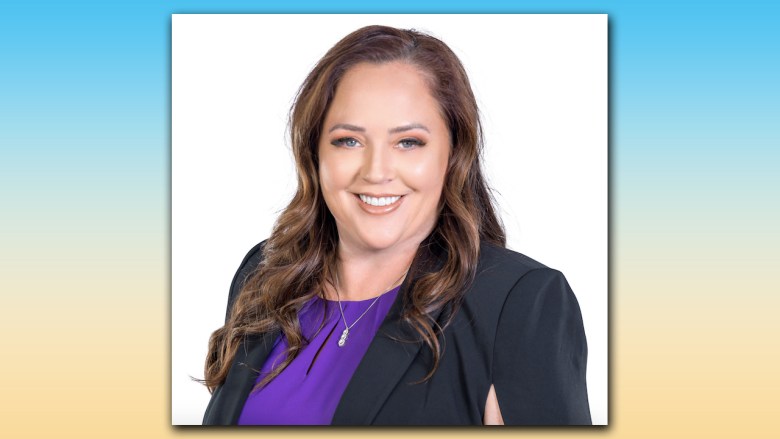
Feds update charges against Willy in Lubbock-based Ferrum Capital case, could take her assets
March 4, 2026
February 4, 2026
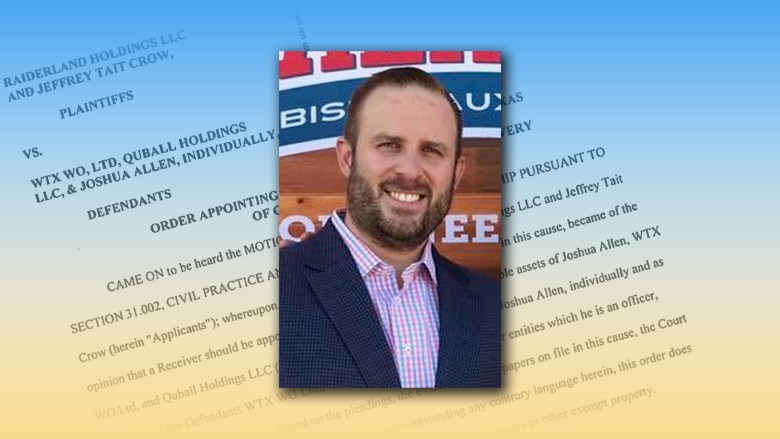
Josh Allen may lose companies as one impact from receivers working on Walk-On’s, Ferrum cases
November 25, 2025

November 21, 2025
November 7, 2025

October 8, 2025
Ferrum criminal trial – Allen, Cox and Willy – pushed back until next year
September 5, 2025
Ferrum detour to Delaware ends; what that means for victims in Lubbock, San Antonio
July 29, 2025
July 24, 2025
July 16, 2025
‘Finally … in shackles’ – Ferrum victims ‘ecstatic’ about criminal charges against Allen and Cox
July 10, 2025
July 9, 2025
June 19, 2025
Attorneys trying to recover money in Ferrum cases concerned about legal processes moving to Delaware
June 13, 2025
Two companies tied to Ferrum and securities fraud FBI investigation go bankrupt
June 9, 2025

May 20, 2025
May 2, 2025

Cox deal to keep his house approved but some of his bankruptcy protections lost
April 30, 2025
April 29, 2025
April 25, 2025
New bankruptcy judge appointed in Lubbock – to oversee cases across much of West Texas
April 15, 2025
‘They robbed people blind,’ says upset Lubbock attorney representing dozens in Ferrum Capital case
March 28, 2025
March 28, 2025
March 10, 2025

March 4, 2025
January 27, 2025
Where’s the money?
Collins had to answer questions under oath in the deposition in April of last year taken at Omni Barton Creek Resort in Austin. A full copy of the deposition showed up recently in bankruptcy court records.
Royal Lea of San Antonio, attorney for the court-appointed Ferrum receiver, asked Collins multiple questions about the money.
“You’re asking me – where’s the rest of the money?” Collins said.
Lea said, “The money that hasn’t been paid back, where is it?
Collins said, “I really want to know that. I don’t know.”
“Mr. Collins, what do you think happened to the money that the Ferrum investors put into Ferrum and was loaned to Collins Asset Group?” Lea asked.
Another lawyer objected. Then Collins began to speak.
“I like the question,” Collins said before going on a bit of a tangent.
“There was one of Ferrum’s agents, Brooklynn Willy. She had her own operation, and she was very, very impressive – visited me – did her due diligence. She was introduced by Ferrum and she was very thorough. She did the appropriate due diligence,” Collins said.
When pressed, Collins said he didn’t know where the money was.
“Where do you think it is?” Lea then asked.
Collins answered, “I have great respect for Oliphant [which is now CAG’s parent company via Hollins Holdings]. A person there is dear to me, understands, knows the business stone cold. … The Ferrums and other Collins investors had a strategy that they worked to a T. Their goal was to build massive portfolios of charged-off receivables which would give their clients protection. They did that.”
“From my standpoint, they did it right. For the first time in the history of Collins, there’s a massive underperformance. I don’t see necessarily bad people at all,” Collins said.
Collins testified he had no way of knowing if Ferrum investors could ever get their money back.
Responsibility
Asked if he felt bad for Ferrum investors, Collins answered, “Yes. Yeah. Absolutely.”
“The company has never missed a payment, never been late for a payment and this is what I’m taking to my grave,” Collins said.
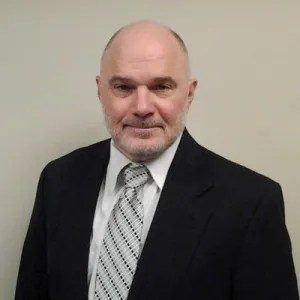
Walt Collins. Credit: LinkedIn page
CAG was a debt collection company, purchasing uncollected or “distressed” debt for pennies on the dollar. CAG could profit if it could find a way to get people to pay.
“My name is Collins. I’m a partner in Collins. I’m a partner in Oliphant. It’s not all mine. I think when we sold, I had 21 percent of the company. But do I feel that I was responsible? Do my partners feel they’re responsible? All the way down to the wonderful team we have, [everyone] feels responsible.”
Lea asked a follow-up question, “When you stepped away from the company in 2021, Mr. Collins, was everything on course? Was the money there for the Ferrum investors to get repaid?”
“Yes,” Collins said.
Price said Collins’ answers defy logic.
LubbockLights.com asked Price if Collins is going to be held responsible for Ferrum victims in the lawsuits or even the federal investigation.
“He damn sure should be!” Price said.
“The biggest problem with that is that our criminal justice system is not set up to handle an 80-year-old-plus inmate who is ill,” Price said.
Collins was almost 81 years old at the time of the deposition and mentioned he’d had two heart attacks and a three strokes.
“He is the root of the whole problem. When Sonoqui went away, he looked for another place to do the same damn thing and he found it,” Price said.
Would the lawsuits and federal investigation be enough to deter others from creating another Ferrum in the future?
“It’s been going on forever, and it’ll go on forever. As long as you’ve got greedy people who are willing to take money from anybody, this will always be a possibility,” Price said.
Start of the Lubbock connection
During the deposition, Lea asked, “How did you meet Josh Allen and Mike Cox?”
“Through one of the horror stories that Collins ever went through,” Collins said.
Lea asked, “May I interrupt you, sir? You said one of the horror stories?”
“Yes. For the first time in the Collins history, a lender defaulted,” Collins said.
Collins never specified the name of the lender. But two of CAG’s partner companies, Sonoqui and Diversified Financing, stopped operating in 2017.
“Collins never missed a payment, wouldn’t be late on a payment. But here comes legal and [a] class [action lawsuit], and sure, it’s terrible. People are losing money,” Collins said.
He reenacted the disagreement he had with the lender as, “No, no, no. Money now! Money now!”
He said the out-of-court settlement was for $16 million – and previous court records corroborated the amount. Collins said it was $16 million out $32 million in loans, but it’s not like his company could just pocket the leftover amount. Having to pay the settlement hurt CAG.
It takes time to collect old debts, Collins said.
“We had to dig out of the hole,” he testified.
“We did everything in our power to try to keep that loan agreement in place and nobody would lose money,” Collins said.
He insisted his company did nothing wrong. But the $16 million settlement was the “horror story” opening the door for Allen and Cox, according to Collins.
“Ferrum would have approached us. … They’re calling us. … ‘Will you take a look at us?’ Sure,” Collins said.
“They were – in our view – two stellar young men. And in a due diligence trip [to Lubbock], got to see their operation, meet people. I have nothing but good to say about them,” Collins said.
Price disagreed.
“They helped make him richer, basically by going in and striking a deal where in the note itself, it said whatever Collins Asset Group agrees to pay, they don’t have to pay the first 35 percent of it or never have to pay 35 percent of it back. So I mean, I imagine he’s real happy with those people,” Price said.
Collins characterized the deal very differently, saying CAG fees were normal.
Price is not convinced Allen and Cox will take a plea deal like Willy did.
“The approach they’ve taken to this point is all or nothing. Either they win or they’re probably going to be locked up the rest of their lives,” Price said.
“If they were to cooperate in restitution, helping people find the money, that could also get them some added consideration on their sentence,” Price said, adding he believes Willy will be obligated to testify against Allen and Cox. Her sentencing is not until after the Allen and Cox trial.
Collins defends CAG and Ferrum
“I love my companies. I love people at the companies. We had state-of-the-art technology that monitored everything.” Collins said.
When CAG sold to Oliphant, he said CAG had the better analytics and the better management team.
“The other thing that I saw that has never made sense is [CAG] sold as an insolvent company and that was in October of ‘21. Now, if you look at the tax returns, that’s nonsense. Paid our bills. We had to register with each state. … We had to have a net worth,” Collins said.
By the end of 2023, things changed. CAG defaulted to Ferrum, lawsuit records said. Collins was asked about that.
“I would trust Ferrum,” Collins said.
People had good reason to rollover their premium every four years and keep their principal investment with Ferrum, Collins said.
“That was part of what they were doing. People didn’t want their money back. They liked what’s going on. Keep building the portfolio and send us interest. They don’t want the principal back. And so you continued to freshen and freshen this enormous portfolio so that when it does come time, their money is there,” Collins said.
Lea asked, “How did that turn out for them?”
“For the first time in Collins’ history, it didn’t work,” Collins said.
Related

Related posts