
The number of Coastal Bend communities declaring emergencies due to the looming water crisis is growing fast.
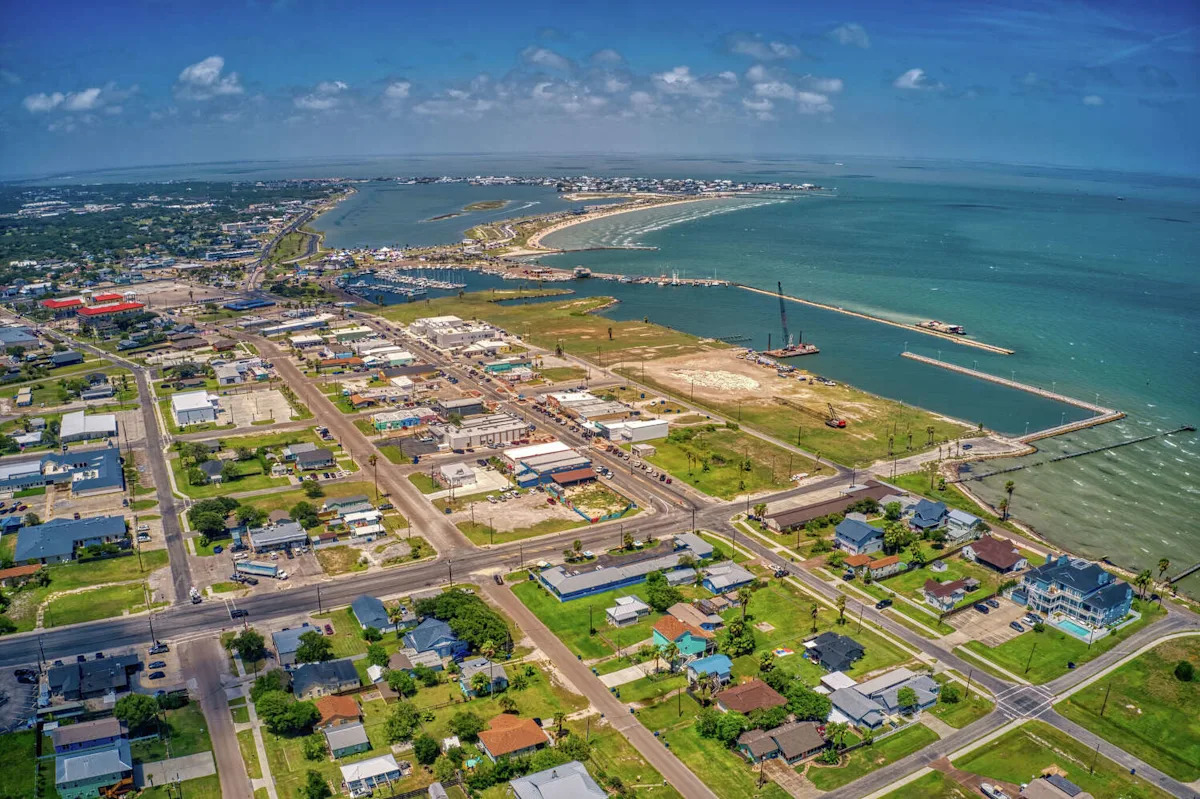
On Monday, officials in Rockport, a town of about 11,500 people located 30 miles north of Corpus Christi, became the latest to declare a water emergency as the Coastal Bend scrambles to grapple with a quickly dwindling water supply. The city, which lies along the shores of Aransas Bay, gets its water from the San Patricio Municipal Water District, which, in turn, buys its water from the city of Corpus Christi. However, a years-long drought is threatening to force mandatory curtailments of water use as soon as this fall, and that poses “a significant risk” to Rockport’s ability to supply its residents with water, officials said.
“Current drought conditions and projected supply shortfalls indicate that immediate action is necessary to conserve, manage, and supplement water resources,” Rockport Mayor Timothy Jayroe said in a news release on Monday, May 11.
“The City is taking proactive steps to protect public health, safety, and welfare while pursuing both short-term and long-term solutions,” Jayroe added.
Rockport now joins nearly a dozen local governments that have declared emergencies or states of disaster due to the water crisis, which is stressing not just the four reservoirs and river systems that supply the Coastal Bend but also the underground aquifers that serve as the sole source of water for the region’s inland communities. Late last month, the cities of Ingleside, Aransas Pass and Taft declared emergencies due to the drought.
Alice, which brought a brackish-water desalination plant online last summer, declared a state of emergency on April 14. And the city of Beeville has maintained a continuous state of emergency since last October. Bee County ratified Beeville’s disaster declaration with one of their own on April 27. The leaders of Live Oak, Jim Wells and Aransas counties have all declared emergencies as well.
Additionally, in mid-April, the cities of Orange Grove and Three Rivers declared water emergencies while laying the blame for the burgeoning crisis squarely at the feet of Corpus Christi and its officials. At the end of March, Three Rivers officials issued a statement saying that Corpus Christi’s “inaccurate water projections” would leave the tiny landlocked town unable to pump water from Choke Canyon Reservoir, where it holds water rights to 2% of the lake’s volume.
A week later, officials in Orange Grove said that Corpus Christi’s rapidly accelerated efforts to pump water from the Evangeline and Goliad Sands Aquifer just 10 miles outside the smaller town were causing “measurable changes” to its water quality for the worse. Further, Corpus Christi’s recent pumping caused the aquifer’s water levels to plummet 13 feet over the course of just six months. That’s 760% more than Orange Grove typically sees over the course of an entire year. Prior to Corpus Christi’s tapping into the aquifer, its levels had dropped, on average, about 1.5 feet per year, Orange Grove City Administrator Todd Wright told MySA.
This article originally published at Water emergencies spread across South Texas as drought worsens. Here’s where.