
A federal judge on Thursday blocked portions of an unprecedented Texas law empowering state and local officials to arrest and deport immigrants – a day before the law, known as SB4, was set to take effect.
U.S. Judge David A. Ezra said the state deportation scheme “threatens the fundamental notion that the United States must regulate immigration with one voice.”
The law was set to take effect on Friday after an appeals court tossed out a lawsuit that had kept it on ice since 2024, when the same judge deemed it “patently unconstitutional.” A coalition of civil rights groups then sued again on behalf of two immigrants living in Texas who they say face arrest and deportation under the law.
READ MORE:Judge appears likely to block Texas’ migrant deportation law
“If allowed to proceed, SB 4 could open the door to each state passing its own version of immigration laws,” Ezra wrote in the order. “The effect would moot the uniform regulation of immigration throughout the country and force the federal government to navigate a patchwork of inconsistent regulations.”
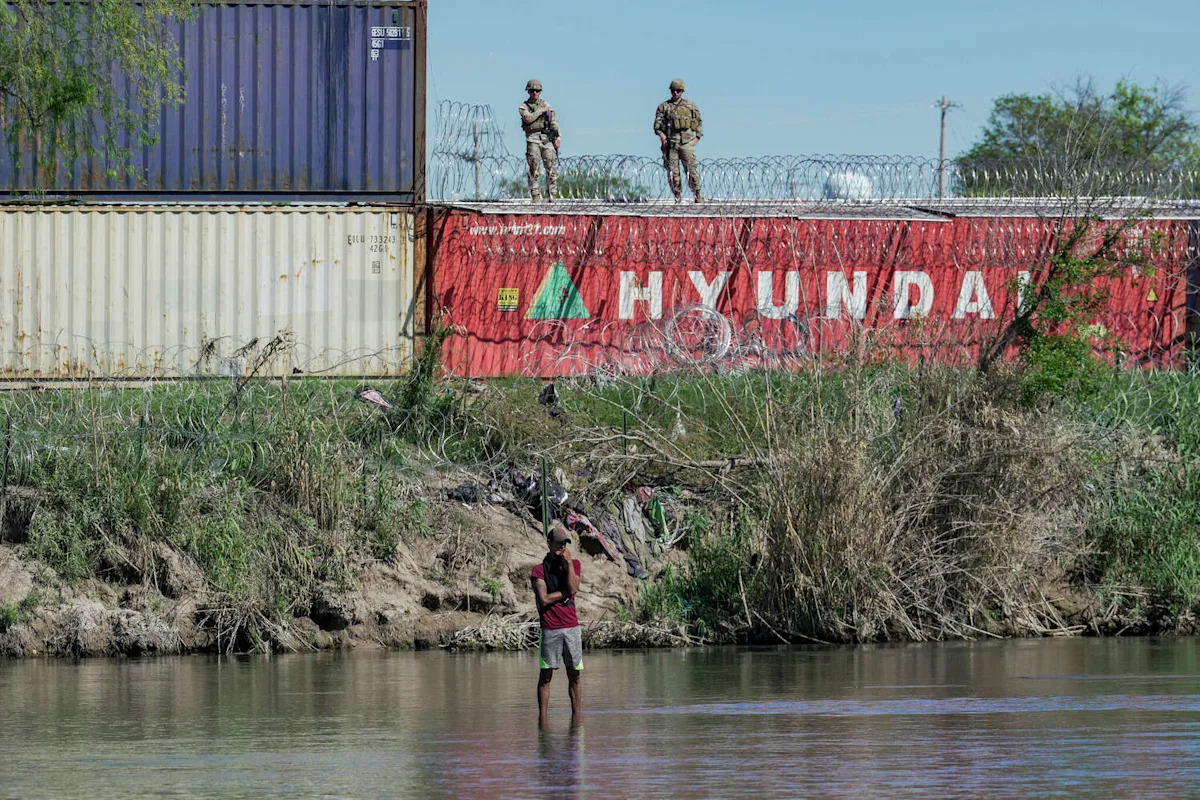
SB4 taking effect would mark a massive shift by giving state officials immigration enforcement powers long left solely to the federal government. It makes it a state crime to cross the border from Mexico without permission, and empowers any officer in the state to arrest people they suspect of doing so. State judges would be authorized to order their removal.
Ezra’s order blocks some of the most significant parts of the law, including preventing judges from ordering removals. It would still allow state and local police to arrest some individuals they believe crossed the border without permission.
The American Civil Liberties Union, which is representing the immigrants in the case, cheered the ruling.
“The court’s decision reaffirms what every court that has reviewed the merits of SB4 and laws like it has held: Immigration enforcement is exclusively a federal issue and not up to the states,” the lawyers in the case said in a joint statement Thursday night. “SB4 would instill fear in our communities, cause widespread racial profiling, and subject lawfully present immigrants to arrest, detention, and deportation. Texas cannot override the U.S. Constitution and should stop wasting time attempting to do so.”
The state has sought to downplay the law’s immediate effects. SB4 was passed in 2023, at the height of the border surge under President Joe Biden, when Gov. Greg Abbott dispatched state troopers to arrest migrants on trespassing charges.
IN-DEPTH: Everything to know about Texas’ migrant deportation law SB4
Those officers are now assisting President Donald Trump’s mass deportation push, and the state has said in court filings that Department of Public Safety Director Freeman Martin has “not yet determined what operational steps DPS will take to enforce SB4.”
David Bryant, an attorney for the state, said in court that state police would bring anyone they arrest under SB4 to federal immigration officers for deportation, rather than charge them with a state crime under the law.
“None of us can know how this law will actually be enforced,” Bryant said.
Still, some worry the law going on the books creates an opening for officers across the state to round up people they think are in the country illegally.
“I would hope that people would be cautious and careful and know that this could all change,” said Charley Wilkison, who led the state’s largest police union for more than a decade. “But if you have an agenda, if you’ve been salivating and waiting on this opportunity, you’re going to have a license to do so now.”
The American Civil Liberties Union, one of the groups that sued on behalf of the two Texas immigrants, argued its clients are in imminent danger. They both drive daily and regularly see DPS officers pulling over other vehicles.
“The reality is, this law will go into effect and our clients can be arrested,” said Cody Wofsy, an ACLU attorney who pressed Ezra to issue an emergency order stopping the law.
Ezra forecast his decision in a court hearing this week, saying his views on the law were well known. But he had indicated he likely would not have a ruling out before the law went into effect Friday.
Texas Republicans have cast the law as an opening for the now-solidly conservative Supreme Court to revisit a landmark 2012 ruling that held that only the federal government has the power to enforce immigration laws. In that case, the high court struck down portions of an Arizona law authorizing police to arrest anyone suspected of being in the country illegally.
Ezra said he did not believe the high court would side with Texas.
“Its arguments rest upon a narrow and untenable reading of Arizona and the many immigration preemption cases that preceded it,” Ezra wrote. “SB 4 intrudes onto especially dominant federal interests, such as the removal of noncitizens, and conflicts with federal law by disallowing consideration of pending asylum or withholding determinations. Texas is unlikely to succeed on the merits.”
Subscribe
There’s more to Houston with the Chronicle. Subscribe today for just 25¢.
This article originally published at Federal judge blocks SB4, Texas’ controversial deportation law.