
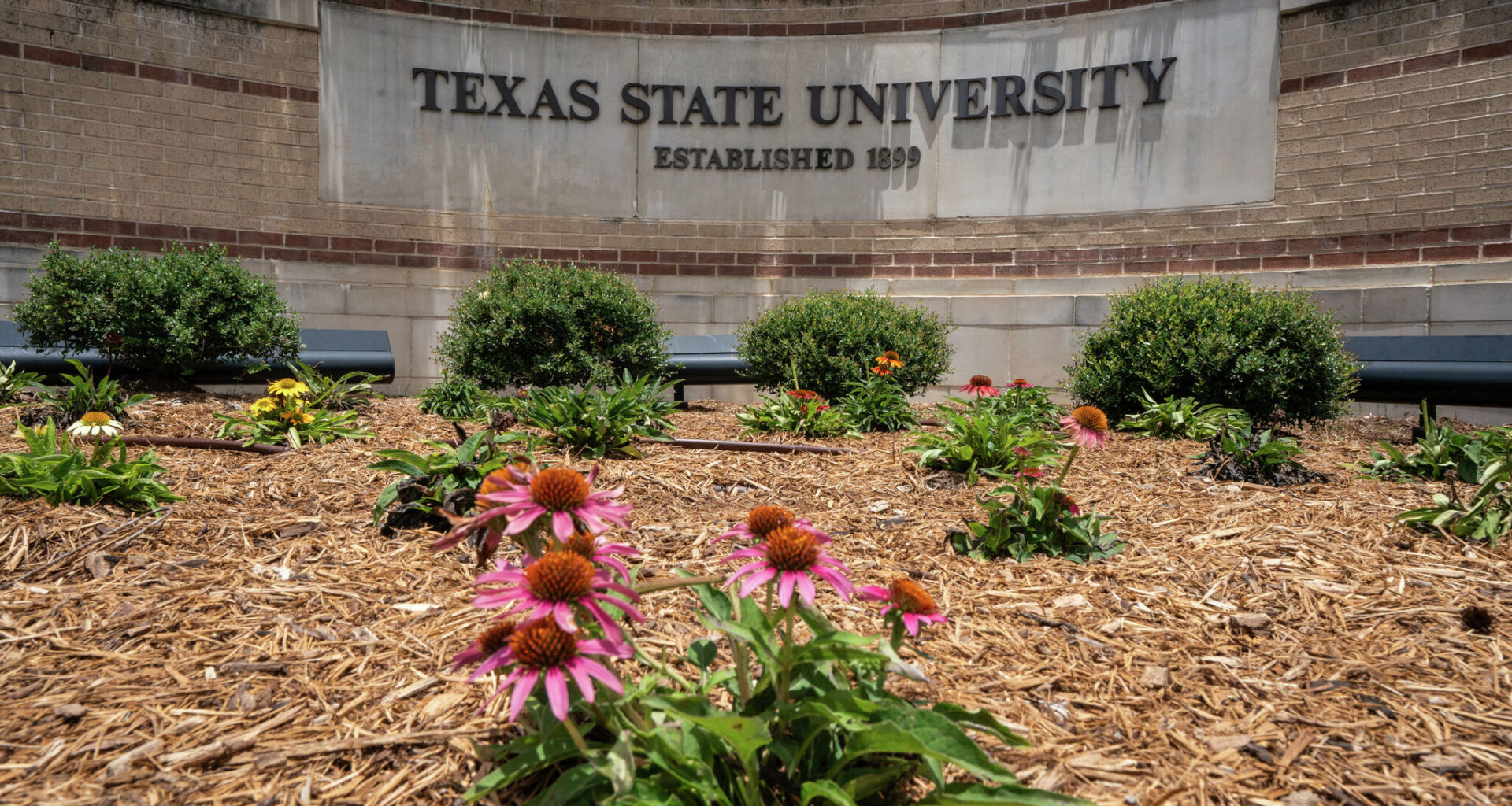
Flowers bloom on campus at Texas State University in San Marcos Monday, June 30, 2025. The university will have to reinstate professor Idris Robinson as his lawsuit plays out against Texas State.
Mikala Compton/American-Statesma/Austin American-Statesman
A federal judge ordered Texas State University to reinstate a professor that the university placed on leave and dismissed after complaints over a pro-Palestinian speech. The judicial order marks a huge win for free speech, advocates argued.

The order, delivered Monday, means Idris Robinson can resume teaching as a philosophy professor for one year or until his free speech lawsuit against the university concludes, whichever is sooner.
Article continues below this ad
“It’s a huge victory not just for him but given the environment especially going on at Texas State but also in Texas and nationwide,” said Myko Gedutis, the vice president of the Texas State Employees Union. “This didn’t happen in a vacuum.”
It’s the second lawsuit the university has faced from a professor fired for controversial speech in the past year. Robinson is one of at least four staff members who have lost their jobs at Texas State this academic year in similar disputes.
U.S. District Judge Alan Albright said in his order that Robinson successfully proved the university violated his First Amendment rights.
“Defendants essentially admit, and the timeline confirms, that Dr. Robinson’s speech motivated Defendants’ decision not to renew his contract,” wrote Albright, who serves in the Western District of Texas. The university, Albright ruled, “put Dr. Robinson’s career in grave danger by violating his First Amendment rights.”
Article continues below this ad
The university said in a statement that it is reviewing the court’s order, which it received Wednesday, and is “considering our appellate options.”
Robinson gave a speech in Asheville, North Carolina in 2024 on Palestinian resistance at a book fair. He spoke in his individual capacity, not as a professor, his attorney said. There was a confrontation at the talk where three Jewish audience members filming the event were assaulted by audience members, but Robinson was not involved, media outlets reported.
A year later, individuals circulated audio from Robinson’s speech on social media and called for his termination, accusing him of having “incited” the violence against the protesters. Robinson was never named a suspect or witness in the police report, according to his legal filings.
But soon after the social media posts, the university received complaints about Robinson. A day later, he was placed on paid administrative leave because of “multiple complaints and allegations” about his summer 2024 talk, the judge’s order states.
Article continues below this ad
A month later, the university decided to not renew his contract, which ended May 31, 2026. Texas State officials did not state a reason for the nonrenewal or offer Robinson a chance to appeal, Albright’s order states. Robinson, a tenure-track professor, sued the university in March, arguing the university’s non-renewal violated his First Amendment rights and hurt his chances for tenure and future academic employment.
Albright concluded Texas State’s actions were severe enough to cause “irreparable harm,” warranting an injunction. He also said that Robinson was “likely” to succeed in his lawsuit.
“We’re excited about it because we’re hoping it’s the beginning of the end for this ugly chapter,” Gedutis said about the ruling. “Free speech rights can’t just be undermined because of political opinion or internet trolling.”
Samantha Harris, Robinson’s attorney, said the ruling will serve as precedent for other individuals suing institutions over free speech violations and will hold universities accountable for chilling and punishing speech.
Article continues below this ad
“I hope that it will serve as a check to state universities that are suppressing the speech of faculty and students,” Harris said. “It is a form of accountability, and the only way to fight types of abuse to power is accountability.”
Texas State President Kelly Damphousse fired another Texas State professor last September over a speech given at a conference. The university terminated professor Thomas Alter after he spoke at a revolutionary socialism conference in his private capacity.
After a clip of Alter’s speech went viral, Damphousse announced his termination, accusing the remarks of inciting “violence.” A judge ruled the university had to give Alter due process, and after reconsidering the termination, the university upheld the firing.
Article continues below this ad
“We hope that university professors, students and staff see this as a huge victory and we do hope that universities grasp the significance of it,” Gedutis said about the ruling. “I know it’s not final, that the trial is still ongoing, but reading through the injunction, it’s a huge win for free speech. And we’ll take that right now.”